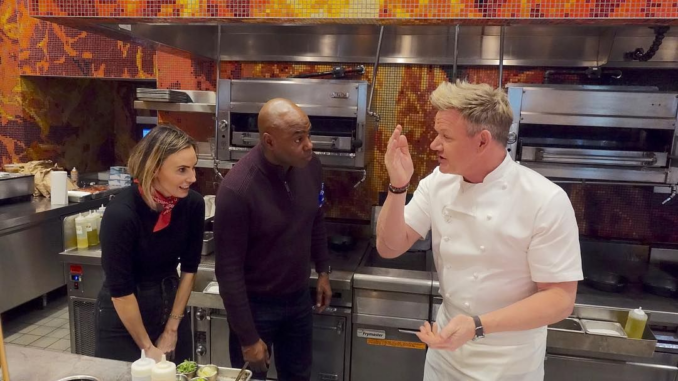
Dining at a restaurant owned by Gordon Ramsay is often seen as a premium experience—one that comes with high expectations and, usually, a high price tag. So when a YouTuber recently claimed they had found a way to enjoy a meal at one of Ramsay’s establishments “for free,” it didn’t take long for the internet to take notice.
The video quickly gained traction across social media platforms, with viewers drawn in by the bold premise. Was it really possible to dine at a Gordon Ramsay restaurant without paying? Or was it simply another case of online exaggeration designed to generate clicks?
As it turns out, the reality is far less controversial—but still interesting.
According to discussions surrounding the viral clip, the YouTuber’s experience did not involve any form of deception or rule-breaking. Instead, it appeared to rely on legitimate scenarios that occasionally occur in the hospitality industry. For example, restaurants—especially high-end ones—sometimes offer complimentary dishes or even full meals under specific circumstances. These can include promotional collaborations, influencer partnerships, or service recovery situations when something goes wrong during a guest’s visit.
In other words, the idea of “free food” isn’t as straightforward as it sounds.
At establishments connected to Ramsay, standards are famously strict. Shows like Hell’s Kitchen and Kitchen Nightmares have reinforced the image of precision, accountability, and high expectations. Within that environment, giving away meals without a clear reason would go against both business logic and brand reputation.
However, there are exceptions—just not the kind that can be easily replicated by the average diner.
Influencers and content creators, for instance, sometimes receive complimentary experiences as part of marketing efforts. In these cases, the “free meal” is not truly free—it’s an exchange for exposure, content creation, and audience reach. Similarly, if a restaurant makes a significant error, management may choose to comp a dish or an entire bill as a gesture of goodwill.
The YouTuber’s video, therefore, sits at the intersection of reality and perception. While technically accurate in showcasing a no-cost dining experience, it may give viewers the impression that such outcomes are easily achievable, which is rarely the case.
This has led to mixed reactions online.
Some viewers found the content entertaining and insightful, appreciating the behind-the-scenes look at how restaurants handle special situations. Others criticized it for being potentially misleading, arguing that it could encourage unrealistic expectations among customers.
From a broader perspective, the viral moment highlights how quickly narratives can shift in the digital age. A single video can transform a routine hospitality practice into a headline-grabbing story, especially when it involves a globally recognized name like Gordon Ramsay.
It also underscores the growing influence of social media on the dining industry. Restaurants today are not just serving food—they are managing online perception, customer experiences, and viral potential all at once. A single post, whether positive or negative, can impact reputation in ways that traditional word-of-mouth never could.
As for Ramsay himself, there has been no direct response to the video. Given his long-standing emphasis on discipline and professionalism, it’s likely that any such situation—whether promotional or service-related—would be carefully managed within established guidelines.
Ultimately, the idea of “eating for free” at a Gordon Ramsay restaurant is less about discovering a secret trick and more about understanding how the industry works. Opportunities may exist, but they are situational, structured, and far from guaranteed.
For most diners, the real takeaway is simple: the value of the experience lies not in avoiding the bill, but in enjoying the craftsmanship, atmosphere, and quality that define Ramsay’s culinary world.
Because when it comes to dining at this level, what you’re really paying for isn’t just the food—it’s everything that comes with it.