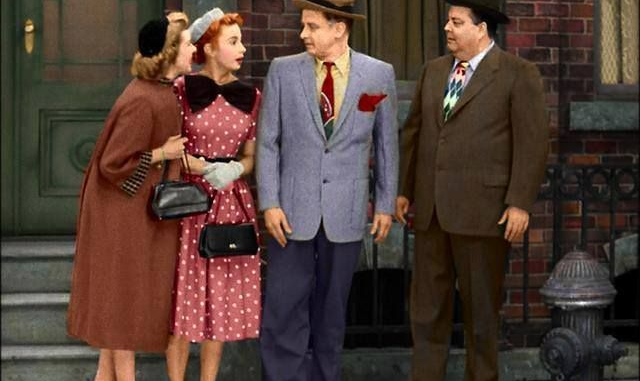
To generations of viewers, The Honeymooners has always felt like comfort television—simple, funny, and deeply human. But behind the laughter and timeless one-liners lies a more complicated reality that many fans don’t often see. Like many early television productions, the show carried its own share of pressures, tensions, and uncomfortable truths.
One of the most talked-about aspects today is the show’s portrayal of marriage—particularly the explosive temper of Ralph Kramden. His famous threats, often played for laughs, reflected a very different era of comedy. Back then, audiences accepted exaggerated frustration as humor. Today, those same moments can feel unsettling, raising questions about how entertainment once normalized behavior that would now be criticized.
Off-screen, the pressure to deliver perfection week after week was intense. Jackie Gleason, the driving force behind the show, was known for his genius—but also for his demanding standards. He often preferred minimal rehearsal, pushing co-stars like Art Carney to rely on instinct rather than preparation. While this created a sense of spontaneity on screen, it also added stress behind the scenes, where mistakes weren’t always easily forgiven.
There were also quieter struggles. Early television didn’t offer the same protections or recognition actors receive today. Performers worked long hours under tight schedules, often without the long-term financial security that modern stars enjoy. For some cast members, the success of The Honeymooners didn’t translate into lasting stability, revealing the fragile nature of fame during that era.
And then there’s the emotional weight of legacy. Being part of such an iconic show can be both a blessing and a burden. For actors like Audrey Meadows and Joyce Randolph, their roles became so defining that it was difficult to step out of those shadows later in their careers. The very thing that made them unforgettable also limited how the industry saw them.
Yet, perhaps the most “dark” truth isn’t about conflict or controversy—it’s about contrast. The world of The Honeymooners was small, contained, and filled with humor drawn from everyday struggles. But the real lives behind it were far more complex, shaped by ambition, pressure, and the realities of a rapidly evolving television industry.
Still, none of this diminishes what the show achieved.
If anything, it makes its success even more remarkable. Despite the challenges, The Honeymooners created something timeless—something that continues to resonate decades later. The laughter was real, even if the circumstances behind it weren’t always easy.
And maybe that’s the truth many don’t realize: great television isn’t always born from perfect conditions. Sometimes, it’s shaped by imperfections—and that’s exactly what makes it last.