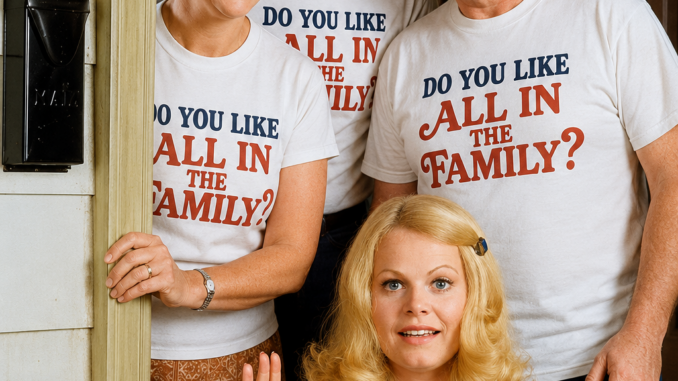
For years, fans of All in the Family believed the show was simply a loud, funny family sitcom about politics, culture clashes, and Archie Bunker’s unforgettable arguments. But hidden beneath the laughter was a plot twist many viewers never fully noticed — the real tragedy of Archie Bunker was never his temper.
It was his loneliness.
From the very first season, Archie appears larger than life: stubborn, sarcastic, impossible to win against in an argument. He dominates every room he enters. Yet as the series quietly progresses, the show begins peeling away the armor that made him seem invincible.
And that is where the real twist begins.
Most sitcoms of the 1970s reset after every episode. Characters rarely changed. Problems disappeared after the credits rolled. But All in the Family slowly did something revolutionary: it let Archie age emotionally in front of the audience.
At first, viewers laughed at how confidently wrong he was. Archie mocked changing social values, dismissed younger generations, and clung desperately to the world he understood. The audience expected him to remain frozen in time forever — the same angry man in the same chair.
Instead, the series quietly revealed something heartbreaking.
Archie was terrified.
Terrified that the world no longer needed people like him. Terrified that his family was slipping away. Terrified that every argument he started was actually proof that he was losing control of his life.
The genius of the show was that it never announced this transformation directly. There was no dramatic monologue explaining it. No huge “TV moment.” The realization creeps in slowly through small scenes: Archie sitting alone after an argument, struggling to connect with his daughter, or awkwardly showing kindness when nobody expects it.
Then came the emotional turning point many fans still consider shocking today: the gradual softening of Archie Bunker.
Not because he suddenly became progressive or modern — he didn’t. The twist is deeper than that. Archie began understanding people emotionally before he could understand them intellectually. Even when his words stayed harsh, his actions occasionally betrayed compassion.
That contradiction made him human.
And no moment exposed this more painfully than the later years of the franchise, especially after the loss of Edith. Her absence shattered the emotional structure of the show. For decades, Edith had acted as Archie’s emotional translator — the gentle force that softened his anger and kept the family together.
Without her, Archie was no longer the unstoppable king of his living room.
He was just an aging man, alone with his regrets.
Suddenly, all those old arguments felt different on rewatch. Fans realized Archie’s rage had often been covering insecurity, fear, and vulnerability. The loudest man in television history was also one of the saddest.
That is the plot twist many viewers never expected from All in the Family: the show wasn’t secretly about politics.
It was about fear of change.
And by the end, even Archie Bunker himself seemed to know he couldn’t stop the world from moving forward. The audience that once laughed at him eventually began feeling sympathy for him — something almost unimaginable during the show’s early seasons.
Few sitcoms have ever managed that kind of emotional reversal.
That’s why All in the Family still feels ahead of its time today. Beneath the jokes and controversies was a surprisingly honest story about aging, pride, loneliness, and the painful realization that the world eventually changes with or without you.