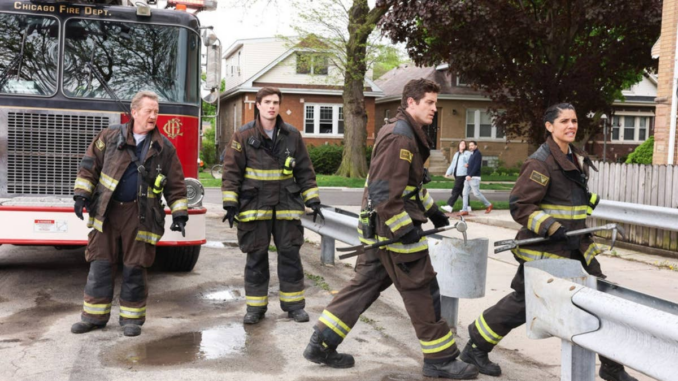
The question of whether Chicago Fire is approaching its final curtain call has become a central topic of discussion among television analysts and the dedicated One Chicago fanbase. As one of the most successful procedural dramas in modern history, the show has defied the odds for over a decade, maintaining high ratings and a cultural footprint that few series ever achieve. However, as we move through the 2026 broadcast season, recent statements from NBC executives and shifts within the production itself have led many to wonder if the sirens of Firehouse 51 are beginning their final descent.
Addressing the Rumors of an Ending
For the first time in years, NBC leadership has had to directly address the longevity of the franchise. During recent industry presentations, network spokespeople emphasized their pride in the show’s performance while simultaneously acknowledging the changing landscape of linear television. While they stopped short of announcing an official end date, the tone has shifted from indefinite renewal to a more measured appreciation of the show’s legacy. This change in rhetoric usually signals that a series is entering its twilight years, focusing on a planned conclusion rather than an abrupt cancellation.
The speculation is fueled by the reality of rising production costs and the natural lifecycle of long-running dramas. Maintaining a high-octane show like Chicago Fire, which requires expensive practical effects, large-scale stunt work, and a veteran cast with escalating salaries, becomes a logistical challenge after fourteen seasons. NBC is currently balancing the need for reliable hits with the desire to launch new programming, and the conversation around a final season is a natural part of that strategic planning.
The Impact of Cast Departures and Evolution
One of the strongest indicators that a show is heading toward its finale is the movement of its core cast. In recent years, Chicago Fire has seen the exit of several foundational characters, most notably Chief Wallace Boden, played by Eamonn Walker. When a show loses its patriarchal figure, the dynamic shifts permanently. Furthermore, the recurring “personal matters” and leaves of absence taken by Taylor Kinney have created a sense of instability for the character of Kelly Severide.
The writers have done an admirable job of introducing new blood, such as the recent addition of a controversial figure from the medical drama world, but the emotional core of the show remains tied to the original crew. As more veteran actors transition to recurring roles or seek new projects, the narrative begins to feel like it is wrapping up loose ends. The focus on the “end-game” for relationships like Stellaride suggests that the writers are prioritizing closure over open-ended drama, a common hallmark of a series preparing for its final act.
Finding a New Home on Streaming
While the broadcast era of the show might be nearing its conclusion, the future of the One Chicago brand is intrinsically linked to streaming platforms like Peacock. NBC has noted that the digital audience for Chicago Fire continues to grow, often outperforming live broadcasts. This digital success provides a safety net, but it also changes how the network views the show’s lifespan. There is a possibility that even if the main series concludes its run on the traditional network, the world of Firehouse 51 could live on through spin-offs or limited event series.
However, for the flagship show itself, the goal is to go out on top. NBC has expressed a desire to give the series a “hero’s send-off,” ensuring that the fans who have followed these characters since 2012 receive a satisfying and emotional resolution. Avoiding the “jump the shark” moment is a priority for both the network and executive producer Dick Wolf.
Preparing for the Final Alarm
The current 2026 season has been characterized by a “return to basics” feel, focusing on the brotherhood and the high stakes that made the show a hit in the first place. This back-to-basics approach often precedes a final season announcement, as it allows the show to celebrate its history before saying goodbye. Whether the official word comes this year or next, the atmosphere surrounding the show is one of reflection and preparation.
In conclusion, while NBC has not yet placed a definitive “final” label on Chicago Fire, the signs point toward a conclusion in the near future. The combination of evolving cast dynamics, shifting network priorities, and a desire for narrative closure makes it likely that we are witnessing the beginning of the end. Fans should cherish every rescue and every moment in the common room, because the legacy of Firehouse 51 is reaching its final, most meaningful chapters. The fire may eventually go out, but the impact of this series on the landscape of television will be felt for decades to come.