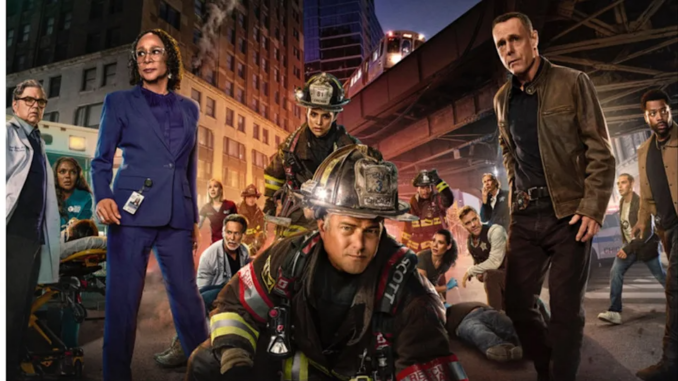
The recent announcement that NBC has officially renewed the entire One Chicago lineup, including the cornerstone series Chicago Fire, has sent waves of relief and excitement through its massive global fanbase. For over a decade, Wednesday nights have been synonymous with the sirens of Firehouse 51, and the confirmation of another season ensures that the legacy of Dick Wolf’s procedural universe continues to thrive. However, in the modern landscape of network television, such big news rarely comes without a complex set of conditions. While the renewal is undeniably good news, many industry insiders and viewers are looking closely at the fine print, wondering exactly what the catch might be as the show moves into its next chapter.
The primary concern among the community involves the shifting logistics of the cast. Chicago Fire has always been an ensemble-driven show, relying on the chemistry between seasoned veterans and fresh recruits. In recent years, however, we have seen a noticeable trend toward budget optimization. To keep long-running shows financially viable, networks have increasingly moved toward model where series regulars appear in fewer episodes per season. This means that while our favorite characters like Stella Kidd, Kelly Severide, or Christopher Herrmann are technically staying on the show, they might not be on our screens every single week. For a show built on the concept of a tight-knit family that lives and breathes together in a firehouse, this staggered presence can sometimes disrupt the narrative flow and leave fans feeling like the house is a bit too empty.
Another element that fans are watching closely is the departure of veteran showrunners and the introduction of new creative voices. Change can be a double-edged sword. On one hand, it brings fresh energy and new types of emergencies to the screen; on the other, it risks losing the specific tone that made the show a hit in the first place. With the departure of legendary characters like Chief Wallace Boden, the dynamic of leadership within the station is undergoing a massive transformation. The catch here is whether the show can maintain its soul while undergoing a forced evolution. The transition from a mentorship-heavy drama to a faster-paced procedural is a delicate balance that the writers must strike to keep the audience from feeling disconnected.
Furthermore, the renewal comes at a time when the television industry is grappling with shorter seasons and longer production breaks. While Chicago Fire remains a ratings juggernaut, the reality of rising production costs in a post-strike era means every explosive rescue and massive warehouse fire has to be calculated with precision. Fans have noticed that the spectacular, multi-episode crossovers that once defined the Chicago franchise have become rarer. The catch to getting more seasons might be a “smaller” feel to the show—fewer massive city-wide disasters and more contained, character-driven subplots. While this allows for deeper emotional exploration, it is a departure from the high-octane spectacle that originally put the show on the map.
There is also the question of character longevity. Every time a renewal is announced, the clock starts ticking on contract negotiations. The anxiety surrounding Kelly Severide’s intermittent absences has already tested the loyalty of the audience. If the catch for a new season involves losing more foundational members to make room for lower-cost newcomers, the show risks becoming a ship of Theseus, where so many parts have been replaced that it is no longer the same vessel. The audience tunes in for the people as much as the pyrotechnics, and the bond between the viewers and the firefighters is the show’s most valuable currency.
Despite these underlying concerns, the renewal is a massive win for NBC and the fans. In an era where streaming platforms cancel beloved shows after only two seasons, reaching thirteen or fourteen years on the air is a monumental achievement. It speaks to the universal appeal of stories about everyday heroes who put their lives on the line for strangers. The catch, if there is one, is simply the price of success in a changing medium. The show must adapt to survive, and while that might mean seeing less of certain faces or dealing with more internal politics, it is a trade-off most fans are willing to make if it means the doors of Firehouse 51 stay open.
As we look toward the future, the focus remains on how the writers will navigate these logistical hurdles. If they can turn the forced absences into compelling storylines about specialized training or personal growth, and if they can integrate new characters with the same heart as the originals, then Chicago Fire will continue to lead the pack. The good news is that the sirens will keep wailing; the catch is simply that we must be prepared for a firehouse that looks and feels a little different than it did a decade ago. For the loyal viewers who have been there since the pilot, the journey is far from over, and the heat is still very much on.