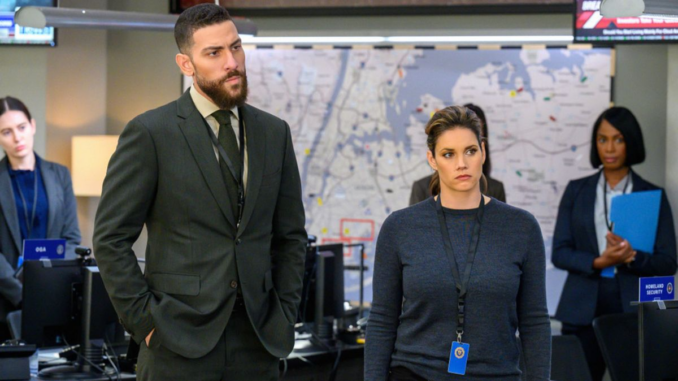
The world of federal law enforcement is rarely a solitary endeavor, and in the high-octane landscape of the FBI franchise, nothing tests the mettle of a partnership like a coordinated terror attack. As the series moves into its most ambitious crossover event to date, Special Agents Omar Adom OA Zidan and Maggie Bell find themselves at the epicenter of a crisis that threatens the very fabric of New York City. The narrative focus of this intense event revolves around a sophisticated, multi-stage bomb threat that requires not just tactical brilliance, but a level of inter-agency cooperation that pushes every character to their absolute breaking point. This is not a standard case of the week; it is a sprawling, high-stakes thriller that explores the thin line between order and chaos in the face of domestic extremism.
The tension begins the moment a series of unconventional explosive devices are discovered in high-traffic areas across Manhattan. Unlike typical improvised devices, these bombs are designed with a level of technical sophistication that points toward a mastermind with deep military or intelligence training. For OA, whose background in the Army Rangers often provides the tactical backbone for the team, the discovery of these devices triggers a visceral response. He recognizes the signature of a professional, one who understands the psychology of fear as much as the chemistry of destruction. Alongside him, Maggie Bell provides the investigative intuition necessary to trace the digital and physical breadcrumbs left behind. Their partnership, which has always been the emotional anchor of the series, is stretched to its limit as they race against a countdown that seems designed to exhaust their resources and distract their focus.
As the crossover event unfolds, the scope of the threat expands beyond the jurisdiction of a single squad. This necessitates the involvement of agents from different branches, bringing a fresh dynamic to the familiar hallways of the New York Field Office. The friction between different leadership styles—the pragmatic, results-oriented approach of the FBI and the broader, often more secretive agendas of other intelligence services—adds a layer of political intrigue to the physical danger. Isobel Castille must navigate these treacherous waters, acting as a buffer for her agents while demanding the resources they need to disarm the threat. The stakes are elevated by the realization that the bomb threat is merely a distraction for a much larger, more insidious plot targeting the city’s vital infrastructure.
The physical intensity of the hunt is matched by the psychological toll it takes on the protagonists. Maggie, who has recently navigated significant personal trauma and professional shifts, finds herself forced into a leadership role that requires her to make split-second decisions involving hundreds of lives. The weight of this responsibility is visible in every frame, as she balances her instinct to protect her team with the cold logic required to neutralize a bomb. Meanwhile, OA must confront the shadows of his own past, as the suspect’s methods mirror the very tactics he once fought against overseas. This personal connection to the crime makes the pursuit more than just a job; it becomes a mission to prevent the horrors of war from taking root on American soil.
Technically, this crossover event sets a new benchmark for the franchise. The cinematography captures the claustrophobic tension of a bomb disposal scene with agonizing detail, contrasting it with the sweeping, chaotic energy of a city in the grip of a panic. The pacing is relentless, moving from the sterile environment of the Joint Operations Center to the gritty, unpredictable reality of the streets. By utilizing multiple perspectives and intersecting storylines, the writers create a sense of scale that makes the threat feel genuinely world-ending. The audience is not just watching a clock tick down; they are experiencing the collective anxiety of a team that knows one wrong move could result in an irreversible tragedy.
The resolution of such a deadly threat rarely comes without a cost. As Maggie and OA close in on the final device, the event explores the theme of sacrifice. It asks what it means to be a hero in an age where the enemy is often invisible and the weapons are everywhere. The synergy between OA’s tactical execution and Maggie’s investigative brilliance is what ultimately provides the breakthrough, but the emotional scars left by the encounter suggest that the impact of this event will resonate through the remainder of the season. They prove that while the bombs can be dismantled, the fear they instill is much harder to erase.
Ultimately, this intense FBI crossover event is a testament to the enduring appeal of the franchise. It successfully blends high-concept action with deep character exploration, reminding viewers why Maggie and OA are one of the most compelling duos on television. By placing them in the heart of a deadly bomb threat, the show reinforces the idea that the greatest weapon against terror is not just technology or firepower, but the unwavering trust between those who stand on the front lines. As the smoke clears and the sirens fade into the distance, the bond between these two agents remains the only thing more powerful than the threats they face.