The Evolution of the NCIS Universe
The world of NCIS has never been small. What started as a military procedural quietly exploded into a global franchise, spawning multiple spinoffs, loyal fandoms, and a legacy that rivals the biggest names in television history.
But here’s the twist: while the brand itself is powerful, it’s not the title that keeps viewers hooked—it’s the characters.
And now, the newest spinoff proves exactly that.
A Franchise Built on Characters, Not Just Cases
Let’s be honest—crime procedurals are everywhere. What makes NCIS different isn’t just the investigations. It’s the emotional glue holding everything together.
Think about it. Over the years, fans didn’t just watch cases—they followed lives, relationships, and growth arcs that felt real.
That’s why this new spinoff doesn’t feel like a corporate extension. It feels personal.
The Fan-Favorite Character Driving the Spinoff
At the center of this new chapter is a character fans never stopped loving.
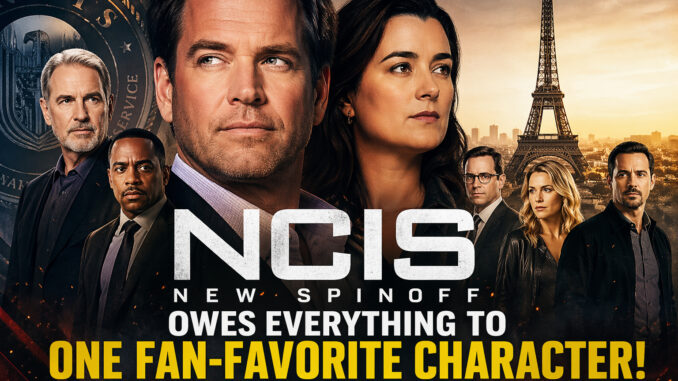
We’re talking about the dynamic presence brought to life by Michael Weatherly as Tony DiNozzo and his unforgettable chemistry with Cote de Pablo as Ziva David.
Their story? It never really ended. It just paused.
Why Tony and Ziva Still Matter
Tony and Ziva weren’t just partners—they were lightning in a bottle.
Their relationship blended humor, tension, loyalty, and just enough mystery to keep fans guessing for years.
So when the idea of revisiting them surfaced, it wasn’t a gamble—it was inevitable.
The Emotional Investment Fans Never Let Go Of
Here’s the truth: fans didn’t move on.
Even after both characters exited NCIS, discussions, theories, and fan campaigns kept their legacy alive.
That kind of staying power? You can’t manufacture it.
Why This Spinoff Exists Now
Timing is everything.
Streaming has reshaped how audiences consume content. Nostalgia-driven revivals are booming. And studios are realizing something crucial:
People want continuity—but they also want closure.
This spinoff delivers both.
The Streaming Era Changed the Game
Back in the day, a character leaving meant the end.
Now? It’s just a new beginning on another platform.
The Tony-Ziva story fits perfectly into this modern storytelling model—long-form, emotional, and deeply character-driven.
A Story That Feels Earned, Not Forced
One of the biggest risks with spinoffs is feeling unnecessary.
But this one doesn’t fall into that trap.
Why? Because the story already existed. It just needed space to breathe.
Picking Up Where the Heart Left Off
The spinoff doesn’t reinvent the wheel—it continues the journey.
We’re stepping back into a world where unresolved emotions, unfinished business, and personal stakes take center stage.
It’s not about bigger explosions. It’s about deeper connections.
The Power of Unfinished Stories
There’s something magnetic about stories left incomplete.
They linger. They haunt. They demand resolution.
That’s exactly what makes this spinoff so compelling.
What Makes This Spinoff Different
Unlike previous NCIS expansions, this one isn’t built around geography—it’s built around people.
No new city. No new agency structure.
Just characters we already care about.
Less Procedural, More Personal
Expect fewer “case-of-the-week” episodes and more serialized storytelling.
Think emotional arcs, evolving relationships, and character-driven tension.
It’s NCIS—but with a heartbeat turned up to eleven.
The Chemistry That Defined an Era
Let’s talk about the real secret weapon: chemistry.
You can write the perfect script, but without believable relationships, it falls flat.
Tony and Ziva? They made it look effortless.
A Dynamic That Still Feels Fresh
Even years later, their interactions don’t feel outdated.
Why? Because they weren’t built on clichés—they were built on nuance.
Playful banter. Silent understanding. Emotional depth.
It’s all still there.
Fan Power Behind the Scenes
This spinoff didn’t just happen.
Fans made it happen.
Social media campaigns, fan theories, and endless demand created a ripple effect that studios couldn’t ignore.
When Audiences Shape the Narrative
We’re living in an era where viewers have a voice.
And in this case, that voice was loud enough to bring two beloved characters back into the spotlight.
Expanding the NCIS Legacy
Every franchise reaches a crossroads: evolve or fade.
This spinoff proves NCIS is choosing evolution.
Building the Future on the Past
Instead of abandoning its roots, the franchise is leaning into them.
It’s a smart move—because legacy isn’t a limitation. It’s a foundation.
What This Means for the Franchise
This isn’t just another show.
It’s a signal.
A message that character-driven storytelling still wins in a world overloaded with content.
A Blueprint for Future Spinoffs
If this works—and it likely will—it could redefine how franchises expand.
Less focus on expanding universes.
More focus on deepening connections.
The Risk Factor
Of course, not everything is guaranteed.
Revisiting beloved characters comes with expectations—and those expectations are sky-high.
Balancing Nostalgia with Innovation
Lean too hard into nostalgia, and it feels stale.
Push too far forward, and you lose what made it special.
The success of this spinoff depends on finding that sweet spot.
Why Fans Are Already Invested
Here’s the bottom line: people care.
Not because it’s new—but because it’s meaningful.
Emotional Stakes Over Spectacle
In a world full of flashy productions, this show stands out by focusing on something simpler—and more powerful.
Human connection.
The Bigger Picture
This spinoff isn’t just about Tony and Ziva.
It’s about what television can be when it listens to its audience.
Storytelling That Evolves With Its Viewers
Fans who watched NCIS years ago aren’t the same people today.
They’ve grown—and now, the story is growing with them.
Conclusion: A Spinoff That Feels Like a Homecoming
At its core, this new NCIS spinoff isn’t just another addition to a long-running franchise.
It’s a return. A continuation. A promise fulfilled.
By centering on a fan-favorite character and a relationship that never truly ended, the show taps into something rare—authentic emotional investment.
And that’s why it matters.
Because in the end, it’s not about the cases.
It’s about the people.