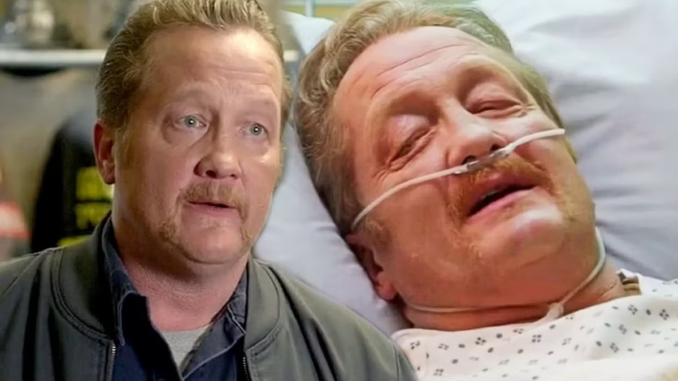
The alarm bells at Firehouse 51 have signaled many emergencies over the years, but few have felt as deeply personal or as frightening as the recent health crisis involving Randall Mouch McHolland. As one of the most enduring pillars of the One Chicago universe, Mouch has long been the steady, often humorous heart of the station. However, the latest season has thrust him into a life-threatening situation that has left fans reeling and asking the unthinkable: Is the legendary firefighter finally facing a forced retirement? The possibility of a Firehouse 51 without Mouch is a scenario many viewers are not yet ready to accept, yet the reality of his recent health scare suggests that his days on the back of the truck might be numbered.
Mouch has always been a character defined by his reliability. While younger, flashier firefighters might grab the headlines with daring rescues, Mouch is the veteran who ensures the equipment is ready, the strategy is sound, and the morale of the house remains high. His transition from a background character to a beloved lead was a slow burn that mirrored his own steady approach to life. But the physical toll of firefighting is a theme the show has never shied away from, and Mouch’s recent collapse is a stark reminder that even the most dedicated heroes have a breaking point. This health scare was not just a plot device; it was a visceral moment that forced the audience to confront the mortality of a character who felt permanent.
The tension surrounding his recovery has been palpable. In the high-octane world of the Chicago Fire Department, there is a very thin line between being fit for duty and being a liability. For a man of Mouch’s age, a significant injury or a cardiovascular event isn’t just a hurdle to overcome; it is a career-altering crossroads. The medical teams at Chicago Med have seen their fair share of firefighters, but Mouch’s case carries a different weight. If his heart or lungs can no longer withstand the grueling physical demands of hauling heavy gear through smoke-filled corridors, the department’s strict protocols would leave him with no choice but to hang up his helmet.
This potential retirement brings a profound sense of melancholy to the firehouse. Mouch is more than just a driver or an engineer; he is the union representative and the unofficial mentor to every candidate who walks through the door. His relationship with Christopher Herrmann is the emotional anchor of the senior staff, and their scenes together have always provided a grounded perspective on the aging process within the service. Seeing Herrmann deal with the fear of losing his best friend on the job has added a layer of emotional complexity to the current season, highlighting the unspoken pact between firefighters to watch each other’s backs until the very end.
Furthermore, Mouch’s retirement would signal a significant shift in the show’s demographic and dynamic. He represents the old guard, a link to the traditions of the CFD that are slowly being replaced by modern techniques and a new generation of responders. If he were to step away, the house would lose a vast reservoir of institutional knowledge and the unique, dry wit that has balanced the show’s darker moments for twelve seasons. The writers have skillfully played with the audience’s heartstrings, showing Mouch’s internal struggle as he grapples with the idea of a life away from the sirens. For a man who has spent his entire adult life defined by his service, the prospect of a quiet retirement is as terrifying as any fire.
However, there is also a narrative of resilience here. Chicago Fire has always been about the ability to bounce back from the brink. Whether Mouch returns to full active duty or transitions into a different role within the department, his journey through this health scare serves as a tribute to the thousands of real-life first responders who face similar health challenges. It highlights the importance of regular check-ups and the reality of occupational hazards that extend far beyond the flames. Fans are holding their collective breath, hoping that Mouch has one more miracle left in him, but also preparing for the possibility that his legacy will now continue from the sidelines rather than the front lines.
As the season progresses, every step Mouch takes toward recovery is a victory for the fans. His story is a reminder that being a hero isn’t always about the spectacular rescue; sometimes, it is about the quiet courage required to face one’s own limitations. Whether he officially retires or finds a way to stay on the rig, Randall McHolland has already secured his place in the history of Firehouse 51. The shocking health scare may have shaken the foundation of the house, but it has only served to prove how much Mouch truly means to the One Chicago family. We remain hopeful that the bells will ring for him for a long time to come, but we respect the journey, wherever it may lead.