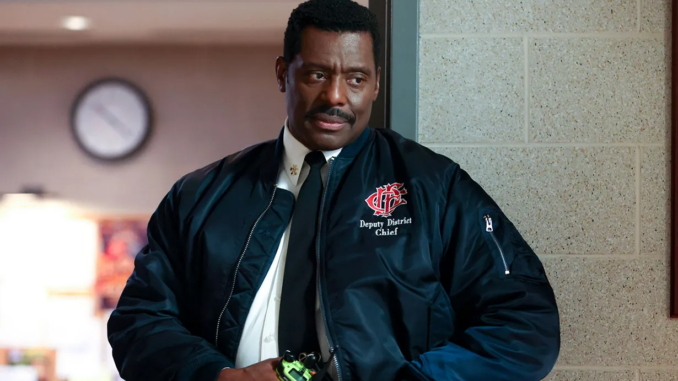
For over a decade, Firehouse 51 has stood as a symbol of resilience, family, and unwavering courage in the face of Chicago’s most dangerous blazes. At the center of that family has always been one man: Deputy District Marshal Wallace Boden. Portrayed with gravitas and soul by Eamonn Walker, Boden has been the bedrock of Chicago Fire since the pilot episode in 2012. However, the sirens are sounding a different tune this season as fans process the reality that the Chief is hanging up his turnout gear for a new chapter. The departure of Wallace Boden isn’t just a casting change; it is the end of an era for One Chicago.
The narrative journey leading to Boden’s exit was handled with the kind of emotional depth the show is known for. Unlike many TV exits that rely on tragic deaths or sudden scandals, Boden’s departure felt earned and deeply rooted in his character’s evolution. Throughout Season 12, we saw the Chief grappling with the shifting landscape of the CFD and the internal politics that often threatened the sanctity of 51. When the opportunity arose to step into the role of Deputy Commissioner, it presented a classic Boden dilemma: stay where his heart is, or move to a position where he can protect the entire department from the systemic rot he has fought for years.
Ultimately, Boden chose the latter, recognizing that his leadership was needed on a grander scale. His decision was catalyzed by the need to prevent a self-serving official from taking the seat, ensuring that the firefighters of Chicago would have a leader who actually cares about their lives. It was a selfless act, perfectly in line with a man who has spent twelve seasons putting his team’s safety above his own ambitions. Yet, for the viewers, seeing him pack up his office was a bittersweet pill to swallow.
The impact of Eamonn Walker’s performance cannot be overstated. He brought a unique blend of “tough love” and “vulnerability” to the screen. Whether he was delivering a booming command on the fire ground or offering a quiet, fatherly word of advice to Kelly Severide or Stella Kidd, Walker made Boden the moral compass of the show. He wasn’t just a boss; he was a mentor and a surrogate father to everyone who walked through those station doors. His chemistry with the ensemble cast created an authentic sense of brotherhood that made the high-stakes drama feel grounded.
From a production standpoint, the exit of a series regular after twelve years often signals a transitional period for a long-running procedural. Chicago Fire has survived many departures—Casey, Dawson, and Otis, to name a few—but Boden feels different. He was the glue. His absence leaves a massive void at the head of the briefing table. The show now faces the challenge of redefining its leadership structure. While the promotion of Christopher Herrmann and the introduction of new leadership figures provide fresh storytelling avenues, the silence in Boden’s old office will be deafening for a while.
The reaction from the “One Chicago” fanbase has been a mix of grief and respect. Social media platforms were flooded with tributes to the Chief, with many fans citing his “Boden Speeches” as the highlight of the series. There is a sense of collective heartbreak, but also a realization that Eamonn Walker deserved a graceful exit. By moving Boden into a higher administrative role rather than killing the character off, the writers have left the door cracked open. While he may no longer be a series regular, the possibility of guest appearances or crossovers during major CFD crises remains a glimmer of hope for the audience.
As we look toward the future of Chicago Fire, the legacy of Wallace Boden will undoubtedly loom large. He taught Firehouse 51 that a firehouse is more than a building; it is a sanctuary built on trust and sacrifice. The show will continue to roar with intense rescues and interpersonal drama, but the shadow of the great Chief will always be there. He didn’t just lead a squad; he built a family that can survive even without him at the helm. Though his departure is heartbreaking, it serves as a powerful reminder of the show’s central theme: change is inevitable, but the bond of the 51 family is forever. Goodbye, Chief, and thank you for the memories.