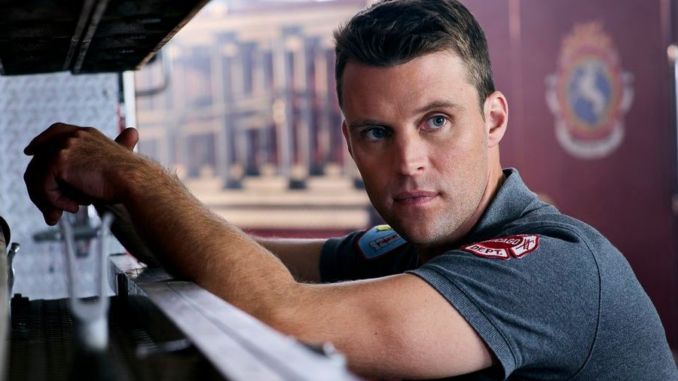
The siren of Firehouse 51 has always signaled danger, but the latest episode of Chicago Fire delivered a different kind of alarm—one that resonates deep within the hearts of its dedicated fanbase. For over a decade, the series has balanced the adrenaline of life-threatening rescues with the tender, often heartbreaking evolution of its characters. However, nothing could have prepared the audience for the harrowing cliffhanger involving the show’s original moral compass, Matthew Casey. As the credits rolled on a night defined by smoke and uncertainty, a single question echoed across social media and living rooms alike: Did Matthew Casey just die?
The episode, titled with an ominous sense of finality, saw Casey returning to the Windy City to assist on a high-stakes task force operation. While his departure to Oregon several seasons ago left a void that was never truly filled, his guest appearances have always served as a beacon of hope for a potential permanent return. That hope was shattered in a sequence of events that ranks among the most intense in the history of the One Chicago universe. During a multi-vehicle collision involving a hazardous chemical leak, Casey found himself trapped in a literal death trap, putting his life on the line to shield a victim from an imminent explosion.
The Moment the World Stopped
The tension in the scene was palpable. As Truck 81 and Engine 51 scrambled to contain a mounting inferno, Casey’s leadership was on full display. He navigated a collapsing structure with the same grit that made him a fan favorite since the pilot episode. But as a secondary blast rocked the site, the screen was engulfed in a wall of orange flame and debris. The silence that followed was deafening. When the smoke partially cleared, the sight of his scorched helmet and a motionless figure being pulled from the wreckage left viewers breathless.
The devastation felt by fans is not merely about the potential loss of a character; it is about the loss of the show’s soul. Jesse Spencer’s portrayal of Matthew Casey has always represented the steady, unwavering hand of leadership. He is the man who always does the right thing, regardless of the personal cost. To see him potentially meet his end in such a brutal, sudden fashion feels like a betrayal of the stability he worked so hard to build, especially given his complicated but enduring romantic history with Sylvie Brett.
A Legacy of Sacrifice
Chicago Fire has never been afraid to kill off major characters. From the shocking death of Shay in the early years to the emotional exit of Otis, the writers have consistently reminded the audience that in the world of first responders, no one is safe. Yet, Casey always felt different—untouchable in a way. He survived house fires, shootings, and internal politics, leading many to believe he would eventually get his happily ever after. If this truly is the end, it marks the most significant turning point for the series since its inception.
The reaction from the firehouse family within the episode mirrored the grief of the audience. The look of pure horror on Kelly Severide’s face and the frantic, desperate calls over the radio from Stella Kidd underscored the gravity of the situation. These characters aren’t just colleagues; they are brothers and sisters. Seeing the unbreakable Severide shaken to his core by the sight of his best friend in peril added a layer of emotional weight that few shows can replicate. It served as a grim reminder that in a split second, a hero can become a casualty.
The Fallout and the Future
As the community of viewers waits for the next installment, theories are flying. Some believe this is a classic bait-and-switch, a way to write the character off permanently without a funeral, while others fear that the show is clearing the path for a new generation of leaders by removing the old guard. Regardless of the outcome, the impact on the show’s narrative trajectory is massive. A Firehouse 51 without the shadow of Matthew Casey is a daunting prospect for those who have watched every episode since 2012.
The writers have succeeded in creating a moment of genuine cultural impact. In an age of predictable television, the uncertainty surrounding Casey’s fate has managed to reignite a fervent passion for the series. Whether he survives against all odds or this is indeed his final curtain call, the episode has cemented its place in television history. For now, fans are left in a state of mourning, clinging to the hope that the man who saved so many lives might have one more miracle left in him. The wait for answers will be long, but the legacy of Captain Matthew Casey will continue to burn bright, regardless of whether he ever puts on the turnout gear again.