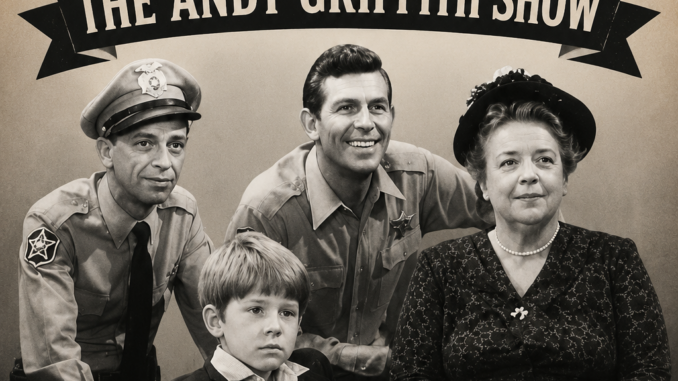
In an era of fast-paced storytelling and high-budget spectacle, few shows manage to hold onto the quiet, enduring charm of The Andy Griffith Show. Premiering on October 3, 1960, the series now marks an incredible 66-year legacy—one that continues to resonate across generations.
Set in the fictional town of Mayberry, the show offered something rare even in its own time: simplicity. At the heart of it all was Sheriff Andy Taylor, portrayed by Andy Griffith, a widowed father whose calm wisdom and gentle humor defined the tone of the series. Alongside him, characters like the lovable but bumbling Barney Fife and young Opie created a world that felt both idealized and deeply human.
Why 66 Years Later, It Still Matters
The enduring appeal of The Andy Griffith Show lies in its values. It wasn’t about dramatic twists or shocking revelations—it was about kindness, community, and everyday life. In today’s world, that kind of storytelling feels almost revolutionary.
Each episode unfolded like a lesson in empathy. Whether Andy was diffusing a conflict without force or guiding Opie through a moral dilemma, the show quietly reminded viewers of the importance of patience and understanding.
A Cultural Time Capsule
Revisiting the series today is like opening a window into 1960s America—but without the harsh edges. Mayberry represents an ideal, a place where problems are solved with conversation rather than confrontation. It’s no wonder the show has remained a staple in reruns and streaming libraries for decades.
More importantly, its influence can still be seen in modern television. Many family-oriented and small-town dramas owe a creative debt to the storytelling blueprint it established.
The Legacy Lives On
As we celebrate 66 years since its debut, The Andy Griffith Show isn’t just a nostalgic relic—it’s a reminder of what television can be at its best. It proves that you don’t need complexity to create something meaningful. Sometimes, all it takes is a front porch, a quiet street, and characters who feel like family.
So whether you’re revisiting Mayberry or discovering it for the first time, one thing is certain: its warmth hasn’t faded. If anything, it’s exactly what audiences still need today.