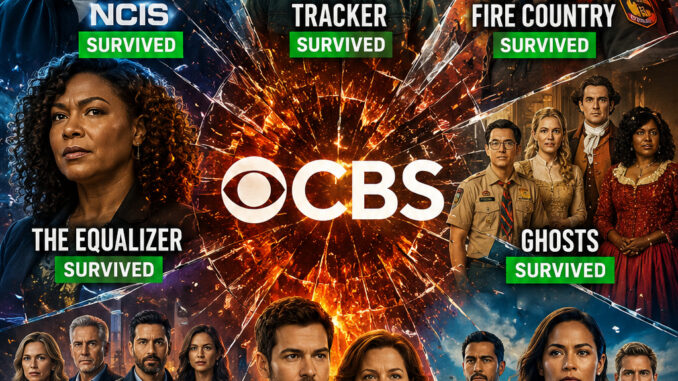
The Year CBS Turned Television Into a Battlefield
Television fans knew change was coming. But nobody expected CBS to swing the axe this hard.
The network’s 2026 schedule overhaul has officially become one of the most dramatic shakeups in recent TV history. Fan-favorite dramas disappeared overnight, bubble comedies were quietly erased, and even long-running franchises found themselves fighting for survival. Meanwhile, a select group of powerhouse shows escaped the carnage and secured another season.
Welcome to the CBS TV bloodbath of 2026.
If you’ve been refreshing social media wondering whether your favorite series survived, you’re not alone. Fans across the internet are reacting with shock, frustration, and celebration all at once. Some cancellations felt inevitable. Others came out of nowhere like a lightning strike.
So which CBS shows survived? Which ones were killed off? And why is the network making such aggressive moves now?
Let’s break down the biggest winners, the heartbreaking losers, and what this means for the future of television.
Why CBS Is Cutting So Many Shows in 2026
Streaming Pressure Changed Everything
Traditional television isn’t the same beast it was even five years ago.
Networks like CBS are under intense pressure from streaming giants. Viewers now expect on-demand content, shorter seasons, cinematic storytelling, and instant accessibility. That means broadcast networks are being forced to rethink their entire strategy.
CBS, once considered the safest and most stable network on television, is now aggressively restructuring its lineup to compete in a digital-first entertainment world.
And unfortunately, that means casualties.
Ratings Are No Longer the Only Thing That Matters
Back in the day, strong ratings almost guaranteed survival.
Not anymore.
Today, networks evaluate:
- Streaming performance
- Social media engagement
- International licensing value
- Production costs
- Demographic appeal
- Advertising potential
A show can pull decent ratings and still get canceled if the financial math doesn’t work.
That’s exactly what happened to several CBS series this year.
The Biggest CBS Shows That Survived
The Franchise Giants Remain Untouchable
Some shows were simply too powerful to fail.
CBS doubled down on its most reliable brands, proving once again that franchise television is king.
NCIS Continues Its Television Dynasty
The king isn’t leaving the throne anytime soon.
Despite endless rumors about fatigue within the franchise, NCIS remains one of the most dependable properties on network television. Loyal audiences continue to tune in week after week, and CBS clearly sees no reason to end the machine now.
The series still delivers consistent ratings, massive syndication value, and strong streaming numbers.
In other words? It prints money.
Tracker Emerged as CBS’ New Golden Child
If there’s one modern CBS success story, it’s Tracker.
The action drama exploded into a ratings phenomenon faster than almost anyone expected. Its blend of suspense, emotional storytelling, and mainstream appeal turned it into a massive audience magnet.
CBS wasted zero time renewing it.
Industry insiders now believe the network sees Tracker as a cornerstone of its next generation lineup.
Fire Country Keeps Burning Bright
Some critics underestimated Fire Country when it debuted.
Big mistake.
The drama continues attracting loyal viewers with emotional rescues, high-stakes action, and compelling character dynamics. CBS appears fully committed to expanding the franchise even further.
The network clearly believes audiences still crave traditional broadcast drama — as long as it feels emotionally authentic.
The Shows That Shockingly Survived the Bubble
Several Series Escaped Cancellation at the Last Minute
Not every renewal felt guaranteed.
A handful of shows were hanging by a thread before CBS finally handed them another chance.
The Equalizer Barely Dodged Disaster
For months, rumors swirled that The Equalizer was doomed.
Production costs reportedly became a major concern, and some analysts believed the ratings decline was too steep to ignore. Yet CBS ultimately decided the series still had enough audience power to justify another season.
Fans celebrated the decision online almost instantly.
Still, many believe the show enters its next season under intense pressure to perform.
Ghosts Continues Defying Expectations
Comedy is notoriously difficult on network television right now.
That’s why Ghosts remains such an impressive success story.
The quirky supernatural comedy has managed to build a devoted fanbase while generating strong streaming engagement. CBS clearly values its younger audience appeal, which is becoming increasingly important for advertisers.
Its survival wasn’t just a win for the show — it was a win for network comedy itself.

The Most Shocking CBS Cancellations of 2026
Fan Favorites Fell Hard
This is where things get brutal.
Several beloved shows failed to survive CBS’ aggressive restructuring plan.
And yes, some cancellations genuinely shocked fans.
CSI: Vegas Finally Met Its End
Even legendary franchises eventually run out of road.
CSI: Vegas hoped nostalgia would keep the franchise alive indefinitely, but CBS ultimately decided it was time to move on. Despite loyal fans and recognizable branding, the series reportedly struggled to justify its production expenses.
The cancellation sparked emotional reactions across social media.
For longtime viewers, it felt like the true end of an era.
So Help Me Todd Couldn’t Escape the Axe
This one hurt.
So Help Me Todd developed a passionate audience thanks to its charming chemistry, sharp humor, and easy-to-watch storytelling. Many viewers believed the show deserved far more recognition than it received.
Unfortunately, strong fan affection doesn’t always translate into financial survival.
CBS pulled the plug anyway.
NCIS: Hawai’i Became One of the Biggest Victims
Few cancellations sparked more outrage than NCIS: Hawai’i.
Fans were furious. Online petitions exploded. Social media campaigns demanded a reversal.
But CBS stayed firm.
Reports suggested budget concerns played a major role in the decision. Filming in Hawai’i created significantly higher production costs compared to mainland productions.
Even a successful franchise name couldn’t save it.
Why Fans Are So Angry About These Cancellations
Viewers Feel Networks No Longer Reward Loyalty
There’s a growing frustration among television audiences.
Fans invest years into characters and storylines, only to watch networks abruptly cancel shows before proper endings happen. That emotional investment creates backlash when beloved series disappear without closure.
CBS is now facing exactly that criticism.
Many viewers believe networks prioritize short-term profits over long-term audience trust.
And honestly? It’s difficult to argue against that sentiment sometimes.
Social Media Amplifies Every Cancellation
Years ago, canceled shows quietly faded away.
Now? Every decision becomes a viral event.
Fans organize campaigns instantly. Hashtags trend worldwide. Petitions gain thousands of signatures overnight.
The internet transformed television fandom into a loud, organized force — and CBS is feeling that pressure right now.
The Real Reason CBS Is Betting on Franchises
Familiar Brands Are Safer Investments
Networks hate uncertainty.
That’s why CBS continues leaning heavily into recognizable franchises like:
- NCIS
- FBI
- CSI
- Fire Country
Established brands come with built-in audiences. They’re easier to market, easier to syndicate, and generally less risky financially.
Original programming still matters, but franchises remain the backbone of network survival.
Spin-Off Culture Isn’t Slowing Down
Expect even more spin-offs moving forward.
CBS executives know audiences are more likely to try a new show if it’s connected to an existing universe they already trust.
That strategy explains why franchise expansion remains a top priority heading into 2027.
The Hidden Financial War Happening Behind the Scenes
Production Costs Are Skyrocketing
One of the biggest factors driving cancellations is simple:
Television has become incredibly expensive.
Modern audiences expect cinematic visuals, large ensemble casts, and high production quality. Meeting those expectations costs millions.
If a show isn’t delivering exceptional returns, networks increasingly decide it’s not worth the gamble.
Actor Salaries Become a Major Factor
Long-running series often face rising salary costs as contracts renew.
That creates difficult financial calculations for networks.
At a certain point, even moderately successful shows can become too expensive to continue profitably.
It’s cold business logic — but it’s reality.
How Streaming Platforms Are Reshaping CBS Strategy
Paramount+ Is Changing Network Priorities
CBS no longer operates in isolation.
Its parent company increasingly views broadcast television as part of a much larger streaming ecosystem centered around Paramount+.
That means shows aren’t just evaluated based on live TV performance anymore.
Executives now ask:
- Does this show drive subscriptions?
- Can it perform globally?
- Will people binge-watch it later?
- Does it appeal to younger viewers?
The answers determine survival.
Which CBS Shows Could Be Next on the Chopping Block?
No Series Is Completely Safe
Even current survivors shouldn’t celebrate too early.
Television changes fast, and another brutal round of cuts could happen next year.
Industry analysts already speculate several bubble shows may face danger if ratings slip even slightly.
That uncertainty is now part of modern television life.
The Future of CBS Programming Looks Very Different
Fewer Shows, Bigger Franchises, Higher Stakes
CBS appears focused on a leaner, more strategic lineup moving forward.
Instead of flooding the schedule with mid-level performers, the network seems determined to invest heavily in fewer, stronger brands.
That approach could lead to:
- Bigger franchise universes
- More event television
- Shorter episode orders
- Higher production quality
- Stronger streaming integration
In many ways, network TV is evolving into something closer to streaming television.
What These Cancellations Say About the Future of Television
The TV Industry Is Entering a New Era
The 2026 CBS bloodbath isn’t just about one network.
It reflects a massive industry-wide transformation.
Viewer habits are changing. Advertising models are changing. Technology is changing.
And television networks are adapting in real time — sometimes brutally.
The days of safe, decade-long procedural comfort shows may slowly be fading.
Now, every series must constantly prove its value.
Conclusion: CBS’ 2026 Shakeup Proves Nobody Is Safe
CBS made one thing painfully clear in 2026: survival is no longer guaranteed.
Even recognizable franchises faced pressure. Fan-favorite dramas disappeared. Loyal audiences were left stunned as the network aggressively reshaped its future.
At the same time, successful powerhouses like Tracker, NCIS, and Fire Country proved that strong brands still dominate the television landscape.
The result is a network caught between old-school broadcast traditions and the ruthless realities of the streaming era.
And honestly? This probably won’t be the last TV bloodbath we see.
The television industry is changing faster than ever — and viewers are watching every move.