Long before modern television dramas pushed boundaries, All in the Family shocked audiences by airing episodes many networks considered too controversial for primetime.
One particular episode changed television history forever.
When the series tackled subjects like racism, sexual assault, war, and political division in the 1970s, network executives worried audiences would reject the show entirely. At the time, sitcoms were expected to provide lighthearted escapism — not uncomfortable social conversations.
But creator Norman Lear refused to avoid difficult topics.
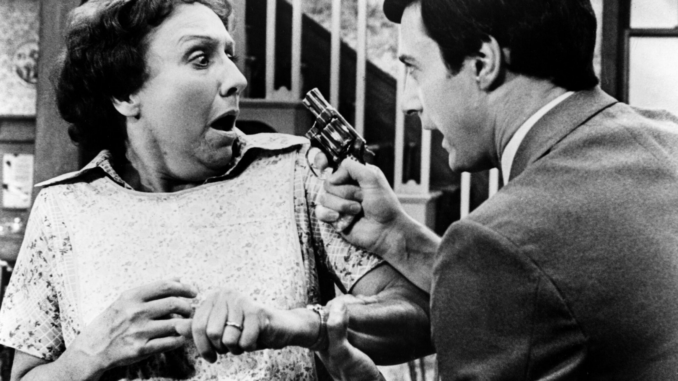
Among the show’s most unforgettable moments was the episode involving Edith Bunker facing a traumatic encounter inside her own home. The storyline stunned viewers because it handled fear and vulnerability with unusual seriousness for a sitcom. Instead of relying on jokes, the episode focused on tension, emotional realism, and Edith’s resilience.
Audiences were shocked.
Many viewers had never seen a comedy series approach such a sensitive subject with that level of emotional intensity. The episode sparked widespread discussion across America and proved that sitcom television could explore real human experiences without losing its emotional impact.
What made the story especially powerful was Jean Stapleton’s performance. She portrayed Edith’s fear with heartbreaking authenticity while still preserving the character’s inner strength. Critics later praised the episode as one of the boldest performances in sitcom history.
At the same time, Carroll O’Connor delivered one of Archie Bunker’s rare moments of emotional vulnerability. Beneath Archie’s stubborn personality, audiences saw genuine concern and fear for his wife. The performance reminded viewers that the character’s anger often masked deep emotional dependence on Edith.
The controversy surrounding the episode only increased the show’s cultural impact. Some viewers felt the storyline went too far for comedy television, while others praised the series for confronting issues most programs ignored entirely.
Today, television audiences are used to serious themes appearing in sitcoms and streaming series. But in the 1970s, All in the Family broke ground that few shows dared to approach.
That episode didn’t just entertain people.
It changed expectations for what television could be.
And decades later, many critics still believe its influence can be seen in nearly every socially conscious comedy that followed.