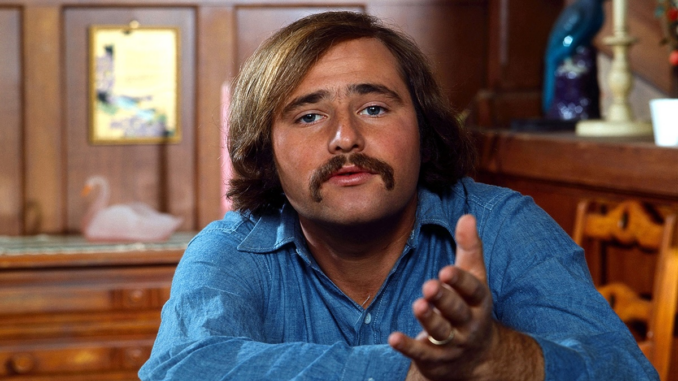
The tragic deaths of Rob Reiner and his wife Michele, hit with the force of something larger than a celebrity loss. For many, it felt like a punch in the gut, even for people who never met him. Part of that comes from the longevity of his work—decades of films and television that became a part of American life—but another from how familiar to all of us that he always seemed.
Before he became one of Hollywood’s most successful directors, Reiner arrived in living rooms every week as Michael “Meathead” Stivic on All in the Family, the brash, passionate counterweight to Archie Bunker. Off camera, he was the son of Carl Reiner, already a giant of American comedy, which meant Rob grew up with a front-row seat to the writers, performers, and instincts that shaped the second half of 20th-century humor.
The result was a career—and a life—built on conviction, curiosity and a belief that stories could challenge people, unsettle them and even push them to think differently. Reiner never lost that sense of purpose, which is conveyed in this look back at the moments, relationships and turning points that molded his childhood and took him to All in the Family—told primarily through his own words and the extensive interview conducted with him at the Television Academy Foundation.
His early days
Rob Reiner entered the world on March 6, 1947, in the Bronx, born to Carl and Estelle Reiner. “My name at birth was Robert Reiner. No middle name. My mother didn’t have a middle name, my father didn’t have one, so they didn’t give me one.” He was “Robbie” to his parents and to anyone who knew him as a boy, a nickname that still surfaced occasionally throughout his life.
Although the Reiners left the Bronx when Rob was around seven or eight, relocating to New Rochelle, the borough remained the gravitational center of his extended family. “We used to go back—it was only about 45 minutes—and we spent virtually every Sunday back there,” he recalled. “All of my relatives, my mother’s relatives, lived in the same building in the Bronx. All my aunts and uncles and cousins and my grandmother lived in that building. We all lived together, so I used to go back quite a bit as a kid.”
Rob Reiner’s childhood was immersed in American comedy royalty
His awareness of comedy as both an art form and a profession began with his father, Carl Reiner, whose career was already accelerating when Rob was a child. “My father started out as a teenager in theater. He was in a Shakespearean company when he was 17, then did summer theater and Broadway reviews, and eventually was on Sid Caesar’s Your Show of Shows in the early days of television. He then went on to create The Dick Van Dyke Show and direct a number of movies, many with Steve Martin. He was essentially known as one of the pioneers of television.”
Rob understood his father’s prominence almost as soon as he could understand anything. “We had a television when I was four or five years old, and he was on live every Saturday night. We used to watch, and he used to tell me to watch for the goodnights at the end of the show. He’d say, ‘I’m not allowed to wave to you, but when I touch my tie like this, that’s me saying hello and telling you it’s time to go to bed.’ That was his way of connecting with us, so from an early age I was aware of what he was doing.”
That early awareness was amplified by the company the Reiners kept. “We had Mel Brooks over at the house, Sid Caesar, Aaron Rubin, Norman Lear, Joe Stein, Larry Gelbart—these were all the writers from Your Show of Shows and Caesar’s Hour. Neil Simon, Shelley Berman, Mike Stewart, Woody Allen—all these people who made most of the comedy of the second half of the 20th century came from that group.”
‘The Dick Van Dyke Show’ mirrored the authenticity of his parents’ marriage
Rob Reiner emphasized that while the show’s young son, Ritchie, was inspired by him, the series drew far more from the dynamic between his parents. “There was nothing specific except the general feeling of how Rob and Laura Petrie related to each other. There was a realness to it that reflected the way my mother and father were with each other. It wasn’t the kind of artificial sitcom reality you had on Father Knows Best or Leave It to Beaver. It was an honest look at how married couples really were.”
He launched his career in theater
Rob Reiner’s earliest professional experiences came onstage. “The first thing I did where I got paid was summer theater at the Priscilla Beach Theater. The first show I acted in was Mary, Mary, but I did a number of shows—Oh Dad, Poor Dad, Tom Jones, Enter Laughing. Enter Laughing was based on my father’s book, and I got to play the lead, which was weird because my father came to see it, and I don’t think he thought I was particularly good in it. But those were my first professional performances.”
His interest in shaping performances emerged just as early. “When I was 19, I directed No Exit at the Roxbury Playhouse in Beverly Hills. Richard Dreyfuss was in it. My father came backstage afterward, looked me in the eye, and said, ‘That was good. No bullshit.’ I’ll never forget that. The next day, he told me, ‘You can do whatever you want. You’re going to be okay.’ That was the first truly affirming moment I ever had from him.”
Rob Reiner’s TV breakthrough came at age 21
“My first real writing job was on The Smothers Brothers Comedy Hour. I was 21. Carl Gottlieb (the co-writer of Steven Spielberg’s Jaws) and I were in The Committee improv group, and Tom Smothers was looking for fresh writers for the summer replacement show with Glen Campbell. We joined the staff and were held over for the fall show.”
Reiner often worked with another young writer who would become a comedy giant. “Steve Martin and I were thrown together because we were the youngest. He was 23, I was 21. Steve was this offbeat, wacky, arrow-through-the-head kind of comic, and I was more brooding and reality-based. But we got along well.”
The show’s creativity collided constantly with CBS’s standards department. “We had censorship problems every single week. Sketches were thrown out constantly. We learned to play the game—put in things we knew they’d throw out so we could preserve other material. Tom Smothers fought like crazy. As a kid, I didn’t fully appreciate it, but he had incredible strength and fortitude.” Reiner stressed that while Dick Smothers was a brilliant straight man, the battles were Tom’s. “Dick is brilliant, an incredible straight man, but Tom ran the show. He fought the battles. He had the vision.”
The show ultimately shut down under the weight of its battles with CBS. “They bucked the censors one too many times. The ratings were okay, but they were so difficult for the network that when the ratings slipped a little, the network looked for a reason to get them off the air. But the most important thing I learned is to stand up for what you believe.”
Andy Griffith’s ‘Headmaster’ led him to ‘All in the Family’
Reiner’s casting as Michael Stivic began with a writing assignment on Andy Griffith‘s Headmaster. “We wrote about six episodes,” he said. “One episode was about a teacher who has an affair with one of his students, and I played the teacher. I was 23. That episode was one of the reasons I got All in the Family. Norman Lear had seen my work, and when I auditioned again, I think he felt I had matured as an actor.”
Even then, Reiner didn’t view the role as a long-term commitment. “I was more interested in writing and directing. I didn’t think All in the Family would go very far. It was so far out, so hip for the room, that I thought it would be on for 13 weeks and then go away, and I’d go back to doing what I liked.”
Norman Lear served as a lifelong mentor and surrogate father
Norman Lear’s influence spanned Reiner’s entire life. “I’ve known Norman since I was a little boy. He was friends with my father. We had houses near each other on Fire Island. He always thought I was funny. He’s like a second father to me. I owe a tremendous amount to Norman, not just professionally, but personally—as a role model for how you conduct your life and how you can use your talents to have an impact on society.”
He never thought the show would last
Reiner never imagined audiences would embrace the series. “I thought the audience wouldn’t get it at all. CBS was nervous. They put a big disclaimer in front of the show that basically said, ‘Don’t watch this.’ They put it on very tentatively.”
Mike Stivic, meanwhile, was essentially Reiner at that point in his life. “The character wasn’t far from me. I was liberal, passionate, angry. I was playing out of myself. I didn’t model it on anyone else. I played close to who I was because that made it easier.”
Archie Bunker’s bigotry never went unchallenged
From the outset, the writers and cast operated under a non-negotiable guideline. “We never let Archie get away with anything. If he made a slur—Polish, Black, Jewish—someone always pushed back. That was a rule.”
For Reiner personally, Carroll O’Connor became his greatest acting mentor. “I learned more about acting from Carroll than anybody. He taught me that you can’t fix bad material with acting. The story supports the actor, not the other way around. If the story works, you don’t have to do much—you just say the lines honestly, and the audience fills in the rest.”
The creative engine of the series was also powered by conflict—particularly between Lear and O’Connor. “They butted heads. Big fights. I got caught in the middle a lot. I loved Norman, and I respected Carroll enormously. Somehow, I became a kind of peacemaker at age 24 or 25. It was strange, but ultimately I think it made the show better.”
The emotional core of the show came from Archie and Mike
Archie’s hostility toward Mike was always layered. “At the same time that he was angry with Mike, he loved him. He resented that Mike was living in the house, especially early on, but he was also jealous of him. Mike had opportunities Archie never had. Part of Archie looked up to Mike. He put him down, but underneath it there was love, and that’s why audiences accepted him.”
The feeling ran both ways. “Mike resented what Archie believed, but he respected him as a father and husband. Deep down, Mike felt loved by him. We did a show where they were locked in a cellar together, and you really got to see how much they cared about each other.”
‘All in the Family’ operated like live theater
Reiner described the weekly process as pure stagecraft. “Monday, we read the script and made changes. Tuesday and Wednesday, we rehearsed and blocked. Thursday, we blocked with cameras. Friday, we did two shows—5:30 and 8:00—and cut the best together. We treated it like a play.”
The choice to shoot on videotape reinforced that live, theatrical feeling. “It was one of the first tape shows. We could shoot a 24-minute show in 35 to 40 minutes. We didn’t want to exhaust the audience. We were putting on a show for them.”
As the seasons went on, the audience’s familiarity with the characters became a performance variable of its own. “They’d start laughing before we even did anything. Carroll would get mad because they were ruining the timing. But it was because they loved the characters.”
‘The Stivics Go West’
“That last episode for Sally Struthers and I was a very emotional time for all of us,” Reiner recalled. “We’ve been together for eight years, and anybody who’s ever been in a TV series, you spend more time with your TV family and TV colleagues than you do with your real family. And so you get very, very close to them, and it’s very emotional. So here was a natural parting where Mike and Gloria were leaving to go out west. And the scene where we say goodbye to each other, there was no acting. You didn’t have to act. I mean, I looked at Carroll and I was saying goodbye to him after eight years of having worked and been so intimately involved with him that it was pretty easy to do. All your emotion just comes out.”
They decided to leave because, at that point, everyone had decided that the series was going to come to a close. “It was only until after that that Carroll decided he wanted to do it again. That was a surprise to all of us. He had been saying for years, up until the time that we crafted that last show, he had been saying, It’s enough already. Let’s stop. Let’s stop the show. We’d done enough of these shows, and we had all agreed at the beginning of that eighth season that this was going to be our last season. It was certainly a surprise to me that Carol decided to keep going with the show.”
The legacy of ‘All in the Family’ endures
Deal of the Day
“It was a groundbreaking television show,” Reiner muses. “I think it will forever be remembered because it really reflected a time in our country’s history. You had this very identifiable group of people set against a backdrop of the most turmoil that we had seen in the country. The end of the sixties and early seventies was tremendous turmoil, where you had the Vietnam War, the women’s movement, the sexual revolution, the racial unrest—all of those things were happening at that time. And it will be seen as a document in a way, a cultural document of what was happening in America at that time. And I think for television, hopefully it will be a quality to aspire to for shows to aspire to. And maybe sometime down the road, we’ll see another show that really takes on issues and really faces these issues head-on. We don’t see the atmosphere for it right now, but you never know when those kinds of things will raise up again. But it definitely takes its place in the history of our culture. No question about it.
And the same could be said about Rob Reiner as an actor, writer and especially as director, who went on from All in the Family to touch a generation of filmgoers with such directorial efforts as This is Spinal Tap, A Few Good Men, The Princess Bride, When Harry Met Sally and so much more. He will genuinely be missed.