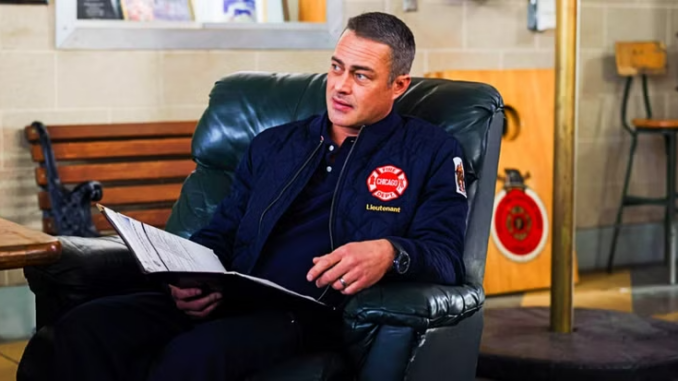
The long-running procedural drama Chicago Fire has built its decade-long success on the reliability of its ensemble cast and the high-stakes adrenaline of Firehouse 51. However, in recent seasons, a recurring shadow has loomed over the series, leaving audiences both anxious and vocal: the sporadic presence of its leading man, Kelly Severide. Played by Taylor Kinney, Severide is more than just a squad lieutenant; he is the emotional and tactical anchor of the show. When he vanishes from the screen without a clear narrative trajectory, the vacuum left behind is palpable, sparking a wave of questions across social media platforms about whether something is fundamentally wrong behind the scenes or within the show’s creative direction.
The concern peaked during the latter half of Season 11 and parts of Season 12, when Kinney took an unexpected leave of absence for personal reasons. While fans are generally supportive of actors prioritizing their private lives, the way the writers handled his departure felt disjointed to many. Severide was sent off to an arson investigation program, a move that made sense for his character’s skillset but felt like a repetitive loop. For years, the show has flirted with the idea of Severide leaving the “boots on the ground” life of 51 for the specialized world of OFI (Office of Fire Investigation). While this adds depth to his expertise, it often feels like a convenient plot device used to explain away the actor’s physical absence, rather than a natural progression of the story.
The absence of Kelly Severide isn’t just about missing a handsome face on the screen; it disrupts the delicate ecosystem of Firehouse 51. His relationship with Stella Kidd, affectionately dubbed Stellaride by the fanbase, is the central romantic pillar of the show. When one half of that equation is missing, the storylines for Stella often become reactive. Instead of leading her own hero arcs, she is frequently seen worrying about her husband’s distance or dealing with the fallout of his lack of communication. This creates a repetitive cycle of marital tension that some viewers find exhausting. Fans want to see the power couple tackling fires together, not navigating a long-distance marriage that feels forced by production schedules.
Furthermore, Severide serves as the primary mentor to younger firefighters and the right hand to Chief Boden. Without his guidance, the hierarchy of the firehouse feels slightly skewed. While other characters like Joe Cruz or Sam Carver have stepped up to fill the void, there is an unspoken gravity that only Severide brings to a rescue scene. His absence forces the writers to lean more heavily on the “revolving door” trope, where characters come and go with such frequency that it becomes difficult for the audience to stay emotionally invested. The “Is something wrong?” sentiment stems from a fear that the show is losing its core identity.
From a production standpoint, rumors often swirl when a major star takes time off. Is the actor unhappy? Is the show reaching its natural conclusion? While Taylor Kinney has eventually returned each time, the “will-he-won’t-he” nature of his appearances creates an instability that Chicago Fire didn’t have in its earlier years. The show thrives on the feeling of a found family, and when a family member is missing for large stretches of time without a satisfying explanation, the immersion is broken.
Despite these frustrations, the enduring popularity of Chicago Fire proves that the audience is willing to wait. The ratings remain strong, and the chemistry of the remaining cast keeps the engine running. However, the writers face a significant challenge moving forward. To keep the fans satisfied, they must find a way to integrate Severide’s specialist interests into the main narrative without removing him from the firehouse entirely. If he is to be absent, the reasons need to be more integrated into the season-long stakes rather than feeling like a last-minute rewrite.
Ultimately, the questions surrounding Severide’s absence are a testament to how much the character matters. Fans aren’t complaining because they are tired of him; they are complaining because they want him back at the center of the action. As Chicago Fire continues to navigate the complexities of long-term television production, the hope is that Lieutenant Kelly Severide remains a permanent fixture of Squad 3, ensuring that the heart of Firehouse 51 stays intact for many more seasons to come. For now, every empty locker or missed phone call in the script remains a point of contention for a loyal audience that simply isn’t ready to say goodbye.