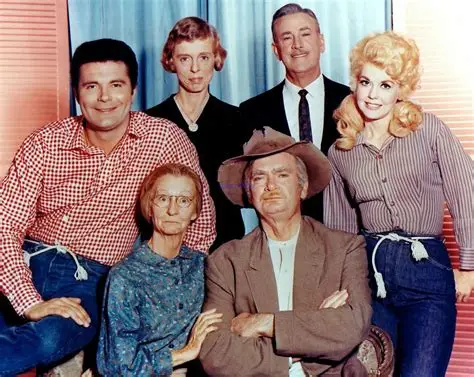
One of the strangest mysteries in television history is why The Beverly Hillbillies ended when it did.
By the early 1970s, the show was still drawing millions of viewers every week. The Clampett family remained incredibly popular with audiences across America.
Yet in 1971, the network abruptly cancelled the series.
The reason had little to do with ratings.
Instead, television executives were trying to reshape programming to attract younger, urban viewers. Shows featuring rural settings—no matter how successful—were suddenly considered outdated.
This industry shift became known as the famous “rural purge.”
During this period, several beloved shows were cancelled at the same time, including Green Acres and Hee Haw.
For fans, the cancellation felt sudden and unfair.
After nine seasons, audiences had become deeply attached to the Clampett family. The idea that executives simply decided rural comedy was no longer fashionable seemed almost unbelievable.
But television trends often change quickly.
What executives failed to predict was that the show would continue thriving in reruns for decades.
Today, long after its original broadcast ended, The Beverly Hillbillies remains one of the most recognizable sitcoms ever produced—proof that sometimes audiences understand the lasting appeal of a story better than television executives do.