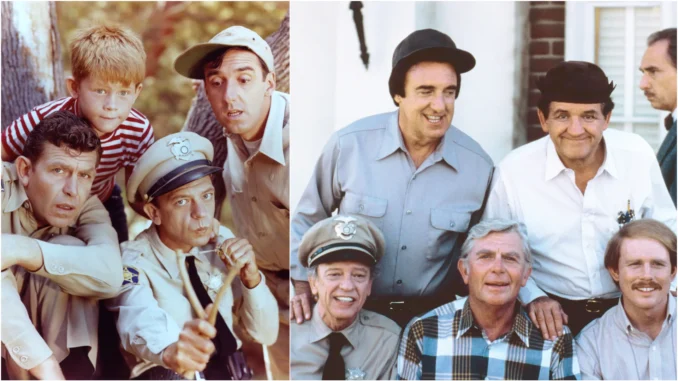
More than 60 years after it first aired, The Andy Griffith Show continues to attract new viewers—and comfort longtime fans—despite having none of the flashy elements that dominate modern television. No cliffhangers. No shocking twists. No biting sarcasm. And yet, its impact remains quietly powerful.
Set in the fictional town of Mayberry, the series offered something rare even in its own time: a world where people listened to one another, mistakes were met with patience, and lessons were taught gently rather than forcefully. Watching the show today feels less like entertainment and more like stepping into a calmer version of life many wish still existed.
At the center of that world was Sheriff Andy Taylor. Unlike many TV authority figures, Andy didn’t rely on intimidation or control. He led with empathy, calm reasoning, and trust. His strength wasn’t in his badge—it was in his belief that most people, when treated with respect, would choose to do the right thing. That idea alone feels almost radical by today’s standards.
Then there was Barney Fife, the show’s most iconic character. Loud, nervous, and endlessly ambitious, Barney provided much of the comedy—but he also gave the series its heart. Beneath the jokes was a man deeply afraid of failure and desperate to matter. His flaws were never cruelly exposed; they were embraced. And that’s why audiences still love him.
What truly makes The Andy Griffith Show timeless is its refusal to rush. Episodes took their time, allowing small moments to breathe: a father and son talking on the porch, a lesson learned without punishment, a town coming together without drama. These moments didn’t demand attention—they earned it.
In a television landscape filled with noise, irony, and constant escalation, The Andy Griffith Show remains a reminder that simplicity can be powerful. It shows us a version of humanity rooted in decency, patience, and quiet understanding.
That’s why returning to Mayberry doesn’t feel like watching an old sitcom.
It feels like remembering who we used to be—and who we still hope to be.