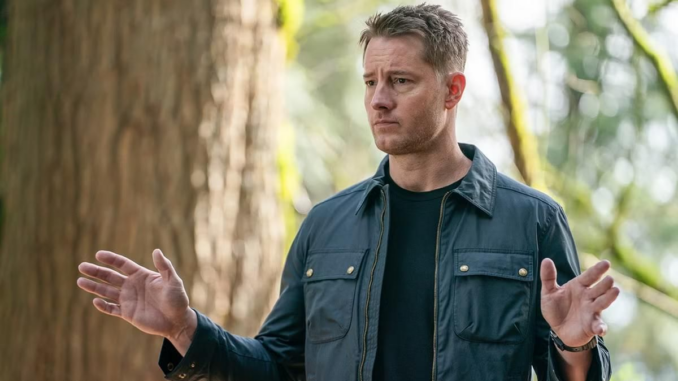
One of the biggest reasons Tracker has captured such a massive audience—besides Justin Hartley’s magnetic performance—is the breathtaking, rugged, almost cinematic world the show builds around Colter Shaw’s journey. Each episode feels like stepping into a new landscape, a fresh stretch of America where danger, mystery, and human stories collide. But fans quickly noticed something interesting: the locations look too varied, too dramatic, and too beautiful to belong to just one state. So where exactly is Tracker filmed?
The answer is that the series, while set across multiple U.S. states, is primarily filmed in Vancouver, British Columbia, one of the world’s most popular and versatile shooting destinations. Vancouver has earned the nickname “Hollywood North” for a reason—it can double for almost any environment. Forests, coastlines, small towns, mountain roads, suburban neighborhoods, and even desert-like terrains exist within reachable distance, making it the perfect base for a show where the main character is constantly on the move. What looks like rural Montana one week and the outskirts of Arizona the next is often the same region of British Columbia, cleverly dressed and framed to match the script.
Production teams love Vancouver because it allows them to shoot fast, shoot smart, and shoot beautifully. Tracker relies heavily on outdoor sequences—Colter Shaw tracking clues in deep woods, hunting for missing persons in remote areas, approaching isolated cabins, or racing down dirt roads that hold secrets—and Vancouver’s natural landscapes provide all the variety the show needs. Dense forests near Squamish and Port Moody give the series its intense survivalist energy. Coastal areas and cliffs around White Rock and Horseshoe Bay offer dramatic visuals. Old-town streets and industrial corners across Greater Vancouver stand in for fictional towns throughout the U.S.
The result? A show that feels like a cross-country odyssey even though most of the action is rooted in one central hub.
But Vancouver isn’t the only location involved. Some episodes also film in nearby regions that offer even more breathtaking scenery. Areas around the Fraser Valley provide sweeping farmland and open country roads. The Sea-to-Sky Highway delivers cinematic mountain views. Small communities like Langley and Maple Ridge can transform into charming, troubled towns hiding dark secrets—perfect for the mysterious, emotionally charged cases Colter Shaw often steps into.

The production design team works closely with local crews to ensure every setting looks authentic to the state it’s supposed to represent. Whether the script calls for the muggy tension of the South, the colder atmosphere of the Pacific Northwest, or the dusty edge of a desert town, the show’s creative team studies real American locations and designs each set to reflect the exact mood and tone. This attention to detail is one of the reasons fans constantly praise Tracker for feeling immersive and visually honest despite filming far from the U.S. border.
Justin Hartley himself has spoken about how physically demanding the filming locations can be. Many scenes require him to hike through challenging terrain, trek muddy trails, or perform action-heavy sequences in unpredictable weather. Yet he’s also admitted that these environments help him slip into Colter Shaw’s mindset—the isolation, the alertness, the connection to the landscape. When the setting feels real, the character feels real.
The Canadian wilderness also lends Tracker a cinematic realism that studio-built sets just can’t replicate. You can’t fake the texture of damp soil underfoot, the echo of a forest at dusk, or the way mist rolls over the treetops in the early morning. These environmental details give the show its signature atmosphere: grounded, tense, emotional, and deeply connected to the land Colter Shaw roams.
Fans often ask whether the show will ever film in the actual U.S. states it portrays. While it’s possible for future seasons to plan location shoots in America, Vancouver remains a near-perfect match for the series’ needs. The production benefits from expert local crews, cost efficiency, and unmatched geographic variety—all crucial for a show that changes setting every episode. As long as Colter Shaw keeps moving from case to case, Vancouver will likely remain his hidden starting point.
So the next time you watch Tracker and find yourself mesmerized by a sweeping mountain shot, a lonely highway bending into the fog, or a secluded cabin nestled in thick forest, there’s a good chance you’re looking at the Canadian wilderness working its magic once again. And that magic is now a defining part of the show’s identity.
In the end, the filming locations of Tracker do more than serve as backdrop—they shape the entire mood of the series. They turn each episode into a journey. They give weight to every mystery. They make Colter Shaw’s world feel vast, unpredictable, and full of hidden stories. And as long as the show keeps delivering episodes filled with adventure, emotion, and striking landscapes, fans will continue asking the same question: Where will Tracker take us next?