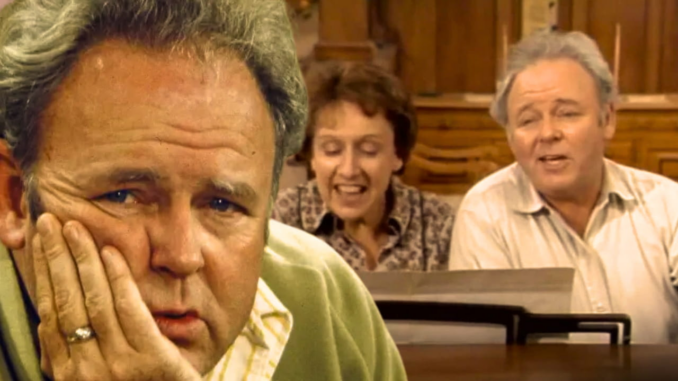
When All in the Family premiered, it didn’t just enter the television landscape—it shook it. At a time when most sitcoms played it safe, this show did the exact opposite. It confronted uncomfortable truths, challenged social norms, and forced audiences to laugh… and then immediately question why they were laughing.
But what made it such a success back then?
And more importantly—would it survive in today’s world?
📺 Why It Was a Hit When It First Aired
In the early 1970s, television was going through a transformation. Audiences were ready for something new—something real.
And All in the Family delivered exactly that.
🔥 1. It Said What Others Were Afraid to Say
The show tackled topics that were almost unheard of on mainstream TV at the time:
- Racism
- Politics
- Gender roles
- Social inequality
Through Archie Bunker, the show gave a voice to a type of thinking that existed in many households—but was rarely shown so openly on screen.
This wasn’t about promoting those views.
It was about exposing them.
And audiences were hooked.
🎭 2. Characters Felt Uncomfortably Real
Unlike the polished, idealized families seen in earlier sitcoms, the Bunkers were flawed.
- Archie was stubborn, biased, and often wrong
- Edith Bunker was kind, patient, but not as naïve as she seemed
Their arguments felt authentic. Their struggles felt familiar.
Viewers didn’t just watch the show—they recognized parts of their own lives in it.
💥 3. It Turned Discomfort Into Entertainment
What made the show unique was its ability to balance humor with tension.
Audiences would laugh at Archie’s comments—then immediately feel uneasy about why they laughed.
That emotional push-and-pull created something powerful:
👉 A sitcom that didn’t just entertain, but provoked thought.
🤔 If It Aired Today… Would It Still Work?
This is where things get complicated.
⚠️ 1. Instant Backlash Culture
In today’s world of social media, controversial content spreads fast—and so does criticism.
Archie’s language and attitudes would likely be clipped, shared, and judged within seconds. Many viewers might react without context, seeing only offense rather than satire.
The nuance that made the show brilliant could easily get lost.
🧠 2. Audiences Are More Aware—But Less Patient
Modern viewers are more socially conscious, which is a good thing. But they also tend to expect clarity:
- Who is right?
- Who is wrong?
- What is the message?
All in the Family didn’t always provide clear answers. It lived in the gray area—and that ambiguity might frustrate today’s audience.
📱 3. The Format Might Feel Too Slow
Today’s content is fast, direct, and often designed for quick consumption.
The slow-burn conversations, long arguments, and subtle emotional shifts that defined All in the Family might feel “too quiet” for some viewers.
But for others?
That’s exactly what would make it stand out.
🕊️ So… Hit or Cancelled?
The truth is—it could be both.
- ✔ It would attract attention for its boldness
- ✔ Critics might praise its depth and courage
- ❌ It would likely face heavy backlash online
- ❌ Some audiences might misunderstand its intent
But here’s the key:
👉 All in the Family was never meant to be comfortable.
Its purpose was to challenge, to provoke, and to reflect society back at itself—even when that reflection wasn’t flattering.
💬 A Show That Was Ahead of Its Time—And Maybe Still Is
What made All in the Family successful in the 1970s wasn’t just timing—it was honesty.
It trusted audiences to think.
It allowed characters to be flawed.
It embraced discomfort instead of avoiding it.
And maybe that’s why the real question isn’t whether today’s audiences would accept it—
But whether they would truly understand it.
Because some shows don’t just belong to a time period.
They exist to challenge every generation that dares to watch them.