🕊️ The Core Conflict: Immortality and the Quest for Peace
If you’re among the millions who have fallen head-over-heels for the quirky, hilarious, and surprisingly heartwarming world of Woodstone Mansion, you know the central tension that fuels every storyline: the eternal, unresolved state of being a ghost. Our beloved gaggle of deceased residents—from the Prohibition-era jazz singer Alberta to the perpetually optimistic Viking Thorfinn—are stuck. They cannot leave the property, and they cannot age. Their greatest, yet most terrifying, goal is to achieve “peace,” or, as the show hilariously terms it, being “sucked off.”
The entire premise of the hit CBS sitcom, Ghosts (the American version based on the BBC original), hinges on the idea that these spirits are stuck. Their confinement is what forces their bizarre, blended community, and it’s what drives the comedy derived from their wildly different eras and experiences. But as the show hurtles through successful season after successful season, a massive, unignorable question looms: Will the Ghosts writers ever let a main spirit get sucked off?
The short answer, based on the fundamental needs of a long-running sitcom, is probably no. But the more nuanced answer involves a delicate balance of narrative necessity, fan expectation, and the ultimate emotional payoff the show has been building toward. We are diving deep into the dilemma: the creative risks, the fan backlash potential, and the strategic reasons why letting a core character achieve peace would be both the most brilliant and the most devastating move the show could make.
🚧 The Sitcom Barrier: Why “Stuck” Is the Magic Word
The primary reason we haven’t seen any main ghost depart is simple: longevity and structure. Sitcoms, especially network comedies, are built on the principle of the status quo.
H3: The Narrative Equation: Character + Setting = Comedy
The comedic formula of Ghosts requires a few non-negotiable elements:
-
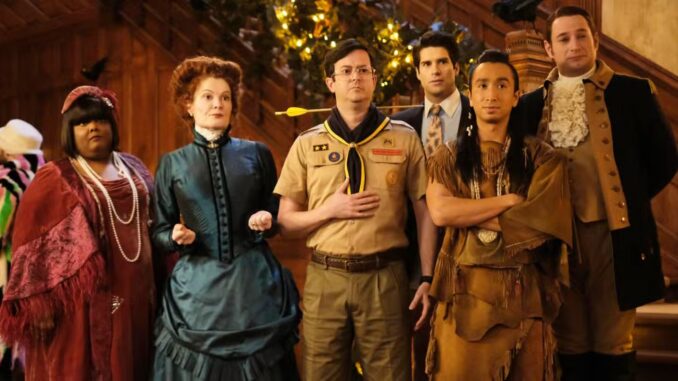
The Ensemble: The show’s humor is derived from the clash of personalities—Sam (Rose McIver) and Jay (Utkarsh Ambudkar), the living human anchors, mediating the eternal bickering between Isaac (the pretentious Revolutionary War soldier) and Pete (the earnest, eternally optimistic Boy Scout).
-
The Stakes (or Lack Thereof): The stakes must remain low. If ghosts start achieving peace regularly, the show transforms from a cozy ensemble comedy into a high-stakes, spiritual Survivor competition. This fundamental shift would completely undermine the show’s charming, low-key tone.
-
The “Can’t Leave” Rule: Woodstone itself is a character. The ghosts’ inability to leave or change is the bedrock of their predicament. Removing a core character fundamentally weakens the dynamic that has taken seasons to perfect.
The Fan Investment Dilemma: Don’t Break Our Hearts!
Fans are invested in the current roster of spectral roommates. Every ghost has a compelling backstory, a unique comedic voice, and crucial relationships within the house.
-
The Emotional Cost: If Flower (the perpetually high hippie) got sucked off, who would provide the essential, bizarre life advice? If Trevor (the finance bro) achieved peace, who would deliver the essential, self-deprecating humor? The emotional backlash from breaking up the central ‘found family’ unit would be enormous. The writers know that removing a main ghost is essentially risking a narrative nuclear option.
🌟 The Narrative Temptation: When Peace Makes Sense
Despite the logical barriers, the writers constantly tease the possibility of a ghost being “sucked off” because it represents the ultimate, profound conclusion to any individual character arc.
The Unresolved Business: The Key to Leaving
The lore of Ghosts suggests that a spirit is granted peace only when they resolve the unresolved business that kept them anchored to the physical world. This mechanism creates the most compelling potential exit points.
-
Alberta’s Murder: Alberta’s main mission was solving her own murder. While that was technically solved, the emotional closure—accepting the killer’s identity and forgiving those involved—could still lead to her departure. ****
-
Pete’s Regret: Pete’s biggest regret is missing out on life and his family. A powerful storyline where he successfully imparts meaningful wisdom to his living family or gets a true, final goodbye could easily trigger his departure.
-
Isaac’s Legacy and Love: Isaac’s unfinished business involves accepting his true self, reconciling his complicated legacy, and perhaps embracing his relationship with Nigel. Achieving this level of personal fulfillment would be the perfect, earned conclusion.
H4: The Earned Conclusion vs. The Arbitrary Exit
The writers understand that if a main ghost does depart, it must be the most emotionally satisfying, earned conclusion possible. It can’t be a random plot point or a sudden accident. It needs to feel like the final, perfect punctuation mark on a long, complicated sentence—a true spiritual graduation.
🎭 The Strategic Trade-Off: Sacrificing a Character for the Story
If Ghosts ever reaches its final season—let’s project Season 9 or 10—the writers will face the immense pressure of providing closure. At that point, allowing one or two main ghosts to achieve peace becomes narratively essential to avoid a disappointing, static finale.
The Final Season Gambit
Imagine the final season culminating in Sam and Jay finally opening the B&B to success, followed by an emotional sequence where Thorfinn and Flower finally depart together, symbolizing their ultimate, chaotic, yet loving peace.
-
Emotional Climax: This structural choice guarantees a massive emotional payoff. It delivers the tears and the spiritual conclusion that the audience has waited a decade to see. It transforms the comedy into a poignant commentary on life, death, and letting go.
-
The Meaning of the House: The departures would reinforce the show’s central thesis: Woodstone is a place of healing and transition. The house and the community are there to help broken spirits find their missing piece before moving on.
H4: The “Guest Ghost” Exit Strategy
The show has successfully used the mechanism of a ghost achieving peace for guest characters (like the Revolutionary War soldier who moved on after correcting his historical record). This allows the writers to test the emotional waters and remind the audience of the ultimate goal without fracturing the main ensemble. It’s a way to keep the stakes real without breaking the band.
🔮 The Prophecy: Which Ghost Is Most Likely to Go?
Based on their proximity to fully resolving their core issue, two ghosts stand out as the most likely candidates for “peace” if the show decides to take the plunge:
-
Isaac Higgintoot: His arc, revolving around his sexuality, his historical legacy, and his relationship with Nigel, is the most clearly defined and progression-oriented. A final, dramatic move where he fully embraces his truth could easily lead to his departure.
-
Pete Martino: His regret is simple and pure: missing his family. A well-written episode where his now-adult children visit Woodstone, and Pete finds a way to truly communicate his love and pride to them, would create a perfect, tear-jerking exit.
🤝 The Sam and Jay Anchor: Why the Living Must Stay
The structural linchpin of the entire dilemma remains Sam and Jay. As long as they remain the primary, living inhabitants of Woodstone, the ghost ensemble must largely remain intact.
The Necessity of the Intermediary
Sam’s unique ability to see and hear the ghosts is the core premise of the show.
-
Plot Engine: Sam is the essential intermediary—the only one who can translate the ghosts’ issues to the physical world, which is necessary for resolving their unfinished business.
-
The Emotional Bridge: Sam is the emotional bridge that connects the ghosts’ past lives to the present. Her presence justifies the ghosts’ continued residency, as they need her help to interact with the world and ultimately, to find peace.
As long as the show needs its current level of high-quality comedy and storytelling, the Woodstone Family—both living and dead—must stay together, making the departure of a main spirit a narrative anomaly reserved only for the most desperate moments or the grand finale.
Final Conclusion
While the narrative goal of every ghost on the hit CBS series Ghosts is to be “sucked off,” the likelihood of the writers allowing a main spirit to achieve this peace remains low for the immediate future. The core comedic structure of the show relies heavily on the intact, chaotic ensemble and the principle of the status quo. However, should the show continue toward a planned conclusion (Season 8 and beyond), the departure of one or two key characters, like Isaac or Pete, would become narratively essential. This move would provide the ultimate, earned emotional climax and reinforce the beautiful theme that Woodstone Mansion is a sacred space for spirits to resolve their unfinished business before finding their ultimate peace.
❓ 5 Unique FAQs After The Conclusion
Q1: What is the official definition of being “sucked off” in the Ghosts universe?
A1: Being “sucked off” is the humorous term used by the ghosts for achieving peace and moving on to the afterlife. It occurs when a ghost resolves the unresolved emotional business or lingering regret that keeps their spirit anchored to the physical world and Woodstone Mansion.
Q2: Has the show ever hinted that Sam might lose her ability to see the ghosts, which could end the show?
A2: Yes. The show has explored the potential for Sam to lose her ghost-seeing ability, often through physical trauma or a shift in her mental state. This plot point represents a massive, existential threat to the show’s entire premise and would likely serve as the ultimate climax in a final season.
Q3: In the original BBC version of Ghosts, did any of the main spirits get sucked off?
A3: Yes. The BBC version, which concluded after five series, did allow a main ghost, Julian (the cynical politician), to be “sucked off” after a beautiful, emotionally resonant final arc where he was able to resolve his decades-long regret. This suggests the American version may follow a similar path for its ending.
Q4: Why can Jay not see or hear the ghosts, even though he lives in a haunted house?
A4: Jay cannot see or hear the ghosts because he did not experience the near-death experience (NDE) that granted Sam her unique ability. The show established that a severe trauma that brings a person close to death is the catalyst required for the living to perceive the dead.
Q5: Which main ghost on Ghosts is based on the most specific historical figure or era?
A5: Isaac Higgintoot is based on the Revolutionary War era, a specific period in American history, giving his character a unique blend of historical pretension and modern confusion. His rigid structure and legacy focus are directly tied to his 18th-century origins.