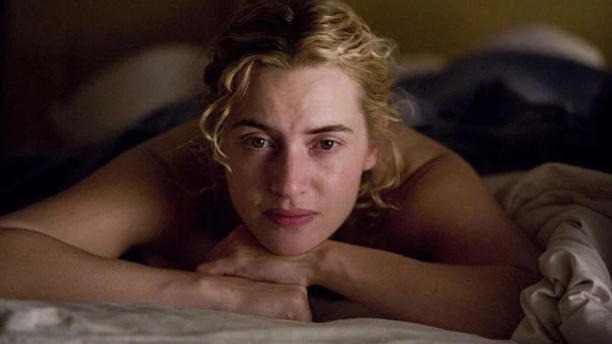
🌟 The Winslet Witness: A Voice Against Digital Perfection
There are few voices in Hollywood that carry the weight, honesty, and grounded perspective of Kate Winslet. For three decades, we have watched her career evolve, marked by roles that celebrate complex, authentic womanhood—from the fiercely independent Rose in Titanic to the deeply flawed, unfiltered Detective Mare Sheehan in Mare of Easttown. She’s always been a champion for real women, real bodies, and real lives.
Recently, Winslet delivered a powerful, poignant, and somewhat heartbreaking observation about the current cultural moment, one that affects young women globally: she believes young women no longer know what true beauty is.
This isn’t the tired lament of an older generation dismissing youth culture. This is a profound concern from an actress who has spent her life fighting against the relentless machine of image manipulation and unrealistic expectations that Hollywood—and now, social media—perpetuates. Winslet’s comments cut straight to the core of the issue: we are witnessing an epidemic of digital conformity that is rapidly erasing the understanding and appreciation of authentic, natural beauty. We need to explore why she feels this way, what forces are driving this cultural shift, and how we can reclaim a healthier definition of self-worth.
📱 The Digital Deception: The Erosion of Self-Perception
The primary villain in this story, according to Winslet’s insightful commentary, is the inescapable presence of social media and the ubiquity of digital filters and editing tools.
The Filter Fantasy: Perfection as the Default
In the past, the impossible beauty standard was confined to glossy magazine covers, where readers subconsciously knew the images had been manipulated by professional retouchers. Today, the deception is personal, accessible, and instantaneous.
-
Self-Imposed Editing: Young women are no longer just consuming digitally altered images; they are actively creating and demanding them for themselves. They can instantly smooth skin, reshape jaws, enlarge eyes, and delete flaws with a single tap. This turns the process of self-presentation into a constant exercise in digital dishonesty.
-
The Normalization of Artifice: When every peer, every influencer, and every celebrity presents a filtered, perfected version of themselves, the unfiltered reality begins to feel wrong, inadequate, or even ugly. True beauty—the asymmetry, the freckles, the fine lines that tell a story—becomes an anomaly, not the default.
The Loss of the “Original”: Seeking Digital Conformity
Winslet implies that the sheer repetition of these digitally manufactured faces creates a new, narrow standard of beauty that is devoid of individuality. Why strive to look unique when you can easily achieve the universally approved, filtered look? This pursuit of homogeneity means young women are losing sight of the most beautiful element of their existence: their uniqueness. They are chasing a constantly moving digital mirage, not celebrating the physical reality of their own reflection.
🎭 The Winslet Standard: A Career Built on Authenticity
Kate Winslet’s credibility in this discussion is immense because she has consistently refused to participate in the image manipulation machine. Her entire career has been a rebellion against the airbrushed fantasy.
Fighting the Retouching Battle
Winslet has been vocal about her contracts and her commitment to preventing the excessive retouching of her professional images. She actively fights to keep her natural skin texture, her curves, and her wrinkles visible, understanding that her image carries weight and serves as a vital counterpoint to Hollywood’s obsession with perfection.
-
Mare Sheehan: The Apex of Realism: Her role in Mare of Easttown was a powerful statement. She insisted that the lighting and camera work preserve the reality of her forty-something face and body, rejecting any attempts to soften or gloss over her character’s lived-in appearance. That performance became a global success precisely because of its authenticity. It felt real, and that realism resonated deeply with viewers.
H4: The Pressure to be Flawless
Winslet experienced the pressure of being scrutinized in the late 90s and 2000s, but that pressure was external (magazines, critics). She argues that today’s pressure is internalized and relentless. It’s a 24/7 battle waged in the palm of one’s own hand. That constant self-judgment is what truly erodes a young woman’s understanding of her own inherent worth.
🧘♀️ Reclaiming True Beauty: Shifting the Focus Inward
If true beauty is not perfection, filters, or digital symmetry, then what is it? Winslet and other advocates for realistic standards suggest that the definition must pivot back to well-being and self-acceptance.
H3: The Beauty of Resilience and Confidence
True beauty is, fundamentally, an internal state that radiates outward.
-
Confidence as the Foundation: A woman who knows her value, who carries herself with confidence, and who speaks her mind possesses a magnetism that no filter can replicate. This beauty is about character and conviction, not symmetry.
-
The Glow of Well-Being: True beauty reflects health—good sleep, nourishing food, and emotional stability. It’s the “glow” you get from resilience, kindness, and purpose. This is a marathon, not a quick-fix digital sprint.
H3: Embracing Imperfection: The Story of Scars
Winslet’s career teaches us that imperfection is essential to beauty. Our physical flaws—the scars, the asymmetry, the stretch marks—are a map of our lives, telling a unique, powerful story. When young women filter these stories out, they dilute their own narrative power. The goal isn’t to look like a statue, but to look like a vibrant, interesting human being.
📚 The Role of Mentors: Guiding the Next Generation
Winslet, as a mother and a public figure, understands that the antidote to the digital distortion lies in education, mentorship, and parental guidance.
Teaching Media Literacy
We must teach young women to be media literate. They need to understand the mechanics of filters and manipulation to view the content they consume with a critical, informed eye. Knowing how the trick is done immediately reduces its power.
Promoting Real-World Connection
The time spent chasing perfection online needs to be replaced with real-world activities that build genuine self-esteem—hobbies, sports, creative arts, and community involvement. Self-worth built on achievement, kindness, and skill is far more durable than self-worth built on likes and validation from anonymous followers. We need to encourage experiences that demand grit and perseverance, qualities that reveal a much deeper and more powerful form of beauty than any selfie.
📢 A Call to Action: Celebrating the Real Reflection
Kate Winslet’s brave and necessary confession serves as a powerful call to action. We need to collectively recognize the immense pressure young women face and actively work to shift the focus away from the fabricated digital ideal.
We must use our voices and our platforms—no matter how small—to celebrate the kind of beauty that is strong, complex, diverse, and unapologetically real. We must applaud actors like Winslet who stand firm against the airbrush, providing a crucial visible example of what it means to age gracefully and live authentically. True beauty isn’t about looking perfect; it’s about feeling powerful and whole exactly as you are.
Final Conclusion
Kate Winslet’s profound observation that young women are losing touch with what constitutes true beauty is a crucial wake-up call in the age of digital dominance. She argues that the endless stream of filtered, manufactured perfection on social media has led to a dangerous normalization of artifice, causing young women to reject their unique, authentic selves. Winslet, a lifelong champion of realism who has consistently refused to participate in the image manipulation machine, asserts that true beauty lies not in symmetry or flawlessness, but in confidence, resilience, health, and character. By promoting media literacy, encouraging real-world achievements, and celebrating the power of imperfection, we can help the next generation reclaim a healthier, more meaningful, and ultimately more beautiful definition of self-worth.
❓ 5 Unique FAQs After The Conclusion
Q1: What specific aspect of beauty does Kate Winslet emphasize as being most important?
A1: Kate Winslet consistently emphasizes authenticity and character as the most important aspects of beauty. She values the unique features, natural textures, and signs of life experience (like wrinkles) that convey a person’s individual story and confidence.
Q2: Did Winslet use the term “true beauty” when talking about her role in Mare of Easttown?
A2: While she didn’t use the exact term “true beauty” for the role, Winslet was adamant that her portrayal of Mare Sheehan be unfiltered and realistic, directly aligning with her philosophy that realness and authenticity are inherently beautiful and necessary to celebrate on screen.
Q3: What is the primary difference between the beauty pressures Winslet faced and those young women face today?
A3: Winslet faced external pressure from the media and industry to look perfect (e.g., retouching on magazine covers). Young women today face internalized, relentless pressure because they are the ones constantly using the filters and editing apps on their own devices, leading to constant self-critique.
Q4: How can parents and mentors help combat the negative effects of filters on self-perception?
A4: Parents and mentors can help by teaching media literacy (explaining how filters work), limiting screen time, encouraging activities that build skill-based self-esteem (e.g., sports, art), and actively modeling self-acceptance by refusing to filter their own photos.
Q5: Has Kate Winslet ever publicly discussed her own body image struggles during her early career?
A5: Yes, Winslet has been very open about the body shaming and scrutiny she faced early in her career, particularly after Titanic. Her public sharing of these struggles reinforces her empathy and authority when speaking out against today’s toxic beauty standards.