🚢 The Battle of the Unsinkable Ships: A Rotten Tomatoes Twist
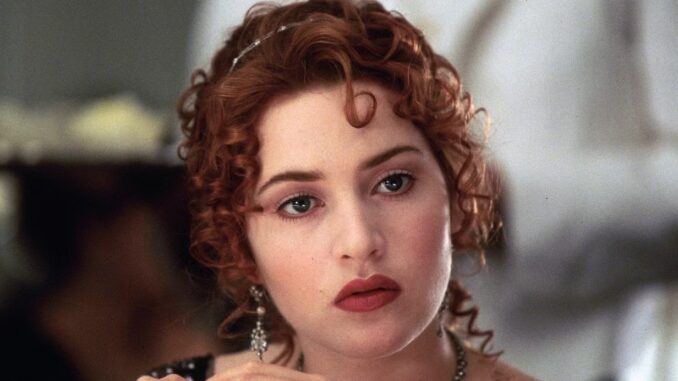
Let’s be honest for a second. When you think of the Titanic, your brain probably goes straight to Celine Dion’s voice, Leonardo DiCaprio standing on a railing, and a very debatable piece of floating wood that definitely had room for two. James Cameron’s 1997 Titanic isn’t just a movie; it’s a cultural monolith. It won 11 Oscars, minted billions of dollars, and turned “I’m the king of the world!” into a permanent part of our lexicon.
But what if I told you that in the eyes of the critics, the “king of the world” has actually been dethroned by a film made nearly four decades earlier? If you head over to Rotten Tomatoes, you’ll find a surprising upset. While Cameron’s epic sits at a very respectable 88% (at the time of writing), a stark, black-and-white British film from 1958 called A Night to Remember currently boasts a near-perfect score of 93%.
Wait, what? How can a movie made before CGI even existed outrank a film that literally rebuilt the ship? It seems impossible, right? But the deeper you look into the history of cinema, the more you realize that bigger isn’t always better. While Cameron gave us a sweeping romance, the 1950s version gave us a cold, hard look at reality. Let’s dive into why this old-school classic is still the critics’ darling and why it might just be the “better” Titanic movie after all.
📽️ What is A Night to Remember? The 1958 Contender
Before we can compare them, we have to talk about what A Night to Remember actually is. Released in 1958 and directed by Roy Ward Baker, this British production was based on the non-fiction book by Walter Lord. It didn’t have a fictional love story to carry the weight. Instead, it focused on the collective experience of the passengers and crew.
The Documentary-Style Approach
Unlike the 1997 version, which feels like a grand opera, A Night to Remember plays out almost like a documentary. It uses a wide-angle lens on the disaster, following multiple characters from different social classes simultaneously. There is no Jack and Rose to distract you from the looming iceberg. The “main character” is the ship itself and the tragedy unfolding around it.
Technical Marvels of the 1950s
For 1958, the technical achievements were mind-blowing. They didn’t have computers to simulate water physics. They used massive sets, practical effects, and incredibly clever editing. Many historians still praise this film for its accuracy, as the production team consulted with the Fourth Officer of the Titanic, Joseph Boxhall, who actually survived the sinking. Talk about having a reliable source!
🍅 Breaking Down the Rotten Tomatoes Disparity
So, why the gap in scores? Rotten Tomatoes scores are essentially a “consensus of positivity.” While Cameron’s Titanic is beloved, it also has its detractors who find the dialogue cheesy or the romance a bit too much. A Night to Remember, however, is almost universally respected for its restraint and tension.
Restraint vs. Spectacle
Critics often favor A Night to Remember because it doesn’t try to manipulate your emotions with a soaring soundtrack or a tragic love story. It lets the events speak for themselves. There’s something hauntingly effective about seeing people calmly accept their fate in black and white. It feels like a newsreel from a nightmare.
H3: The Narrative Efficiency of the 1958 Script
The script for the 1958 version is a masterclass in efficiency. In just two hours, it manages to convey the arrogance of the shipbuilders, the confusion of the crew, and the desperation of the third-class passengers without ever feeling rushed. Critics love a tight script, and A Night to Remember is as lean as they come.
🎭 Jack and Rose vs. The Reality of the Sink
James Cameron made a choice: he decided that audiences needed a relatable human anchor to care about the tragedy. He gave us a fictional romance to bridge the gap between 1912 and today. While that worked for the box office, it’s also the biggest point of criticism for the film.
The “Second Banana” Problem
In Cameron’s version, the sinking sometimes feels like a backdrop for Jack and Rose’s drama. In A Night to Remember, the sinking is the only thing that matters. You see the musicians playing on the deck, the engineers trying to keep the lights on, and the captain’s quiet descent into despair. By removing the “main” stars, the film makes everyone on that boat equally important.
H3: Historical Accuracy and the Turning Point
For years, A Night to Remember was considered the gold standard for accuracy. However, there’s one big catch. In 1958, the world didn’t know the Titanic broke in two as it sank. It wasn’t until Robert Ballard discovered the wreck in 1985 that the truth came out. Cameron’s film shows the break; the 1958 film shows the ship slipping under in one piece. Despite this “error,” critics still prefer the emotional truth and pacing of the older film.
🎬 Directional Differences: Baker vs. Cameron
Roy Ward Baker and James Cameron are two very different kinds of directors. Baker was a veteran of the British studio system, known for his steady hand. Cameron is a tech pioneer and a visionary who pushes every boundary.
Baker’s Gritty Realism
Baker’s direction is stoic. He doesn’t use sweeping camera moves or dramatic slow-motion. The horror comes from the stillness. When the lifeboats start to pull away and you see the thousands of people left on deck, the silence is deafening. It’s a very British way of handling a tragedy—stiff upper lip until the very end.
Cameron’s Epic Vision
Cameron, on the other hand, wants you to feel every drop of water. He uses the most advanced technology of the time to put you on that deck. It’s an immersive experience that Baker couldn’t have dreamed of. Yet, some critics argue that the immersion actually makes the tragedy feel “cinematic” rather than “real.”
🎞️ Why the 1950s Aesthetic Still Works Today
You might think that a black-and-white film from the 50s would feel dated, but it actually has the opposite effect. The lack of color creates a distance that makes the movie feel timeless.
The Haunting Power of Black and White
The shadows on the deck, the white foam of the Atlantic against the black hull—the contrast is stunning. It adds a layer of “noir” to the disaster. It feels like you’re watching a ghost story. Modern CGI, while impressive, can sometimes feel “rubbery” or fake as it ages. High-quality practical effects and 35mm film have a grit that never goes out of style.
H4: Sound Design Without the Symphony
Interestingly, A Night to Remember is much quieter than Cameron’s version. There isn’t a constant orchestral swell telling you how to feel. You hear the creaking of the hull and the rushing of the water. This sound design creates a sense of dread that is arguably more effective than a full orchestra.
⚖️ Which Movie Should You Actually Watch?
It’s not a zero-sum game. You don’t have to pick a side! Both films offer something unique, but they appeal to different parts of the brain.
-
Watch James Cameron’s Titanic if: You want a grand, emotional, romantic epic. You want to see incredible sets, hear a legendary score, and experience the spectacle of Hollywood at its peak.
-
Watch A Night to Remember if: You want a historical drama that feels like a real-time account of the disaster. You want to see the social dynamics of 1912 and a story focused on the collective human experience.
H4: The Verdict from the Critics
The Rotten Tomatoes scores tell a clear story: critics value the unsentimental, focused storytelling of the 1958 version. They appreciate that it doesn’t need a love story to make the tragedy matter. However, the 1997 version remains the audience favorite for its ability to make a hundred-year-old event feel intensely personal.
Final Conclusion
While James Cameron’s Titanic will likely remain the most famous depiction of the 1912 tragedy, the 1958 classic A Night to Remember holds a higher critical standing on Rotten Tomatoes for good reason. By stripping away the fictional romance and focusing on a documentary-style, ensemble account of the sinking, the ’50s version achieves a level of tension and historical gravitas that modern epics often struggle to replicate. It reminds us that cinema doesn’t always need billions of dollars or CGI to create an “extraordinary” experience; sometimes, a tight script and a focus on raw human reality are all you need to make a night truly unforgettable.
❓ 5 Unique FAQs After The Conclusion
Q1: Why does A Night to Remember have a higher score than James Cameron’s Titanic?
A1: Critics often prefer A Night to Remember because of its narrative focus and restraint. It avoids the fictional romance of Jack and Rose, focusing instead on a broader, more historically grounded perspective of the passengers and crew, which many find more emotionally honest and impactful.
Q2: Does the 1958 version show the Titanic breaking in half?
A2: No. At the time A Night to Remember was filmed, it was a common belief that the ship sank in one piece. It wasn’t until the wreck was discovered in 1985 that we learned it broke in two. James Cameron’s 1997 version is more accurate in this specific regard.
Q3: Is the 1958 movie based on a true story?
A3: Yes, it is based on the 1955 book of the same name by Walter Lord, which was a meticulously researched non-fiction account of the sinking. The film even used a real Titanic survivor, Joseph Boxhall, as a technical advisor to ensure the details were as accurate as possible for the time.
Q4: Is A Night to Remember available in color?
A4: The film was originally shot in black and white, which contributes to its gritty, newsreel-like feel. While some colorized versions may exist through modern AI techniques, the intended artistic experience is in its original monochrome format.
Q5: Which movie is considered more “historically accurate” overall?
A5: It’s a toss-up. A Night to Remember is praised for its accurate depiction of the social hierarchy and the timeline of events on deck. However, James Cameron’s Titanic has the advantage of modern forensic knowledge of the wreck, specifically the ship breaking in half and the physics of the final plunge.