When CBS announced a new chapter in the Blue Bloods universe, many fans thought the story of the Reagan family had quietly ended. The long-running police drama had already closed its final chapter after more than a decade on television. But behind the scenes, a decision was unfolding that would ignite both excitement and heated debate among viewers.
That decision was the creation of Boston Blue—a dramatic expansion of the franchise that brings Detective Danny Reagan back to the screen, but in a completely new world.
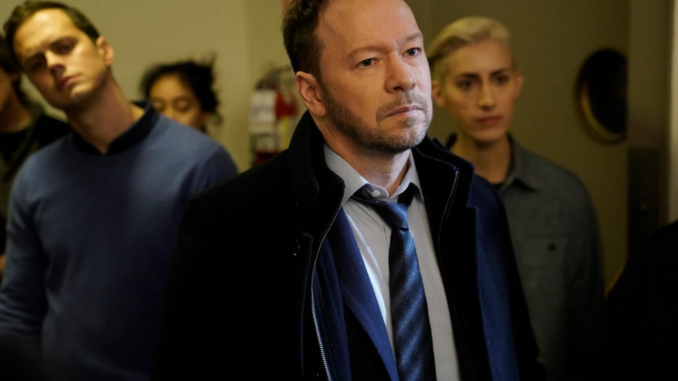
At the center of the storm is Donnie Wahlberg, who returns to his iconic role as Danny Reagan. Instead of patrolling the streets of New York, Danny now relocates to Boston and joins the Boston Police Department, marking one of the most dramatic shifts the character has ever experienced.
For longtime viewers, the premise alone was shocking. The Reagan family had always been the emotional core of the original series, with its famous Sunday dinner scenes symbolizing loyalty, tradition, and family unity. Suddenly, Danny is separated from that familiar world, forced to navigate a new city, new department politics, and a new family of law enforcement officers.
The new show pairs Danny with Detective Lena Silver, a rising investigator from another powerful police family in Boston. Their partnership introduces a new dynamic to the franchise—one that blends the legacy of the Reagans with the influence of an entirely different law-enforcement dynasty.

But the most talked-about twist wasn’t the new setting.
It was the recasting of Danny’s son.
For fourteen seasons of Blue Bloods, Sean Reagan was portrayed by Andrew Terraciano, growing up on screen alongside the audience. In Boston Blue, however, the role has been taken over by a new actor, Mika Amonsen, a change that immediately sparked intense conversation among fans.
In the storyline, Sean has followed the family legacy by joining the Boston Police Department himself. The new series explores a complex father-son relationship unlike anything seen in the original show. Danny is no longer just a veteran detective—he is now the father of a rookie officer navigating the same dangerous profession.
For many viewers, that shift feels both exciting and unsettling.
Some fans see the change as a bold reinvention, arguing that the series needed a fresh direction after fourteen seasons of Blue Bloods. Others believe replacing a familiar character risks breaking the emotional continuity that made the original series so beloved.
Yet the controversy has only fueled the conversation.
Producers have hinted that Boston Blue will still honor the Reagan legacy through surprise appearances and connections to the original story. Danny’s long-time partner Maria Baez is expected to reappear, linking the new Boston storyline with unfinished threads from New York.
And perhaps the most intriguing possibility is that other members of the Reagan family could return at unexpected moments—keeping the door open for emotional reunions that longtime fans desperately hope to see.
What makes Boston Blue fascinating is the tension at its heart.
It is not simply a spinoff. It is a gamble.
The show attempts to preserve the DNA of Blue Bloods while reinventing its world, its characters, and even its emotional center. Danny Reagan—once surrounded by family, tradition, and familiarity—now stands alone in a new city where everything must be rebuilt.
Whether that transformation will redefine the franchise or divide its audience remains one of television’s most intriguing questions.
But one thing is certain: the return of Danny Reagan was never going to be quiet.
And the deeper Boston Blue digs into the Reagan legacy, the more secrets—and surprises—are likely waiting beneath the surface.