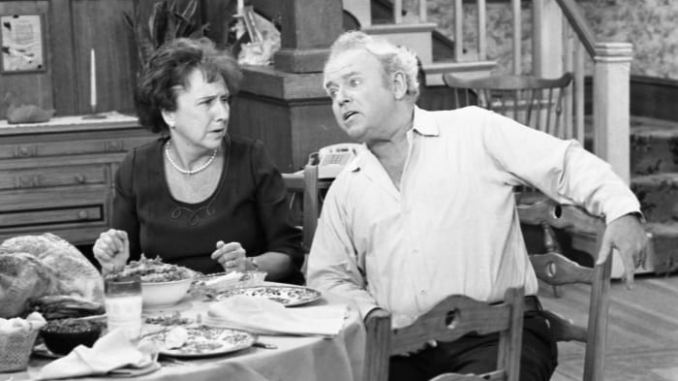
When people first hear about All in the Family, they usually think it’s just another classic sitcom from the 1970s.
A loud father.
A goofy son-in-law.
A few jokes around the dinner table.
But longtime fans know the truth:
This show didn’t just entertain America — it shocked it.
And at the center of it all was one of the most controversial characters in television history.
Archie Bunker: The character audiences loved and argued about
The entire show revolved around Archie Bunker, played brilliantly by Carroll O’Connor.
Archie was:
-
stubborn
-
loud
-
full of outdated opinions
-
constantly arguing with everyone around him
Especially his liberal son-in-law Michael Stivic, played by Rob Reiner.
Their arguments about politics, society, and culture were explosive — something almost unheard of on television at the time.
In the early 1970s, most sitcoms avoided serious topics.
But All in the Family did the opposite.
It ran straight toward them.
The show that dared to talk about everything
Created by Norman Lear, the series broke nearly every rule of television comedy.
Episodes openly discussed topics that had rarely appeared on TV before:
-
racism
-
feminism
-
war
-
class conflict
-
generational politics
And instead of preaching to the audience, the show used family arguments to explore these issues.
Sometimes the debates were funny.
Sometimes they were uncomfortable.
But they were always unforgettable.
The quiet heart of the show: Edith Bunker
In the middle of all the chaos stood Edith Bunker, played by Jean Stapleton.
Edith often seemed naive and gentle compared to Archie’s booming personality.
But fans gradually realized something important:
She was the emotional center of the entire show.
Her kindness softened Archie’s harshness.
Her patience kept the family together.
And in many episodes, Edith delivered some of the most powerful moments in the series.
Why the show still feels bold today
More than 50 years after its premiere, All in the Family still feels surprisingly modern.
Not because it avoided controversy — but because it embraced it.
The show proved something television had rarely attempted before:
Comedy could be uncomfortable.
Comedy could challenge people.
Comedy could start conversations.
And in doing so, All in the Family changed what a sitcom could be.