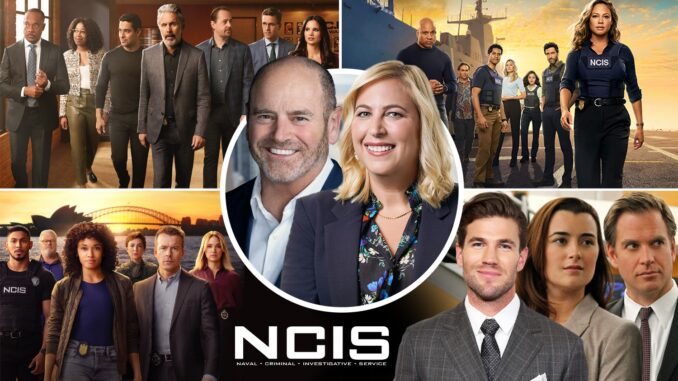
Actor Robert Wagner has been Hollywood royalty for nearly 70 years, a fixture of film and television whose career spans from the Golden Age of the studio system to the modern streaming era. And on February 10, as the screen legend celebrates his 96th birthday, audiences are once again reflecting on the roles that made him an icon. For most folks, he remains best known as the debonair amateur sleuth Jonathan Hart on the hit series Hart to Hart, while in the current era fans know him as Anthony “Tony” DiNozzo Sr., the charming, globe-trotting father of Michael Weatherly‘s agent on NCIS.
Wagner revealed how he got the role of playing Tony DiNozzo’s dad in a chat with NCIS star Cote de Pablo, best known as Ziva David on the show. “It was Michael’s idea to have me on the show, and to be [Tony’s] father,” said the actor. “He played me once in a movie.” According to the actor, Weatherly was instrumental in bringing Wagner to the CBS series by actively campaigning for him for the role of Tony DiNozzo’s father, after having already established a connection with the Hart to Hart actor by portraying a young Wagner in a 2004 TV miniseries, The Mystery of Natalie Wood, directed by Peter Bogdanovich.
The limited series The Mystery of Natalie Wood featured Justine Waddell as the iconic actress and Weatherly as Wagner, tracing Wood’s journey from celebrated child performer to one of Hollywood’s most luminous and complex leading ladies.
The Surprising Hollywood Chain Reaction
Hollywood thrives on unexpected connections. One role leads to another. One headline reshapes a legacy. And sometimes, a television miniseries can quietly set the stage for a casting decision that changes a long-running series forever.
That’s exactly what happened when a TV miniseries about Natalie Wood became an unlikely catalyst for Robert Wagner’s memorable role as Anthony DiNozzo Sr. on NCIS.
At first glance, these stories don’t seem connected. A tragic Hollywood icon. A veteran actor. A crime procedural juggernaut. But dig a little deeper, and you’ll see how one project shifted public perception—and opened a door that might otherwise have stayed closed.
Let’s unpack how it all unfolded.
Natalie Wood – The Hollywood Icon Who Never Faded
A Star Who Defined an Era
Natalie Wood wasn’t just a movie star—she was a symbol of classic Hollywood glamour. From West Side Story to Rebel Without a Cause, she carved her name into cinematic history.
Her sudden death in 1981, however, cast a long and complicated shadow over her legacy. The mystery surrounding her passing became part of the public narrative—and inevitably, part of Robert Wagner’s story too.
The Lingering Questions
Robert Wagner, Wood’s husband at the time of her death, faced decades of scrutiny. Even without formal charges, the cloud of speculation never fully disappeared. For years, that context shaped how audiences viewed him.
So how does that tie into NCIS?
It starts with a miniseries.
The Natalie Wood Miniseries That Reopened Old Conversations
Television Revisits a Tragedy
When a TV miniseries revisited Natalie Wood’s life and tragic death, it did more than dramatize history. It reignited public curiosity. It brought Wagner back into mainstream conversation.
And here’s the key: it reframed him.
Rather than existing solely in tabloid headlines, Wagner was once again part of a broader Hollywood narrative. Viewers saw the romance, the glamour, the complexity—not just the controversy.
Changing Public Perception
Media portrayals matter. When audiences revisit a story through a structured narrative, it humanizes the people involved. Wagner wasn’t just a name tied to a mystery anymore—he was part of a larger emotional tapestry.
That shift created space. Space for casting directors to reconsider him. Space for audiences to see him in a new light.
And that’s where NCIS comes in.
‘NCIS’ – A Show Built on Character Chemistry
The Power of Family Dynamics
NCIS has always understood something simple: crime procedural plots draw viewers in, but family drama keeps them hooked.
Tony DiNozzo, played by Michael Weatherly, was already one of the show’s breakout characters. Charming. Immature. Lovable. But something was missing—a deeper emotional layer.
Enter Anthony DiNozzo Sr.
The Need for a Larger-Than-Life Father
Tony’s backstory required a father who could believably be:
-
Charismatic
-
Slightly irresponsible
-
Wealthy
-
Old-school charming
Who better than Robert Wagner?
He didn’t just fit the role—he embodied it.
Why Robert Wagner Was the Perfect Casting Choice
Life Imitating Art
Casting Wagner wasn’t random. It was almost poetic.
Wagner carried decades of real-life Hollywood charm. He had lived the glamorous lifestyle. He understood the old-money swagger that defined Tony’s fictional upbringing.
When he stepped into the role of Anthony DiNozzo Sr., it didn’t feel like acting. It felt authentic.
Instant Credibility
Sometimes casting works because it feels inevitable. Wagner brought:
-
Star power
-
Generational appeal
-
Emotional nuance
Older viewers recognized him immediately. Younger viewers saw him as the perfect match for Tony’s personality.
It was lightning in a bottle.
How the Miniseries Opened the Door
Visibility Matters in Hollywood
After the Natalie Wood miniseries aired, Wagner’s name circulated widely again. Interviews followed. Retrospectives aired. His career was revisited.
In Hollywood, relevance is currency.
The miniseries didn’t just revisit tragedy—it made Wagner visible again to a new generation of viewers and industry professionals.
Timing Is Everything
Television casting often hinges on timing. When NCIS sought someone to play Tony’s father, Wagner was suddenly back in public consciousness.
The opportunity met the moment.
And the moment mattered.
The Emotional Impact on ‘NCIS’ Storylines
Giving Tony Depth
Before his father appeared, Tony was the class clown. After Anthony DiNozzo Sr. entered the picture, we saw vulnerability.
We saw unresolved tension.
We saw longing.
We saw emotional baggage.
Wagner’s performance allowed those scenes to breathe.
A Complicated Father-Son Dynamic
The chemistry between Wagner and Weatherly felt natural. Their banter had rhythm. Their conflicts had weight.
It’s rare when guest casting transforms a character’s emotional arc—but this did exactly that.
Audience Reception – Why Fans Embraced Wagner
Nostalgia Meets Modern Television
Fans love layered casting. When an actor with real Hollywood history plays a character steeped in wealth and legacy, it adds texture.
Wagner wasn’t just Tony’s father—he represented an era.
A Recurring Role That Stuck
What began as a guest appearance evolved into multiple returns. That’s the ultimate proof of successful casting: audiences wanted more.
And producers listened.
The Power of Narrative Redemption
Television as a Second Act
Hollywood careers rarely move in straight lines. They zigzag. They stall. They rebound.
The Natalie Wood miniseries didn’t erase history. But it recontextualized it. It gave Wagner renewed narrative presence.
And that visibility paved the way for NCIS.
Reinvention Through Storytelling
Television has the power to reshape reputations. By revisiting the past, it can create space for new chapters.
Wagner’s role on NCIS became one of those chapters.
Why This Casting Story Still Matters
A Lesson in Industry Momentum
This story isn’t just about one actor or one show. It’s about momentum.
In entertainment, exposure leads to opportunity. Opportunity leads to reinvention.
The Natalie Wood miniseries reignited attention. That attention contributed to a casting choice that strengthened one of television’s most successful franchises.
H3: The Butterfly Effect of Hollywood
One project. One renewed spotlight. One phone call.
That’s all it takes.
And sometimes, the ripple effect surprises everyone.
Conclusion: When Past and Present Collide
The connection between a Natalie Wood miniseries and Robert Wagner’s casting on NCIS might seem unlikely at first. But Hollywood thrives on unlikely.
The miniseries reopened public conversation. It reintroduced Wagner to audiences in a fresh context. That renewed visibility aligned perfectly with NCIS’ need for a charismatic, larger-than-life father figure for Tony DiNozzo.
The result? A casting decision that deepened character arcs, delighted fans, and added generational gravitas to an already beloved show.
It’s proof that in entertainment, nothing exists in isolation. Every project echoes. Every story leaves a trace.
And sometimes, those echoes land on a hit series at exactly the right time.