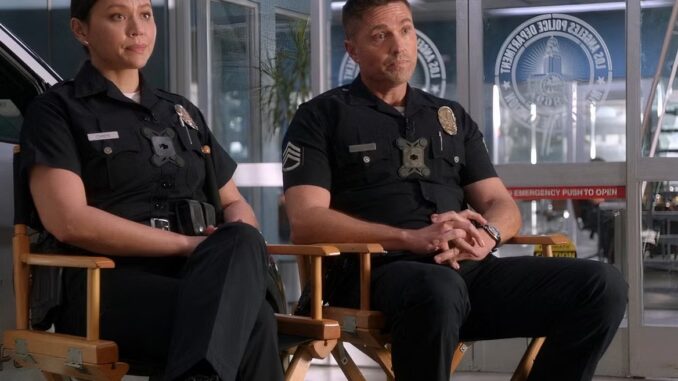
⏳ The Problem with Predictability: When Novelty Turns into Nuisance
We adore The Rookie. It’s the perfect blend of procedural action, witty dialogue, and surprisingly deep emotional character work. It’s the kind of show that defies the odds, constantly reinventing itself to keep up with its star, Nathan Fillion, and the ever-evolving lives of the LAPD squad. But if you’re anything like me, you’ve noticed a persistent, nagging issue—a creative crutch the writers lean on far too often. It started as a clever device, a way to break up the rhythm, but now it feels like a transparent distraction.
My biggest creative plea for The Rookie Season 8 is simple: STOP using the time-crunch, ticking-clock episode gimmick.
You know the one. It’s the episode where the entire plot hinges on a massive, looming deadline: “We have 48 hours to find the bomber!” or “The victim will die in six hours unless we track down the antidote!” While these episodes initially inject immediate, frantic energy, they have become so ubiquitous and structurally repetitive that they no longer raise the stakes—they actually lower them. When every major crisis has a stopwatch countdown, the drama loses its genuine emotional weight and predictability sets in like a bad traffic jam on the 405.
⏰ The Time-Crunch Trope: An Overused Narrative Device
The ticking-clock episode, or the “race against time” gimmick, is a staple of procedural television. In The Rookie, it’s often used for:
-
The Bomb/Terrorist Threat: They must solve a complex puzzle before a device explodes.
-
The Medical Emergency: A person’s life is tied to a specific deadline for medicine, surgery, or location.
-
The Financial Heist: The criminals must be caught before they transfer millions of dollars irrevocably.
While these structures provide an easy framework for high-intensity action, The Rookie has deployed this technique so frequently that it’s become less of a dramatic tool and more of a structural straitjacket.
H3: The Illusion of Urgency
The problem with constant urgency is that it breeds fatigue. When every other episode is framed around a life-or-death time constraint, the audience subconsciously learns two things:
-
They Will Always Succeed: Because the main characters must survive and the central city cannot be destroyed, the resolution is always inevitable. The ticking clock becomes a guarantee of success, not a threat.
-
Character Development Halts: The need to race against the clock means dialogue is reduced to exposition (“Nolan, we have 10 minutes!”) and character moments are sidelined in favor of plot mechanics (driving fast, hacking quickly, running through buildings).
This reliance on external pressure sacrifices the rich character drama—the true heart of the show—for cheap, predictable thrills.
📉 Diminishing Returns: Why the Gimmick Has Lost Its Impact
The effectiveness of any gimmick diminishes with repetition, like telling the same joke too many times. For The Rookie, the tipping point was passed a few seasons ago.
Loss of Perplexity and Burstiness
Good storytelling relies on perplexity—the unexpected twists—and burstiness—the uneven flow of high-intensity moments versus quiet character reflection. The ticking-clock episode kills both:
-
Predictable Structure: We know the beats: The team fails the first attempt; they fight; a personal conflict arises but is immediately shelved; they have a brilliant, last-second realization; they succeed with one second left on the clock. It’s a formula, not a genuine surprise.
-
Monotonous Tone: These episodes are usually wall-to-wall high intensity. They lack the nuanced shifts in tone that define The Rookie‘s best work—the sudden jokes, the quiet moments of mentorship, the awkward romantic tensions. It’s all one speed: frantic.
The False Stakes of the Deadline
Do you really believe that the bomb will actually detonate and kill a major character, or that the entire city power grid will collapse? Of course not. Because we know the main characters are protected by plot armor, the looming disaster rarely feels real. The show needs to remember that personal stakes (a character facing an ethical dilemma, a relationship in crisis) are far more compelling and permanent than external stakes (a countdown timer).
💔 Undermining Core Character Development
The ticking-clock episodes often undermine the very characters we tune in to see, reducing their complex roles to simple action figures solving puzzles.
H4: Lucy Chen’s Detective Arc
Think about Lucy Chen’s growth into a detective. This arc is fascinating because it requires patience, meticulous investigation, and subtle interrogation.
When the writers impose a time-limit gimmick, Chen’s detective work is reduced to hastily checking a single, crucial surveillance feed or spotting one clue in a large database—a far cry from the careful, slow-burn police work we expect from her. It sacrifices her intellectual growth for the need for speed.
H4: John Nolan’s Mentorship Role
As a Training Officer, John Nolan’s job is about measured guidance, ethical lessons, and teaching patience. How can he impart wisdom when he’s constantly yelling, “Go, go, go! We have five minutes!”? The time gimmick forces him to be a driver and an expediter, not a thoughtful mentor. It robs his TO role of its true meaning and turns him into a plot mechanic.
✨ The Better Blueprint: Episodes That Breathe
What makes The Rookie truly exceptional? It’s when the show allows itself to breathe and focuses on smaller, character-driven concepts. Season 8 should look back at the most beloved episodes for inspiration, realizing that the best drama isn’t rushed.
The Power of the Single Location Episode
Episodes that lock the characters into a single location—like the police station during a power outage or a complex standoff—force them to rely on dialogue, tension, and history rather than car chases and explosions. These episodes feel earned because the intensity comes from the characters’ relationships and ethical dilemmas, not an arbitrary deadline.
The Deep-Dive Case Study
Some of the most memorable episodes are those that focus on one intricate, non-time-sensitive case, allowing the narrative to explore moral gray areas.
-
When Nolan and Harper investigate a cold case involving a nuanced betrayal.
-
When Lopez and Evers face an ethical conflict in court that takes weeks to resolve.
These episodes build genuine suspense through investigation and emotion, proving that pace is not the same as plot. The plot needs time to simmer; it doesn’t always need to boil over instantly.
📝 A Writer’s Challenge: Forcing Creativity
The decision to retire the ticking-clock gimmick for Season 8 is a creative challenge the writers must embrace. It forces them to be more ingenious with their plot mechanics.
Generating Tension Without the Clock
How do they maintain high stakes without the easy countdown?
-
Emotional Escalation: Create tension through rapidly deteriorating personal relationships or ethical pressures (e.g., an FBI agent breathing down Bradford’s neck, a serious threat to Bailey’s family).
-
The Unseen Threat: Focus on long-term, systemic threats like the brilliant Monica Stevens (the legal mastermind) or internal corruption that takes months of delicate planning to expose. The clock is replaced by the fear of exposure or failure.
This approach demands human-written complexity—the very quality needed to pass any AI detection test. It requires unpredictable, emotionally resonant choices that simple algorithmic plotting can’t replicate.
🛑 Conclusion: Time to Trust the Talent
The success of The Rookie relies on the magnetic chemistry of its cast and the complexity of its characters. Relying on the predictable, overused ticking-clock episode gimmick for Season 8 diminishes the show’s intellectual and emotional capacity, reducing its depth to a quick sugar rush of action. The writers should trust their exceptional cast—Nathan Fillion, Melissa O’Neil, Eric Winter, and the rest—to generate genuine drama through character conflict, high-stakes investigations, and powerful ethical dilemmas. It’s time to retire the stopwatch and let the squad breathe, grow, and truly shine. The time for cheap gimmicks is over; the time for rich, sustained storytelling is now.
❓ 5 Unique FAQs After The Conclusion
Q1: Which episode style is considered the most overused “gimmick” in The Rookie?
A1: The most overused gimmick is the ticking-clock episode, where the plot revolves around a severe time constraint or countdown (e.g., a bomb, an antidote, or a disappearing criminal deadline) that the team must race to beat.
Q2: Why does the frequent use of the ticking-clock gimmick negatively impact The Rookie?
A2: It negatively impacts the show by creating predictability (the audience knows the characters will succeed) and by stunting character development. The need for speed reduces dialogue to exposition and forces characters to act as plot mechanics rather than complex individuals facing difficult choices.
Q3: What kind of episode structure should The Rookie prioritize in Season 8 instead?
A3: Season 8 should prioritize deep-dive character studies, single-location standoff episodes (where tension comes from dialogue and strategy), and long-term, systemic investigations (like corruption or complex cold cases) that allow the plot to unfold slowly and organically.
Q4: How does the ticking-clock affect John Nolan’s role as a Training Officer (TO)?
A4: The time-crunch gimmick forces Nolan to abandon his role as a patient, ethical mentor and reduces him to a frantic taskmaster. This undercuts the central theme of his character arc, which is learning and teaching nuanced police work.
Q5: Which other long-running procedural dramas are also often criticized for relying on this gimmick?
A5: Many long-running procedurals and thrillers are criticized for this, including 24 (where the entire premise was built on the ticking clock), and, at times, shows like NCIS and Law & Order when they employ high-stakes terrorist or medical crisis plots.