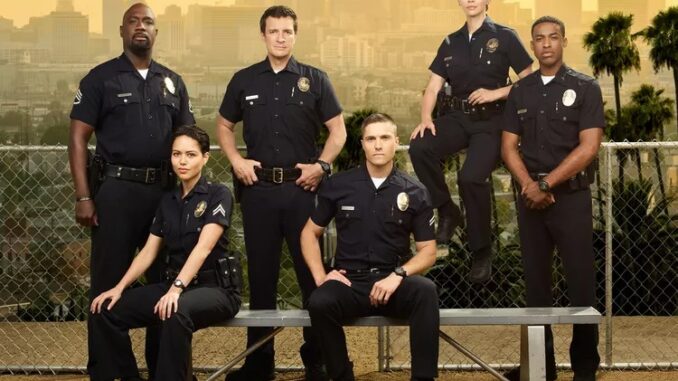
🎬 The Illusion and the Bruises: Why The Rookie Feels So Real
Let’s face it: one of the things that makes The Rookie such a compelling and successful police procedural is the visceral, heart-pounding realism of its action sequences. Whether it’s a desperate foot chase through downtown Los Angeles, a brutal hand-to-hand fight in an abandoned warehouse, or a character diving out of the way of a speeding car, the scenes consistently make us lean forward and hold our breath.
But what if I told you that the raw, gritty authenticity you see on screen is often achieved because the actors themselves—the very people you tune in to watch—are performing many of those dangerous stunts? In a Hollywood landscape increasingly reliant on CGI and specialized stunt doubles, the core cast of The Rookie has cultivated a reputation for going the extra mile, often insisting on doing their own demanding physical work.
This commitment, while dramatically rewarding, comes at a very real, painful price. The dedication of actors like Nathan Fillion, Melissa O’Neil, and Eric Winter has resulted in a quiet, but growing, list of on-set injuries ranging from nagging sprains and deep bruises to legitimately broken bones and concussions. This isn’t just acting; this is a physical sport, and they are playing to win, often putting their bodies on the line for our entertainment.
🤕 The Injury Report: A Growing List of On-Set Accidents
The nature of filming a fast-paced action drama means accidents are statistically inevitable. When you have actors running on uneven pavement, falling onto mats, and engaging in intense fight choreography multiple times a day for months on end, something is bound to go wrong. The injuries the Rookie cast has publicly discussed are serious, proving the show’s action is no joke.
The Concussion Crisis: When a Hit is Too Real
One of the most worrying categories of injuries involves head trauma, which the cast has experienced firsthand.
-
The Full-on Concussion: At least one core cast member has openly discussed sustaining a “full-on concussion” during the filming of a particularly intense scene. While details often remain vague to avoid panic, concussions are severe injuries that require extensive time off and can have long-lasting effects. This is the kind of injury that reminds everyone involved that they are dealing with real risk, not just movie magic.
Broken Bones and Rib Pain
Fractures are common in action sequences where actors must hit the ground or collide with objects.
-
-
Fractured Ribs: Several members of the ensemble have admitted to sustaining broken or fractured ribs over the seasons. This specific injury is debilitating—ribs affect nearly every movement, including breathing, making the subsequent days of filming incredibly painful and difficult.
-
-
Sprains and Ligament Damage: An endless stream of ankle sprains, twisted knees, and strained ligaments forms the base level of pain the cast regularly endures. These injuries often force actors to wear braces or use ice packs between takes, all while maintaining a brave face for the camera.
🥋 Why the Risk? The Core Philosophy of Realism
Why does a major network drama with the budget for professional stunt people push its lead actors to take such high risks? The answer lies in the commitment to realism that defines The Rookie‘s aesthetic.
The Face-to-Camera Rule
The biggest advantage the actors gain by doing their own stunts is unbroken continuity.
-
No Cutaways: When a stunt double performs a complex action, the director often has to use quick cuts, close-ups, or strategic camera angles to hide the double’s face. When the actual actor executes the maneuver, the camera can stay wide or stay close to their face, capturing the raw emotion and exertion without interruption. This makes the action feel immediate and personal.
-
Believability: When you see John Nolan’s face contorted in effort as he leaps a fence or tumbles to the ground, the scene feels exponentially more believable. The audience instinctively knows they are watching the actor, deepening the investment in the scene’s danger.
H3: The Actor’s Choice: Commitment to the Craft
Many of the cast members, having worked in the industry for years, view performing their own physical labor as an integral part of their commitment to the character and their craft.
-
Emotional Truth: Actors argue that the physical exhaustion and pain involved in performing a stunt often feeds directly into the emotional truth of the scene. The heavy breathing, the genuine grimace—these are not things they can easily fake.
-
Respect for the Viewer: By going the extra mile, they feel they are demonstrating respect for the viewer, ensuring the product they deliver is as authentic as possible.
🚨 The Unsung Heroes: Stunt Coordinator and Stunt Doubles
It is crucial to remember that while the core actors do a significant portion of the work, they are supported by an incredible, dedicated team of stunt professionals and their own stunt doubles.
The Choreography of Safety
-
The Stunt Coordinator: The Stunt Coordinator is the true hero, responsible for meticulously planning every fall, fight, and collision to ensure maximum safety. They teach the actors how to fall, how to absorb impact, and how to sell a punch without actually connecting.
-
When the Double Steps In: The stunt doubles are always ready and essential for the truly dangerous, specialized work: the high falls, the massive car crashes, or the complex wire work. The actors rely on their doubles to handle the risks that could jeopardize the entire production, showing a necessary line between commitment and responsibility.
💪 The Conditioning: How the Cast Prepares for Brutality
The ability of the Rookie cast to perform this demanding physical work requires year-round dedication to intense fitness and martial arts training.
H4: Maintaining Peak Physicality
For a show with this many demanding physical scenes, the actors must maintain peak athletic conditioning. This isn’t just about looking good; it’s about injury prevention. A strong core, good balance, and quick reflexes are their first line of defense against the hard reality of hitting the concrete.
-
Fight Training: Actors frequently train in stage combat and fight choreography, which helps them execute complex sequences safely and believably. They learn how to pull punches, manage timing, and control their body during staged violence.
-
The Endurance Factor: A simple chase scene often requires shooting the same sprint and subsequent tackle or fall dozens of times from various angles. The actors need the endurance to maintain their energy and performance quality across these highly repetitive, taxing physical tasks.
🚑 The Behind-the-Scenes Sacrifice: The Cost of Authenticity
The final product we see on screen—a clean, exciting, ten-minute action sequence—masks the hours of pain, swelling, and recovery the cast endures off-camera.
The Analogy of the Athlete
Think of these actors as professional athletes. They spend their week practicing for a single performance (the episode). They are constantly dealing with chronic pain, muscle strains, and the psychological weight of knowing that one small misstep could lead to a catastrophic injury that shuts down the entire production. Their commitment is a reflection of the intense demands placed upon them by the show’s action-driven genre.
This shared sacrifice also strengthens the bonds between the cast. They become a genuine team, relying on each other to be sharp, focused, and safe during the most dangerous moments of production.
Final Conclusion
The commitment of The Rookie cast to perform their own stunts is a significant, often painful, factor in the show’s success, resulting in an unfortunately growing list of on-set injuries, from simple bruises to broken ribs and serious concussions. This insistence on physical performance stems from a core belief that realism and the unbroken emotional continuity of seeing the actor’s face in the moment of danger are paramount to the storytelling. While this dedication raises the show’s quality and believability, it serves as a powerful reminder of the physical sacrifices these talented individuals make to deliver the high-octane drama we love, confirming that their job involves far more risk than simply reading lines.
❓ 5 Unique FAQs After The Conclusion
Q1: Which major The Rookie cast member is known for performing the most challenging stunts?
A1: While all core cast members engage in stunts, Eric Winter (Tim Bradford) and Melissa O’Neil (Lucy Chen) are frequently cited as being highly athletic and often performing complex fight choreography and intense running sequences themselves. Nathan Fillion, while engaging in many fights, often utilizes his double for the highest-risk maneuvers due to his central role as the show’s lead.
Q2: Does the show’s insurance cover injuries sustained by the actors while performing their own stunts?
A2: Yes. Productions carry comprehensive insurance policies specifically designed to cover cast and crew injuries. The cost of these policies is factored into the budget, and they cover medical expenses, rehabilitation, and lost wages if an injury forces a temporary halt in filming.
Q3: What specific physical training do the actors undergo to prepare for fight scenes?
A3: The actors typically train in stage combat, which focuses on safety and believability for the camera, as well as forms of martial arts and self-defense specific to police training. They work extensively with the stunt coordinator to memorize and practice the precise, repetitive movements of the choreography.
Q4: How do they film scenes where an actor has a visible injury, such as a broken arm?
A4: If an injury is too severe to work around, production is often forced to pause while the actor recovers. If the injury is minor (like a broken finger or fractured rib), writers may sometimes write the injury into the script to explain the cast or sling, or they may use clever costuming and camera angles to hide it.
Q5: Are there laws that limit the type of stunts actors can perform on television sets?
A5: While there aren’t specific laws banning an actor from performing a stunt, strict safety regulations and union rules (like those from SAG-AFTRA) govern stunt work. The production must have a certified stunt coordinator present, and the ultimate decision often rests with the coordinator, who must certify that the stunt is reasonably safe before an actor attempts it.