Since its original run, The Office has remained one of the most beloved comedies in television history, blending cynical humor with deeply human characters and an unforgettable mockumentary style. Over a decade after the final episode aired, the franchise has expanded with The Paper, a brand-new series that premiered in 2025 and continues the mockumentary legacy with a fresh twist.
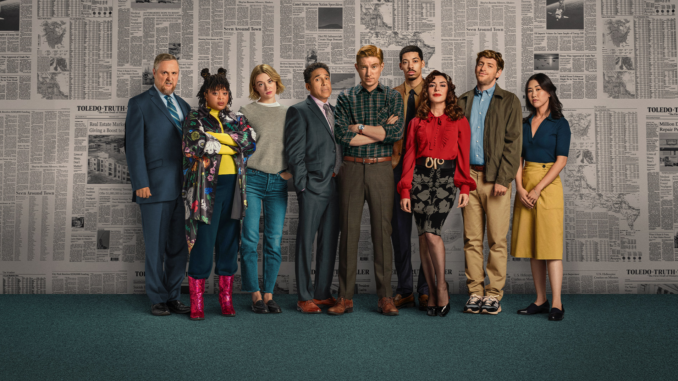
The Paper arrives at a time when nostalgia is a potent force in entertainment, yet it refuses to rely solely on familiar faces or repeat old formulas. Instead, it introduces audiences to a struggling Midwestern newspaper and the eclectic team trying to save it. The series centers on the Toledo Truth-Teller, a once-esteemed local paper navigating the brutal realities of modern journalism while being filmed by the same documentary crew that once immortalized the office antics of Dunder Mifflin. This clever linkage to the original show provides context without overshadowing the new narrative.
The choice to bring back the mockumentary format — a storytelling style that was central to The Office’s success — makes The Paper both comforting and novel. Viewers who grew up watching Jim and Pam can now see how that camera style evolves as it captures a more earnest and slightly somber workplace. At its heart, the show blends comedy with commentary, exploring how industries like print journalism must reinvent themselves in an age dominated by digital headlines and dwindling ad revenue.
Critically, The Paper was renewed for a second season even before its first premiered, signaling confidence from its producers and the platform that hosts it. Such a renewal ahead of broadcast indicates that executives believe in the series’ potential to build loyal viewership and contribute to the broader universe around The Office.
 Reception among fans and critics is diverse. Some praise the humor that arises from the newsroom’s chaotic efforts to modernize while retaining old-school charm. Others feel it doesn’t fully match the comedic peak of its predecessor, pointing out that fans often compare any new project to an iconic original. Yet, this mixed reaction reflects the challenge of extending a beloved franchise: The Paper is not merely mimicking The Office but trying to carve out its identity.
One distinctive aspect that The Paper captures is the tension between nostalgia and evolution. While the documentary crew’s presence connects viewers to the original, the focus shifts to contemporary workplace issues, the relevance of local news, and how humor can be rooted in everyday struggles. Beyond laughs, the series resonates thematically, reminding audiences of the impermanence of institutions once taken for granted.
Ultimately, The Paper delivers on two fronts: it gives audiences a new comedic setting to explore while honoring the spirit of a format that has endured in popular culture. Whether longtime fans embrace it or approach it cautiously, the show signals that The Office universe continues to grow in ways that engage both past and future viewers.