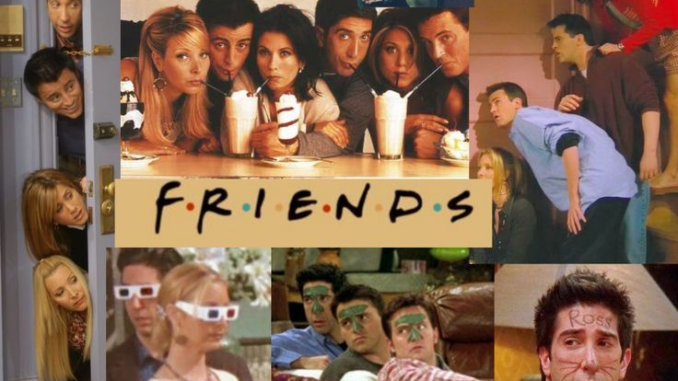
For a show that aired its finale more than two decades ago, Friends refuses to fade quietly into nostalgia. It’s comfort TV. It’s a cultural time capsule. It’s a weekly ritual people still replay like it never left.
And now? It’s at the center of a renewed storm of emotion, debate, and unexpected headlines.
Between fresh reunion whispers, behind-the-scenes revelations, and a wave of cast reflections that hit harder than ever, the world of Friends feels alive again—just in a way no one predicted.
Let’s break down why the conversation has exploded.
The Matthew Perry Effect: A Legacy That Changed the Tone of Everything
The passing of Matthew Perry didn’t just shock Hollywood. It shifted how fans watch Friends forever.
As Chandler Bing, Perry delivered sarcasm with surgical precision. But recent interviews and tributes from co-stars have added emotional weight to scenes once considered purely comedic. Suddenly, rewatching isn’t just about laughter—it’s about memory.
Cast members, including Jennifer Aniston, Courteney Cox, Lisa Kudrow, Matt LeBlanc, and David Schwimmer, have spoken candidly about grief, friendship, and the private bonds that extended far beyond the set.
What fans are debating now isn’t just the show’s humor. It’s its emotional undercurrent.
Did we ever fully understand how much of Chandler’s vulnerability was drawn from real life?
That question alone has fueled countless think pieces and social media threads.
Reunion Rumors—Again?
After the massive success of Friends: The Reunion, speculation about another tribute or special has resurfaced.
But this time, it feels different.
Sources close to production insiders suggest that while a traditional revival isn’t on the table, a commemorative project honoring Perry’s legacy has been quietly discussed. Nothing confirmed. Nothing official. But enough ambiguity to ignite hope—and hesitation.
Would fans even want a scripted continuation without Chandler?
Some say yes, as a celebration.
Others argue the original ending of Friends was perfect—and untouchable.
The debate has divided the fandom in ways we haven’t seen since the “Were Ross and Rachel really on a break?” era.
The Streaming Boom That Reignited Obsession
When Friends moved to HBO Max (now Max), a new generation discovered Central Perk for the first time.
Gen Z audiences aren’t just watching—they’re critiquing.
Discussions around outdated jokes, 90s cultural blind spots, and representation have resurfaced with intensity. At the same time, defenders argue that the show must be viewed within its era.
Is Friends timeless—or a time capsule?
The answer seems to be both.
And that tension keeps it trending.
Behind-the-Scenes Revelations That Hit Differently Now
Recent interviews and memoir excerpts from cast and production insiders have peeled back the glossy sitcom façade.
We’ve learned more about salary negotiations that changed television history, creative disagreements in later seasons, and the emotional toll of global fame.
Back in 2002, the cast famously negotiated equal pay—$1 million per episode—reshaping ensemble television economics. Today, that moment is being revisited as a milestone in Hollywood labor history.
What once felt like industry trivia now feels historic.
Could There Ever Be a Reboot?
Let’s address the elephant in the coffee shop.
Multiple cast members have repeatedly shut down the idea of a full reboot. David Schwimmer has stated that the show belongs to a specific time in life—your twenties, your chosen family before adulthood splinters everyone in different directions.
But in today’s franchise-driven entertainment landscape, nothing is truly impossible.
Reboots dominate. Revivals trend. Nostalgia sells.
Yet Friends feels uniquely fragile. The chemistry wasn’t just scripted—it was lightning in a bottle.
Without all six? It’s hard to imagine the same spark.
Why This Moment Feels Different
For years, Friends nostalgia was lighthearted. Trivia nights. Memes. Halloween costumes.
Now, there’s a reflective tone.
Fans are revisiting episodes like “The One Where Everybody Finds Out” or “The Last One” with new perspective. Lines hit harder. Pauses linger longer.
It’s no longer just about whether Ross deserved Rachel.
It’s about appreciating a cultural phenomenon that shaped how an entire generation viewed friendship, adulthood, and love.

The Cultural Footprint That Refuses to Fade
Few sitcoms achieve what Friends did.
Ten seasons.
236 episodes.
A finale watched by over 50 million viewers in the United States alone.
But beyond numbers, it normalized the idea of “found family.” It turned coffee shops into community symbols. It influenced fashion, catchphrases, and even apartment expectations in New York City.
Its DNA runs through countless modern ensemble comedies.
And now, in this renewed spotlight, its legacy feels both celebrated and scrutinized.
The Emotional Crossroads
So where does Friends stand now?
Not ending.
Not returning.
Not fully resting either.
It exists in a strange, powerful in-between space.
A show from the 90s that feels newly relevant.
A comedy that now carries unexpected poignancy.
A cast bonded by grief and gratitude.
Fans aren’t just asking if there will be another special.
They’re asking how to hold onto something that meant so much—while accepting that time moves on.
The One Truth We Can’t Ignore
Whether through tribute projects, streaming debates, or cast reflections, Friends has re-entered the cultural conversation in a profound way.
Not because of scandal.
Not because of cancellation drama.
But because legacy, loss, and nostalgia collided at once.
And sometimes, that’s more powerful than any cliffhanger.
So is this the beginning of a new chapter for Friends?
Or simply a reminder of why it mattered in the first place?
For now, the door to Apartment 20 remains closed.
But the conversation outside it has never been louder.