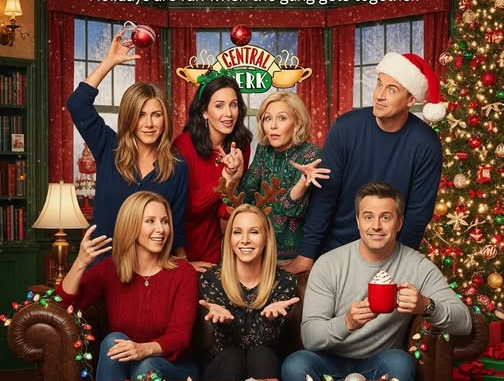
For a sitcom that went off the air more than two decades ago, Friends isn’t just lingering on the cultural charts — it’s obliterating them all over again in 2026 in ways nobody predicted. What was once nostalgia-comfort TV has transformed into a full-blown worldwide phenomenon, sparking debates, fan mania, live experiences, and a flood of mainstream media buzz that’s eclipsing today’s newest scripted hits.
1. A Cultural Phoenix Ignites — Old Cast, New Relevance
Despite ending in 2004, Friends has never really faded — but this year, something unusual happened: the show’s cultural footprint expanded rather than diminished. Long-time fans are revisiting classic episodes, younger Gen-Z viewers are discovering the sitcom for the first time, and entire online communities are debating whether it holds up in 2026. Many say its laugh-track charm and timeless character arcs finally make sense only when binge-watched in the era of streaming, not weekly broadcast TV.
And the cast? Stars like Jennifer Aniston, Courteney Cox, David Schwimmer, and Lisa Kudrow have remained in the public eye, but this year they’ve taken center stage in new cultural narratives. In particular, Lisa Kudrow’s return to sitcom television with a dark comedy revival after 12 years has reignited interest in her work and, by extension, Friends’ legacy. Her new show — starring a washed-up performer clashing with artificial-intelligence writers — is being talked about as boldly relevant and “brilliantly painful,” bridging classic sitcom appeal with modern creative anxiety.
2. The Friends Experience Hits Asia — And It’s Packed
In March 2026, The FRIENDS Experience — a walk-through, immersive exhibition of the sitcom’s iconic sets — opened in Singapore, drawing massive crowds of fans armed with cameras, jokes, and nostalgia. People are not just watching Friends again — they are living it. Cappuccino in one hand, espresso machine chatter in the recreated Central Perk set in the other, fans are treating the show like a religion more than a rerun.
This isn’t just casual fan tourism — it’s a global cultural event, a real-world reboot of what the show meant in the first place: friendship, laughter, and a community you want to be a part of.
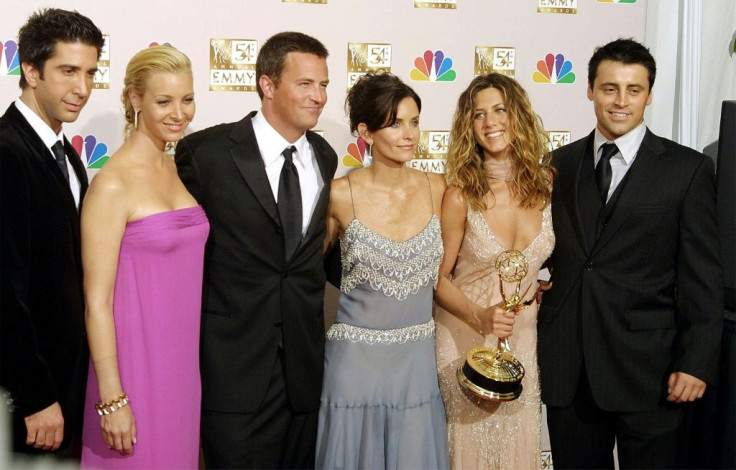
3. Audience Backlash, Debate, and Relentless Online Buzz
It’s not all rose-colored nostalgia. Social media threads reveal fierce debates: some viewers argue that Friends’ humor hasn’t aged well, while others claim its comfort-show charm is timeless. Younger fans say seeing the gang navigate life before smartphones and social media feels oddly refreshing — even radical in today’s AI-driven entertainment environment.
These debates have ironically turned into fuel for the show’s relevance: the more people argue about whether it’s dated, the more viewers stream episodes, re-watch moments, and post memes — effectively keeping Friends at the center of pop-culture conversations.
4. Legacy in the Culture — From Reruns to Reinvention
Beyond fan debates and live experiences, Friends’ actual legacy is sparking discussion among creators and historians. Even the world of fashion and pop-culture history highlights The Rachel hairstyle — once a simple sitcom hairdo — as one of the most enduring style moments of all time, proving that Friends’ impact on real life was never just about laughs on a TV screen.
This sort of cross-generational influence is why streaming platforms still list Friends among the most watched and shared sitcoms globally, decades after its finale. And in 2026, Friends isn’t just surviving — it’s leading. The show has become a cultural anchor, a reference point against which new comedies are measured, discussed, and critiqued.
5. The Internet’s Role: Meme-ification and Viral Resurgence
One of the biggest surprises of 2026? The Friends phenomenon isn’t being driven by network TV or official studio pushes — it’s happening because the internet decided it should. TikTok challenges, meme remixes of classic lines, and Reddit threads breaking down every character quirk have turned Friends into a living, evolving cultural script again, with new voices remixing old jokes and discovering them for the first time.
In fact, many fans argue that what’s happening now is not just repetition, but reinvention: a reshaping of Friends from a product of the 1990s into a shared cultural language for 2026 — whether people love it, laugh at it, or critique it passionately.