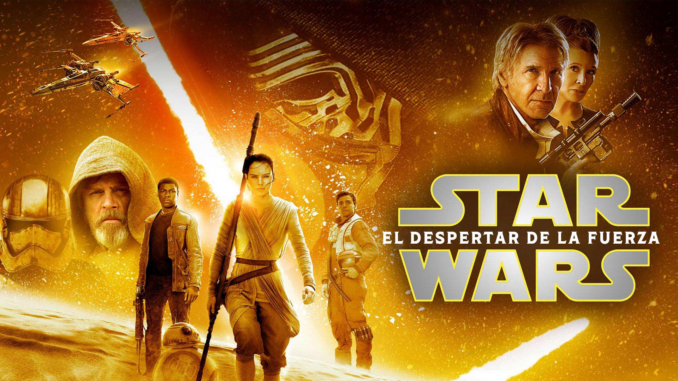
For nearly five decades, Star Wars has been more than a franchise. It’s been mythology. A generational bond. A cultural force that refuses to fade into hyperspace.
And now? The galaxy feels like it’s standing at another seismic turning point.
A new wave of announcements, casting shifts, and bold creative decisions have ignited fierce debate across the fandom. Is Star Wars entering a daring renaissance—or drifting into uncertain territory? Let’s break down the moment that has everyone talking.
The Rey Revelation That Reignited the Fire
When Daisy Ridley officially confirmed her return as Rey in an upcoming Star Wars film set after the events of Star Wars: The Rise of Skywalker, the reaction was immediate—and explosive.
For some fans, it was a triumphant moment. Rey’s journey from scavenger to Jedi felt unfinished. The promise of rebuilding the Jedi Order? That’s mythic territory.
For others, the announcement reopened old wounds from the sequel trilogy era—debates over legacy characters, narrative direction, and whether the saga should move forward or pivot elsewhere.
One casting confirmation. Two radically different reactions.
And suddenly, the galaxy was divided again.
A New Jedi Order—or a Risky Gamble?
The upcoming film, directed by Sharmeen Obaid-Chinoy, is set to explore Rey as a Jedi Master forging a new generation.
On paper, it’s a natural evolution. The Skywalker saga closed one chapter. Now comes the rebuilding.
But here’s the tension: Star Wars has always struggled with balancing nostalgia and innovation.
Do fans want something completely new?
Or do they want the comfort of familiar bloodlines and legacy?
Rey’s return represents both—and that’s precisely why it’s so controversial.
The Mandalorian & Grogu: Big Screen Leap
Meanwhile, another bombshell changed the conversation entirely.
Jon Favreau is bringing The Mandalorian and its breakout duo to theaters with The Mandalorian & Grogu.
After dominating streaming and redefining what televised Star Wars could look like, the transition to cinema feels monumental.
Grogu isn’t just a character. He’s a phenomenon. Merchandise juggernaut. Cultural icon.
The question now isn’t whether audiences love him.
It’s whether the intimacy of streaming storytelling can translate into blockbuster spectacle without losing its emotional core.
The Dave Filoni Factor
Hovering over it all is Dave Filoni—now a central creative architect of the franchise.
From Star Wars: The Clone Wars to Ahsoka, Filoni has earned deep trust among longtime fans for honoring George Lucas-era lore while expanding it.
His upcoming crossover film tying together interconnected Disney+ series could serve as the franchise’s Avengers-style culmination.
But ambition carries risk.
Can interconnected storytelling elevate the galaxy?
Or will it overwhelm casual viewers?
The Villain That Stole the Spotlight
No recent character has sparked more fascination than Grand Admiral Thrawn, portrayed in live-action by Lars Mikkelsen.
Cold. Strategic. Calculating.
Thrawn’s presence signals a shift from mystical destiny toward cerebral warfare. For many fans, that tonal pivot feels refreshing.
For others, it underscores how fragmented the franchise has become—multiple timelines, overlapping arcs, and no single unifying saga.
Behind the Scenes: Creative Turbulence
It wouldn’t be Star Wars without behind-the-scenes drama.
Over the past few years, multiple announced projects have been delayed, reshuffled, or quietly shelved. Directors have come and gone. Release calendars have shifted.
While some see instability, others argue it’s careful course correction—an effort to avoid repeating past divisiveness.
After all, few franchises operate under this level of scrutiny.
Every casting choice trends.
Every interview quote is dissected.
Every rumor becomes a headline.
The Streaming Era vs. The Cinematic Legacy
Since The Walt Disney Company acquired Lucasfilm, the franchise has expanded aggressively across platforms.
Streaming allowed deeper character studies.
Cinema demands spectacle and event status.
Now, the franchise faces a pivotal question:
What is Star Wars in 2026 and beyond?
A sprawling television universe?
A cinematic saga?
Or a hybrid mythology redefining blockbuster storytelling?
The Fandom Divide—Louder Than Ever
Social media has transformed how fandom operates.
Every teaser becomes a battleground.
Every creative choice fuels think pieces.
Every rumor sparks trending hashtags.
Some fans crave bold reinvention.
Others want a return to the spiritual simplicity of the original trilogy.
And in between lies the silent majority—excited, cautious, hopeful.
Legacy Characters vs. New Blood
One of the franchise’s biggest challenges remains generational transition.
The era of Luke, Leia, and Han defined cinema history. The sequel trilogy introduced new faces. The Disney+ era deepened side characters into leads.
Now, the spotlight shifts again.
Rey rebuilding.
Din Djarin evolving.
Thrawn rising.
Ahsoka navigating the unknown.
It feels less like a single storyline—and more like multiple epics unfolding simultaneously.
Is This a New Golden Age—or a Crossroads?
There’s undeniable momentum.
Major theatrical returns.
Expanding lore.
A stronger creative roadmap.
But there’s also caution.
Franchise fatigue is real.
Expectations are sky-high.
And the memory of past backlash still lingers.
The coming years will determine whether this era is remembered as a bold renaissance—or a transitional experiment.
Why This Moment Feels Different
Unlike previous turning points, this one isn’t about ending a saga.
It’s about redefining identity.
For the first time, Star Wars isn’t anchored to a single central family or trilogy structure. It’s a mosaic of timelines and tones.
That freedom could be its greatest strength.
Or its greatest vulnerability.
So… Where Does the Galaxy Go From Here?
Here’s the truth: uncertainty has always been part of Star Wars.
When the original film premiered in 1977, no one predicted a cultural empire.
When the prequels arrived, they were debated fiercely—yet later embraced by a new generation.
Now, as Rey steps forward again and new cinematic ventures ignite anticipation, the franchise faces another defining era.
Is this fragmentation—or evolution?
Is this nostalgia—or renewal?
One thing is certain: the Force has never felt more unpredictable.
And fans? They’re watching every move.
Because in this galaxy, every shift echoes across generations.