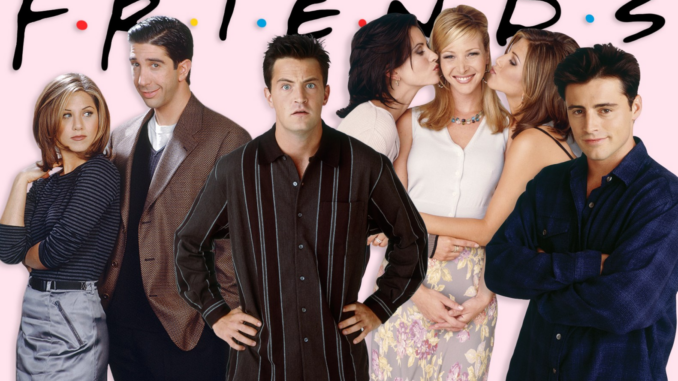
One of the smartest — and most underrated — creative decisions in Friends had nothing to do with punchlines, romances, or coffeehouse drama. It was a rule the show quietly followed from the very beginning: no one character was ever more important than the group.
At a time when sitcoms often revolved around a clear breakout star, Friends did the opposite. Rachel, Ross, Monica, Chandler, Joey, and Phoebe were written as equals. No single storyline was allowed to dominate for too long, and no character was positioned as “the main one.” This balance wasn’t accidental — it was a deliberate choice that shaped the show’s chemistry and longevity.
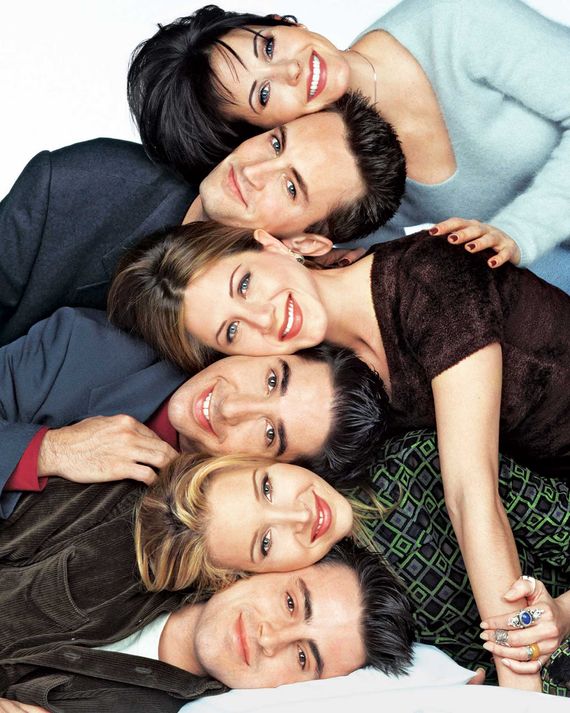
Behind the scenes, this rule influenced everything from scripts to screen time to salary negotiations. Episodes were built like ensembles, weaving multiple storylines together so every character had a moment to shine. A romantic arc for Ross would be offset by a comedic subplot for Chandler. A Monica meltdown would land alongside a perfectly weird Phoebe moment. The result was a rhythm that felt organic, not forced.
This creative equality also protected the show from becoming predictable. Because no character carried the series alone, the dynamics could shift naturally. Friendships evolved. Power balances changed. Relationships ended and restarted. Yet the core always remained the same: six people navigating life together, none of them outgrowing the others.
It’s one reason Friends still feels timeless. Viewers don’t just latch onto one favorite character — they attach to the group as a whole. The show didn’t ask audiences to choose a hero. It invited them into a circle.
And that simple rule — everyone matters — may be the quiet secret behind why Friends never lost its heart.