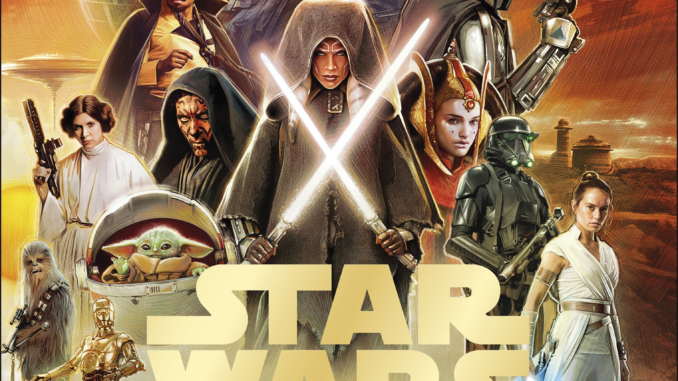
For nearly five decades, Star Wars has never simply been a franchise. It’s been mythology in motion. A generational ritual. A universe that refuses to stand still.
And now? It may be entering its most pivotal era yet.
With bold new casting announcements, unexpected returns, and creative shake-ups behind the scenes, the galaxy far, far away is once again the center of a fandom storm. Is this the dawn of a cinematic renaissance—or the start of another civil war among fans?
Let’s break down the moment that’s redefining the future of Star Wars.
The Rey-Centered Film That Changed the Conversation
When it was confirmed that Daisy Ridley would return as Rey in a new theatrical chapter set after The Rise of Skywalker, the internet erupted.
For some, it was a triumphant homecoming. Rey, now positioned as a Jedi Master rebuilding the Order, represents unfinished business—a chance to deepen a character whose arc sparked intense debate throughout the sequel trilogy.
For others, the announcement reopened old divisions.
The upcoming film, developed under the creative leadership of Sharmeen Obaid-Chinoy, signals a tonal and thematic shift. It promises to explore the fragile rebirth of the Jedi in a galaxy still haunted by war. The premise alone has fueled speculation: Will Rey redefine what it means to be a Jedi? Or will the film attempt to retroactively repair the sequel trilogy’s most polarizing decisions?
Either way, it’s no longer just another installment. It’s a statement.
The Mandalorian & Grogu: From Streaming to the Big Screen
Just as the Rey film dominated headlines, another shockwave hit.
Pedro Pascal’s Din Djarin and the breakout cultural icon Grogu are officially transitioning from streaming success to theatrical spectacle in The Mandalorian & Grogu.
After redefining the franchise’s tone on Disney+, this duo proved that intimate storytelling could coexist with galactic scale. The move to theaters signals confidence—but also risk.
Can the quiet, character-driven magic of The Mandalorian survive the blockbuster pressure of the big screen?
Fans are split. Some see it as a natural evolution. Others fear the loss of the show’s stripped-down charm. What’s undeniable is that Grogu remains one of the most powerful merchandising and emotional anchors the franchise has produced in decades.
And in today’s franchise economy, that matters.
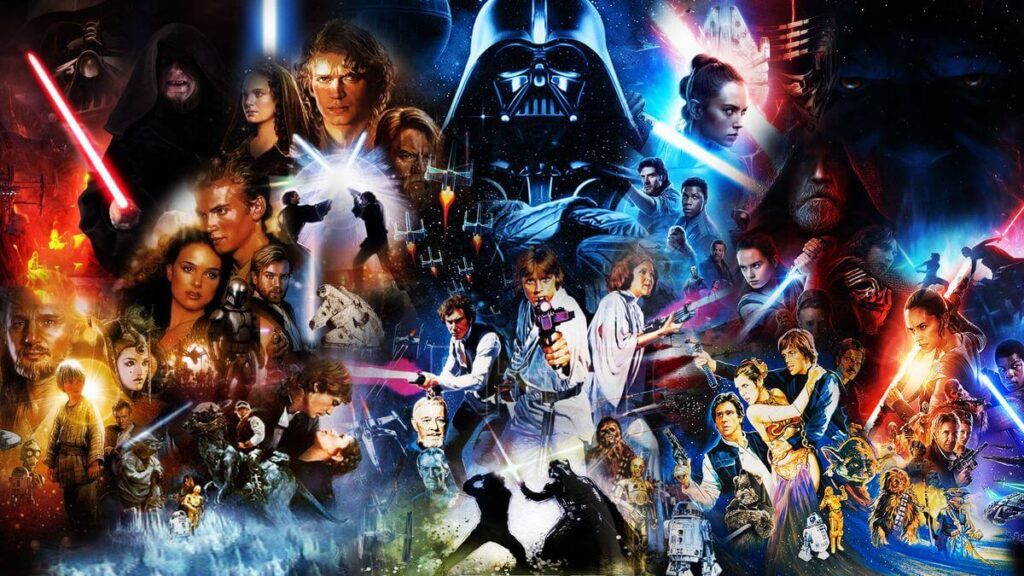
Ahsoka’s Expanding Shadow
Meanwhile, Rosario Dawson’s portrayal of Ahsoka Tano has carved out a fiercely loyal following.
The character’s live-action journey has deepened the lore surrounding the remnants of the Empire and the looming threat of Grand Admiral Thrawn. Whispers of interconnected storytelling—potentially culminating in an Avengers-style crossover event—have ignited speculation about a larger narrative convergence.
Is Star Wars building toward its own cinematic event saga? Or is it layering too many threads at once?
The ambition is undeniable. The execution remains under the microscope.
The Creative Crossroads Behind the Curtain
Beyond casting, the most debated topic may be creative stability.
With multiple films announced, delayed, restructured, or quietly shelved over the past several years, fans have grown wary of premature hype. Directors have come and gone. Release dates have shifted. Strategies have evolved.
Under the umbrella of Lucasfilm and its parent company The Walt Disney Company, the franchise is clearly recalibrating.
The new direction appears focused on fewer, more event-driven films—anchored by recognizable characters rather than experimental standalones.
That pivot alone has sparked intense debate.
Is this creative consolidation a sign of renewed focus?
Or an admission that the previous expansion model overstretched the galaxy?
The Fandom Factor: Passion or Polarization?
No conversation about Star Wars is complete without acknowledging its fandom—arguably the most passionate in pop culture history.
Every casting decision becomes a battleground. Every trailer frame is dissected. Every interview quote becomes fuel.
The return of legacy characters generates nostalgia-fueled excitement. But it also raises stakes. When you revisit icons, expectations skyrocket.
The franchise’s recent history has shown that bold creative swings can either redefine the saga—or fracture its audience.
Right now, both possibilities feel equally real.
A Story About Legacy
What makes this moment different is its thematic weight.
Rey rebuilding the Jedi.
Din Djarin stepping into larger mythic territory.
Ahsoka confronting the ghosts of a fallen Republic.
These aren’t just plot developments. They’re meditations on legacy—on what survives after empires fall.
It mirrors the franchise itself.
After years of experimentation across trilogies and streaming series, Star Wars now stands in its own narrative parallel: rebuilding, redefining, and deciding what the next era should represent.
Are We Witnessing a Renaissance?
Optimists see alignment at last. Strong central figures. Interconnected arcs. Clearer long-term vision.
Skeptics see risk. Familiar faces used as safety nets. A reliance on nostalgia rather than bold reinvention.
The truth likely lies somewhere in between.
Franchises of this magnitude don’t simply continue. They evolve—or they stagnate. And evolution is rarely smooth.
The Bigger Question: What Is Star Wars Now?
Once, it was the Skywalker saga.
Then it became a streaming empire.
Now, it appears to be transforming into a hybrid mythology—cinematic tentpoles supported by serialized storytelling, unified by legacy characters navigating uncharted futures.
The current wave of announcements suggests intention. Purpose. A desire to anchor the galaxy in emotionally resonant arcs rather than sheer volume.
But intention alone isn’t enough. Execution will decide whether this era becomes remembered as a bold rebirth—or another turbulent chapter.
The Calm Before Hyperspace
There’s a palpable sense of anticipation in the air.
Not the comfortable excitement of routine releases.
Not the chaotic uncertainty of abrupt cancellations.
Something more measured. More strategic.
The next theatrical chapter will not just test box office numbers. It will test trust.
Can the saga unify its audience again?
Can it honor its past while confidently stepping forward?
Can it prove that the Force still binds this galaxy together?
For now, fans wait.
Debating. Speculating. Hoping.
Because if there’s one truth that has survived every trilogy, every spin-off, every controversy—it’s this:
Star Wars never truly fades.
It transforms.
And the transformation unfolding now may define the next generation of the Force.