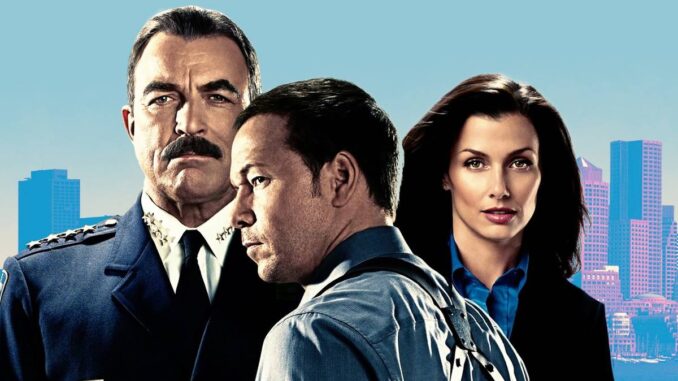
An End of an Era for a Television Icon
After more than a decade leading one of television’s most enduring family dramas, Tom Selleck quietly filmed his final scene for Blue Bloods. For fans who have watched him embody Commissioner Frank Reagan with steady authority and emotional restraint, the moment marked not just the end of a production cycle—but the closing chapter of a defining era.
While the series delivered many powerful moments over the years, Selleck’s last day on set carried a weight that extended far beyond scripted dialogue. It was the culmination of fourteen seasons, countless family dinners, and a character who became synonymous with integrity and tradition.
The Scene Itself: A Return to the Reagan Table
Fittingly, the final scene Selleck filmed took place in the Reagan family dining room—the emotional heart of Blue Bloods. The iconic Sunday dinner table has long served as the series’ anchor, a space where disagreements unfolded, lessons were passed down, and unity ultimately prevailed.
In his final filmed moment, Frank Reagan sits at the head of the table, surrounded by family, listening more than speaking. The dialogue is understated, reflective rather than explosive. There are no dramatic exits or grand gestures—just a quiet exchange that reinforces the show’s central theme: family above all.
The choice was intentional. Instead of ending with action or confrontation, the scene returns to what made the series resonate from the beginning.
Why the Dinner Table Mattered Most
Throughout the series, the Reagan family dinner scenes were more than tradition—they were symbolic. They represented generational continuity, moral debate, and the weight of public service carried into private life. For Selleck, those scenes often required long hours and careful pacing, but they also offered some of the show’s most emotionally grounded performances.
Ending his journey in that familiar setting was both poetic and personal. It allowed Frank Reagan’s legacy to feel intact—still leading, still listening, still guiding.
A Subtle but Powerful Performance
Those present during filming have described Selleck’s performance in that final scene as restrained but deeply emotional. There were no overt tears in character, no dramatic pauses meant to signal farewell. Instead, there was something quieter: a sense of gratitude in his delivery, a softness behind the authority.
It was the kind of performance that longtime viewers would recognize immediately. Frank Reagan was never a character defined by outward vulnerability. His strength came from steadiness—and that steadiness remained until the final frame.
The Atmosphere on Set
Behind the scenes, however, the atmosphere was far more emotional. Cast and crew members reportedly understood the significance of the moment, even if the script itself avoided overt finality. After filming wrapped, applause filled the set—an unscripted tribute to Selleck’s leadership and longevity.
Over fourteen seasons, he wasn’t just the show’s star; he was its anchor. His presence shaped the tone of the production, and his professionalism set a standard that carried through every department.
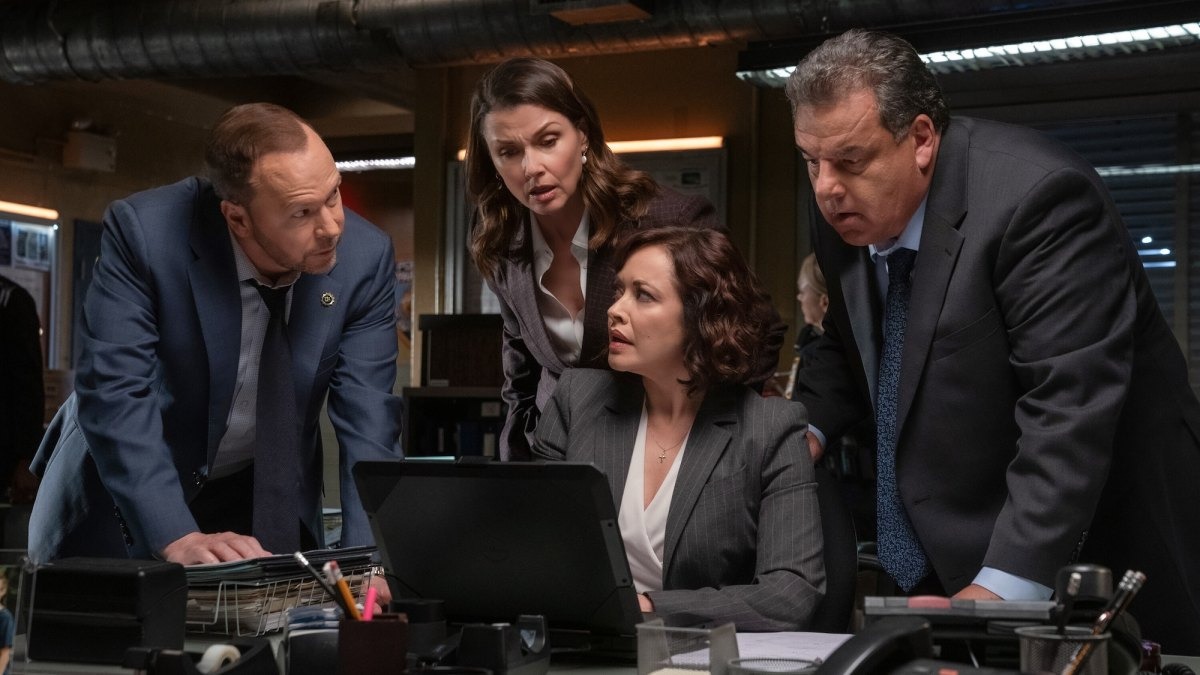
Reflecting on Fourteen Seasons of Leadership
Tom Selleck’s portrayal of Frank Reagan brought gravitas to Blue Bloods from the very first episode. A former Marine, police commissioner, father, and grandfather, Frank balanced political pressure with personal conviction. He wasn’t written as flawless—but he was written as principled.
Selleck infused that principle with nuance. His measured speech, deliberate posture, and controlled emotional range gave the character credibility. Over time, Frank became more than a television role—he became a cultural representation of steadfast leadership.
Filming that final scene was not simply about finishing a script. It was about stepping away from a character that had become part of television history.
No Grand Farewell — Just Continuity
One of the most notable aspects of Selleck’s last scene is what it didn’t include. There was no resignation speech, no hospital bedside goodbye, no sudden twist. The show resisted the temptation to create spectacle around his departure.
Instead, it chose continuity. Frank Reagan remains who he has always been: at the head of the table, steady and reflective. That creative decision reinforces the idea that the character’s legacy continues—even if the camera stops rolling.
For many fans, that subtlety feels more authentic than a dramatic send-off ever could.
The Emotional Impact on the Cast
The Reagan family dynamic has always been central to the series, and Selleck’s relationships with his co-stars mirrored that familial closeness. Actors who played his children and grandchildren have spoken over the years about his mentorship and generosity.
Filming the final scene together in the dining room added another layer of meaning. For them, it wasn’t just a scripted family dinner—it was the last time they would gather in that configuration under studio lights.
That shared understanding reportedly brought real emotion into the room, even if it didn’t fully appear on screen.
A Legacy Beyond the Final Frame
Tom Selleck’s career spans decades, but Blue Bloods represents one of his most sustained and defining roles. The character of Frank Reagan allowed him to explore leadership, aging, fatherhood, and moral complexity in ways that resonated with audiences across generations.
His final scene doesn’t attempt to summarize that legacy. Instead, it trusts viewers to carry those years of storytelling with them. Sometimes the most powerful endings are the quietest ones.
What the Scene Means for Fans
For viewers who have spent years watching Sunday dinners unfold, the knowledge that Selleck’s final filmed moment happened in that familiar room adds emotional weight to every rewatch. The table becomes more than a set piece—it becomes a symbol of television history.
Fans often expect finales to deliver shock or spectacle. In this case, the power lies in restraint. The final scene honors the show’s identity rather than reinventing it.
Closing the Book With Dignity
In many ways, the final scene Tom Selleck shot for Blue Bloods reflects the character he portrayed: dignified, measured, and rooted in tradition. There was no dramatic flourish—only continuity and respect for the journey that came before.
As the cameras powered down and the applause faded, one thing remained clear: Frank Reagan’s legacy endures. And through fourteen seasons of steady leadership, Tom Selleck ensured that legacy would be remembered not for spectacle—but for integrity.