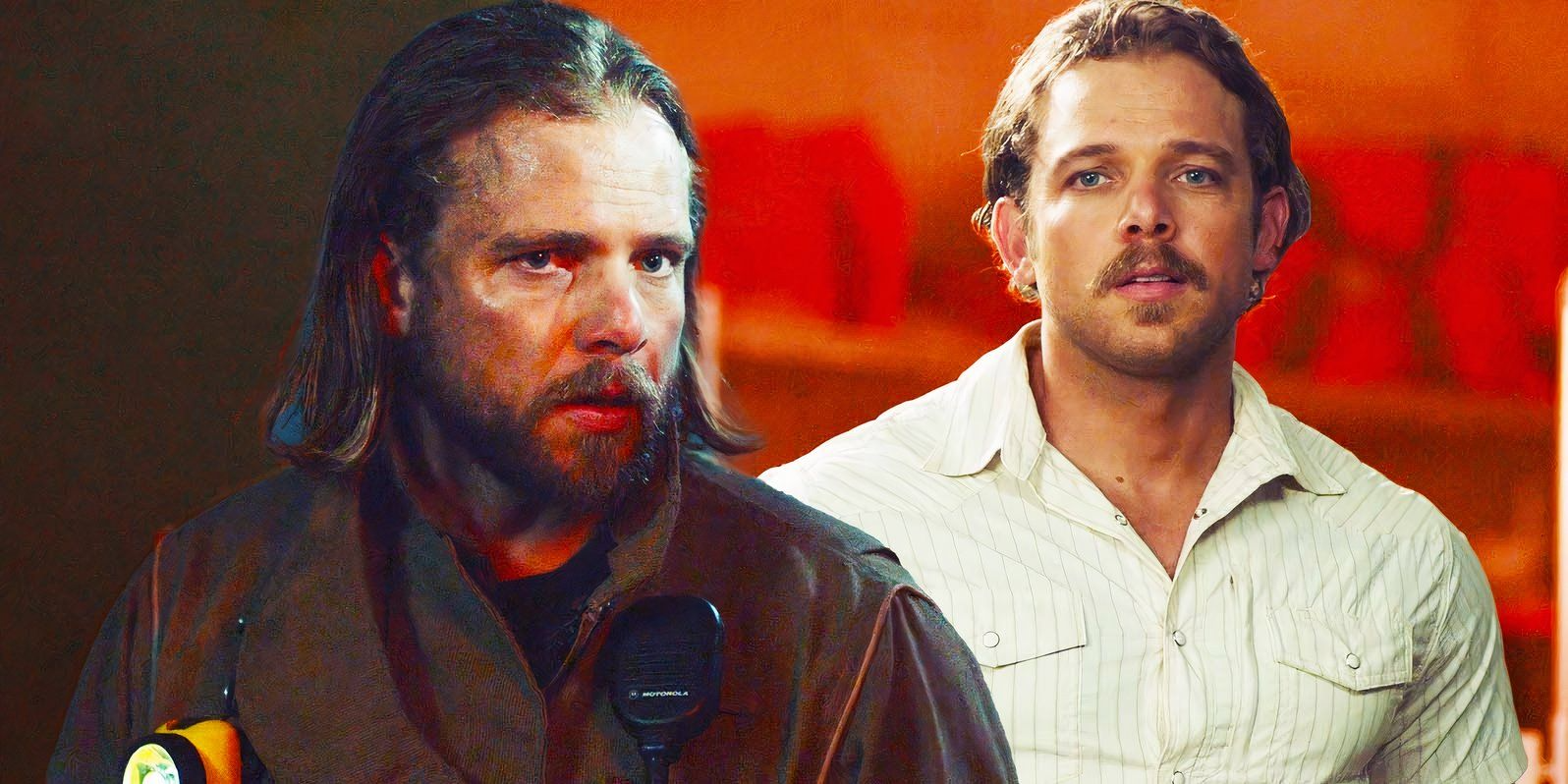
The smoke has cleared, but the emotional embers are still glowing. For fans of Fire Country, the announcement of Bode Leone’s departure marks the end of an era that has been as volatile and intense as the wildfires he fought. It is a “heartbreaking goodbye” in every sense of the word, yet as the dust settles, a surprising sentiment is echoing through the fandom: this was the right time. Bode’s journey was never destined to be a permanent fixture of the Three Rock crew. From the pilot episode, his story was framed as a crucible—a temporary, high-stakes environment designed to either forge him into a new man or consume him entirely. Over the course of his unforgettable journey, we witnessed a masterclass in character development, moving from a broken man burdened by the shadow of his sister’s death to a hero who finally learned to carry his own weight.
The Weight of Redemption
The primary reason fans agree with this exit lies in the integrity of Bode’s redemption arc. In television, there is a dangerous temptation to keep a popular character in a state of perpetual “striving.” Had Bode stayed in the same cycle of making mistakes and seeking forgiveness for several more seasons, the emotional stakes would have inevitably thinned. We watched him grapple with the disappointment of his father, Vince, and the complex, often painful expectations of his mother, Sharon. We saw him navigate a romance with Gabriela that was as much about finding a reason to live as it was about love.
By choosing this moment to close his chapter, the writers have honored the progress he made. To see Bode finally step away is to acknowledge that he is no longer the man who arrived in orange jumpsuits with nothing to lose. He has earned his peace. Forcing him back into the fire—literally or metaphorically—would have felt like a regression rather than a progression.
Impact on the Edgewater Community
Bode’s exit doesn’t just affect the viewers; it shifts the tectonic plates of the show’s universe. The Leone family has spent years centered around Bode’s crisis. His departure allows the narrative to breathe and explore how Vince and Sharon function as a couple and as leaders when they aren’t constantly in “rescue mode” for their son. It also opens up space for the supporting cast at Three Rock and Station 42 to step into the spotlight.
The consensus among the audience is that the show has successfully built a world that is bigger than just one man. While Bode was the heart, the “Fire Country” itself—the community, the bravery, and the shared struggle of the crew—is the soul. Allowing Bode to leave at the peak of his development preserves his legacy as a symbol of hope rather than a character who overstayed his welcome.
A Legacy Defined by Sacrifice
Max Thieriot’s performance brought a raw, visceral vulnerability to the screen that resonated deeply with anyone who has ever felt like an underdog. Fans won’t soon forget the quiet moments of introspection in the barracks or the high-octane rescues where Bode risked everything to prove his worth. These moments defined a chapter of television that explored the nuances of the American penal system and the grueling reality of firefighting with a rare sensitivity.
The heartbreak fans feel is a testament to how well the character was written and performed. It is a “good” kind of heartbreak—the kind that comes from a story being told so well that the ending, though painful, feels earned. Bode Leone came to Edgewater looking for a way out of his own personal darkness, and in the end, he found the light.
As we say goodbye to Bode, we aren’t just losing a protagonist; we are witnessing the graduation of a soul. It is a rare feat for a show to let go of its lead at the perfect moment, but Fire Country has done exactly that. The fire still burns in Edgewater, but for Bode, it is finally time to walk out of the heat and into a new life.