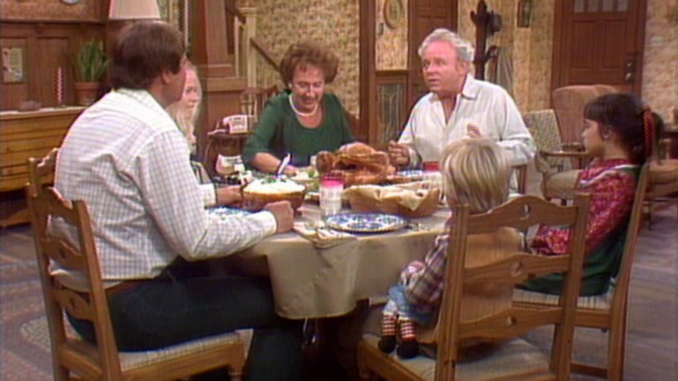
Few television sitcoms transformed an ordinary setting into such a powerful storytelling stage as All in the Family. While most family comedies of the early 1970s leaned on harmless misunderstandings and lighthearted jokes, this groundbreaking series turned the dinner table into something far more significant: a battleground of ideas, generations, and cultural values.
Week after week, viewers gathered around their own televisions to watch the Bunker family sit down for dinner—only to witness conversations spiral into fiery debates about politics, race, social change, and everyday frustrations. These scenes were hilarious, uncomfortable, and deeply revealing all at once. In many ways, the dinner table became the emotional and ideological center of the show.
What made these moments so compelling was their authenticity. In the Bunker household, dinner wasn’t just a meal; it was an arena where different generations collided. Patriarch Archie Bunker, portrayed brilliantly by Carroll O’Connor, often launched into passionate opinions about politics, the changing culture, or what he believed were the “good old days.” Sitting across from him was his progressive son-in-law Michael Stivic, whose responses frequently ignited verbal fireworks.
These exchanges were rarely calm discussions. Instead, they unfolded like miniature theatrical performances—Archie pounding the table, Michael firing back with sharp sarcasm, and the rest of the family trying to keep the peace. Yet even amid the shouting, there was a remarkable comedic rhythm.
The genius of creator Norman Lear was recognizing that these arguments mirrored conversations happening across America at the time. The early 1970s were defined by intense debates about civil rights, the Vietnam War, and generational change. By placing those tensions around the dinner table, the show brought national conversations into the living room.
Despite the intensity of these scenes, humor remained the driving force. Archie’s stubborn logic and colorful expressions often drew laughter even as they exposed outdated thinking. Michael’s passionate rebuttals added a different comedic energy, turning every argument into a mix of satire and social commentary.
For audiences, these dinner table debates felt strangely familiar. Many families recognized their own disagreements reflected in the Bunker household. The difference was that All in the Family turned those arguments into entertainment without avoiding the uncomfortable truths behind them.
Over time, these scenes became some of the most iconic moments in television history. They demonstrated that sitcoms could address serious issues without losing their comedic edge. More importantly, they proved that audiences were ready to laugh—and think—at the same time.
Decades later, the dinner table of the Bunker home remains one of the most recognizable settings in television history. What looked like a simple family meal became something far more powerful: a stage where America confronted itself.