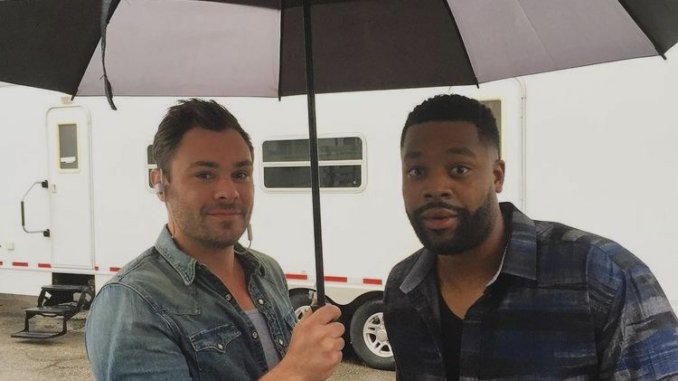
In the high-stakes world of television procedurals, hitting a 13th season is a milestone that few shows ever reach. While Chicago P.D. is known for its grit, its intense depictions of urban crime, and the iron-fisted leadership of Hank Voight, the true engine behind the show’s enduring success isn’t the action—it’s the soul. Specifically, it is the profound, real-life brotherhood between Patrick John Flueger (Adam Ruzek) and LaRoyce Hawkins (Kevin Atwater).
As of late 2025, this relationship has evolved from a simple working partnership into a foundational pillar of the “One Chicago” universe. Their bond is more than just a public relations talking point; it is a “secret pact” of loyalty that has fundamentally re-engineered the show’s scripts, its cultural impact, and its survival in an ever-changing television landscape.
1. The accidental chemistry: origins of “Ruzwater”
When the pilot of Chicago P.D. aired over a decade ago, the characters of Adam Ruzek and Kevin Atwater were never intended to be the show’s emotional center. Ruzek was the hot-headed rookie plucked from the academy, while Atwater was the steady patrol officer making the jump to Intelligence.
However, during the grueling night shoots of Season 1, something unexpected happened. Between takes, while shivering in the sub-zero Chicago wind, Flueger and Hawkins found a rhythm that was entirely unscripted. Their natural banter, shared humor, and mutual respect were so palpable that the producers noticed a shift in the daily “dailies.” The writers realized that while fans came for the action, they stayed for the chemistry between these two men. This led to the birth of “Ruzwater,” a partnership that would become the most stable and trusted relationship in the Intelligence Unit.
2. The “adoption” that broke the Hollywood mold
What truly sets this duo apart is how their friendship transcended the set. While many actors retreat to separate lives once the cameras stop rolling, Hawkins and Flueger did the opposite.
In a series of revealing interviews throughout 2025, LaRoyce Hawkins opened up about his “adoption” into the Flueger family. Patrick, a native of Red Wing, Minnesota, didn’t just invite LaRoyce over for a beer; he brought him into his childhood home. For years, Hawkins has been a permanent fixture at the Flueger family Thanksgiving table.
“I have a family in Minnesota that doesn’t look like me, but loves me like their own,” Hawkins shared.
This isn’t just a heartwarming anecdote; it’s a professional advantage. Because they are family in real life, they share a level of “acting telepathy.” They can anticipate each other’s movements during a tactical raid and communicate entire storylines with a single look. This authenticity is something you cannot fake, and it is the reason why their scenes feel more like a documentary than a scripted drama.
3. “Truck Talks”: The improvised heart of the show
One of the most iconic elements of Chicago P.D. is the “truck talk”—those quiet moments where Ruzek and Atwater are staking out a suspect in their unmarked vehicle.
By late 2025, it has been revealed that a significant portion of these scenes are either heavily improvised or “lived-in” by the actors. The writers often provide the plot points, but they leave the dialogue to Flueger and Hawkins. They bring their real-life conversations about music, life, and Chicago culture into the car. This has allowed the show to move away from rigid procedural dialogue and toward a style that feels loose, modern, and human. It’s the reason why, after 13 seasons, the audience still isn’t bored—because the characters are constantly evolving through their friendship.
4. Navigating the heavy stuff: the allyship that matters
In the 2020s, as the world and the city of Chicago faced massive social and political shifts, Chicago P.D. had to address the complex reality of policing and race. This could have been a point of friction that broke the show, but the Flueger-Hawkins bond made it a point of strength.
Because they are best friends who trust each other implicitly, they were able to tackle storylines involving racial bias and police reform with a raw honesty that other shows avoid. Hawkins has noted that he felt “safe” challenging Flueger’s character on screen because he knew Patrick was an ally off-screen. They worked together to ensure that their characters’ disagreements were rooted in love and a desire to be better, rather than just dramatic conflict. This has made Chicago P.D. a leader in how procedurals handle sensitive topics, proving that a strong real-life foundation leads to braver storytelling.
5. The 2025 hiatus and the “brother’s keeper” moment
Perhaps the greatest testament to their bond occurred in late 2025. When Patrick Flueger took a brief, much-discussed leave of absence from the show for personal reasons, the fans were worried. During this time, LaRoyce Hawkins acted as his protector in the press.
Hawkins didn’t just give “no comment” to reporters; he spoke about the importance of mental health and supporting his brother. When Flueger finally returned to the set in December 2025, the video of their reunion became one of the most-watched clips in the show’s history. It wasn’t a marketing stunt; it was a genuine moment of relief. The cast noted that the “energy” of the show returned the moment the two were back together, showing that the health of the show is directly tied to the health of their friendship.
6. Legacy: 13 seasons and counting
As the series moves toward its 13th season finale, the Flueger-Hawkins legacy is secure. They have proven that longevity in Hollywood isn’t just about ratings—it’s about the culture you build behind the scenes. They created an environment where vulnerability is welcomed, where mentorship is mandatory, and where the person standing next to you is more than just a co-worker.
The “Ruzwater” dynamic has changed the DNA of Chicago P.D.. It took a show about “tough cops” and turned it into a show about “loyal brothers.” For the fans, who have grown up with these characters over the last decade, that friendship is the ultimate payoff.