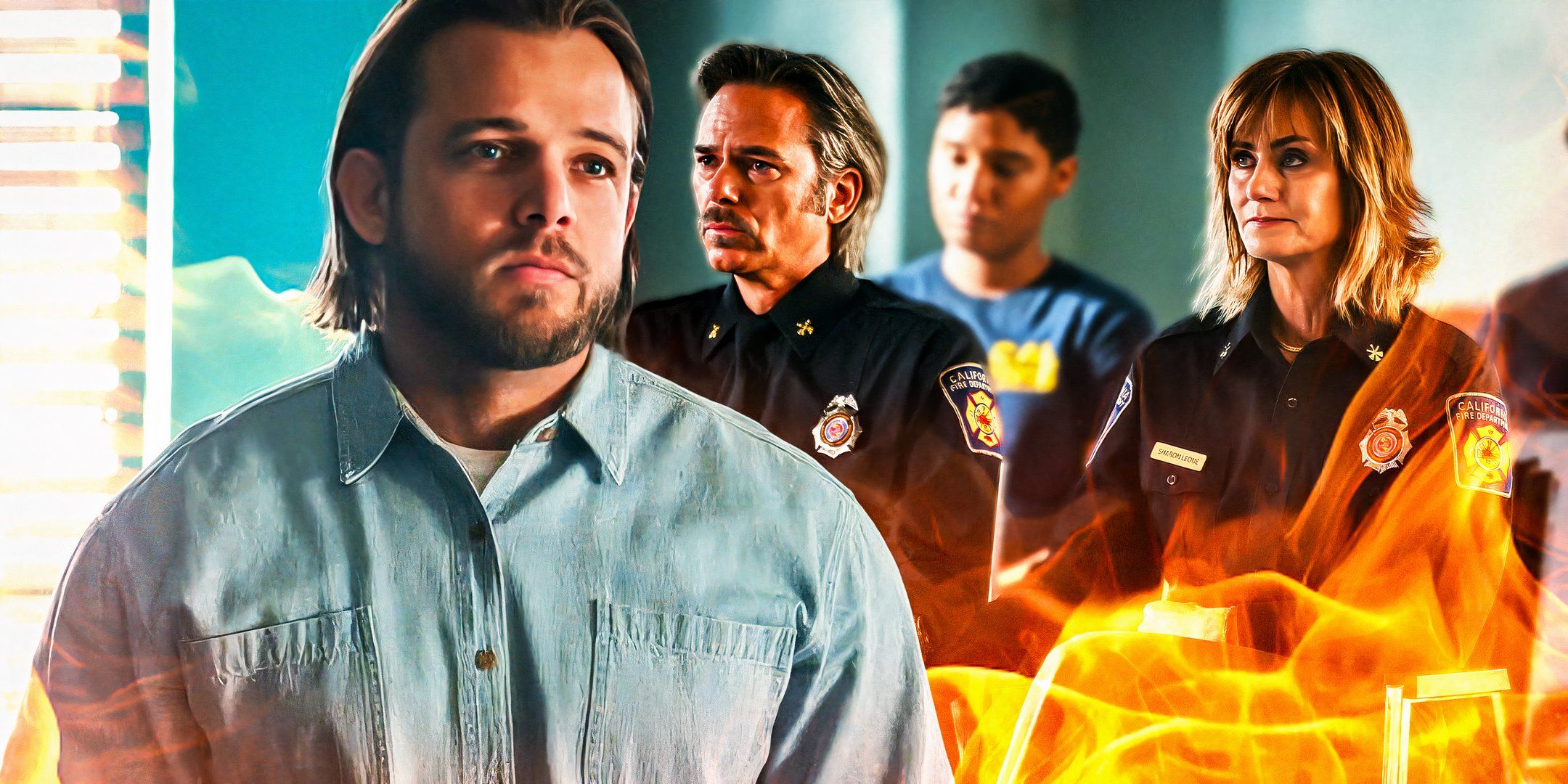
Since its explosive debut, Fire Country has been marketed and consumed primarily as the odyssey of Bode Leone. The narrative hook is undeniably compelling: a disgraced son returns to his hometown in orange jumpsuits, fighting literal and metaphorical fires to earn back the trust of a family he shattered. However, as the series progresses through the high-stakes landscape of 2026, it has become increasingly clear that focusing solely on Bode’s quest for a clean slate is a bit of a “distraction.” While Max Thieriot’s brooding performance anchors the emotional weight of the show, the true conflict of Fire Country—the one that gives the series its grit and longevity—is far more systemic and communal. The real battle isn’t just about whether one man can be “good” again; it is about a town struggling to survive the crushing weight of its own history, a failing infrastructure, and the moral ambiguity of a society that relies on the incarcerated to save the free.
The “Bode Distraction” often veils the fascinating, simmering tension within the Leone family hierarchy. The real conflict lies in the fractured leadership of Vince and Sharon Leone, who are forced to balance their roles as public servants with their private grief. In 2026, we see this manifest as a departmental crisis. The conflict is not just about Bode’s redemption, but about whether the Leone legacy can withstand the modern pressures of “Survival of the Fittest” in the California Department of Forestry and Fire Protection (Cal Fire). We are watching a family—and by extension, a town—renegotiate its identity. Every time the camera lingers on Bode’s internal struggle, it risks overshadowing the equally vital conflict of a community that has become addicted to the “hero narrative” to mask deep-seated socio-economic fractures.
Furthermore, the most profound conflict in Fire Country is embedded in the walls of the Three Rock Inmate Fire Camp itself. The show often presents the program as a vehicle for Bode’s growth, but the “Brutal Truth” is the systemic tension of the program’s existence. The real drama is found in the eyes of Eve Edwards as she leads a crew of men who are deemed “unfit” for society yet are tasked with protecting it from total annihilation. The 2026 season has leaned heavily into this paradox: the conflict between the inmates’ desire for a second chance and a legal system that is designed to keep them in a cycle of “moving on but never moving out.” When we focus too much on Bode, we miss the collective struggle of the “orange-clad heroes” who don’t have a famous last name to protect them. The real conflict is the fight for the soul of Three Rock—a battle against political vultures who see the inmates as disposable labor rather than human beings in search of a path home.
The character of Gabriela Perez serves as another pillar of the real conflict that transcends Bode. Her journey isn’t just about being a love interest; it’s about the “Culture of Excellence” vs. the “Legacy of Trauma.” Gabriela’s struggle to define herself outside of her father Manny’s shadow and Bode’s gravity represents the struggle of every person in Edgewater who wants to be judged by their own merits. In the latest 2026 arcs, the conflict has shifted toward the psychological toll of the job. It is about the “Burnout” that happens when your life is a constant cycle of trauma and rescue. This is a universal conflict that affects every person in the firehouse, and by framing it only through the lens of Bode’s redemption, we diminish the shared sacrifice of the ensemble.
Moreover, the environment itself acts as a primary antagonist that isn’t concerned with anyone’s redemption. The “Mega-Fires” of 2026 are a symptom of a larger, existential conflict: humanity’s losing battle against a changing climate. Edgewater is a town on the brink, and the real tension comes from the realization that no amount of personal growth can stop the next firestorm. The conflict is the “Real-Life Reality” of living in a state where the fire season never truly ends. This adds a layer of fatalism to the show that makes Bode’s quest for a “fresh start” feel almost tragically small in comparison to the scale of the disasters they face.
Ultimately, while Bode Leone is the entry point, the true power of Fire Country lies in its portrayal of a town in a state of perpetual recovery. The real conflict is found in the “Beyond the Flames” moments—the quiet conversations at the local bar, the political maneuvering in the town hall, and the silent grief of those who have lost everything. Bode’s redemption is the hook, but the “Truth” of the show is the resilience of a community that refuses to turn to ash. As we look toward the Season 5 finale, it is time to look past the “Bode Distraction” and appreciate the complex, multi-layered war for survival that makes Fire Country the definitive drama of our time.
Edgewater isn’t just a backdrop for one man’s story; it is a living, breathing entity fighting its own battle to stay standing. Bode may be the spark, but the town is the fuel, and the real conflict is the fire that consumes them all.