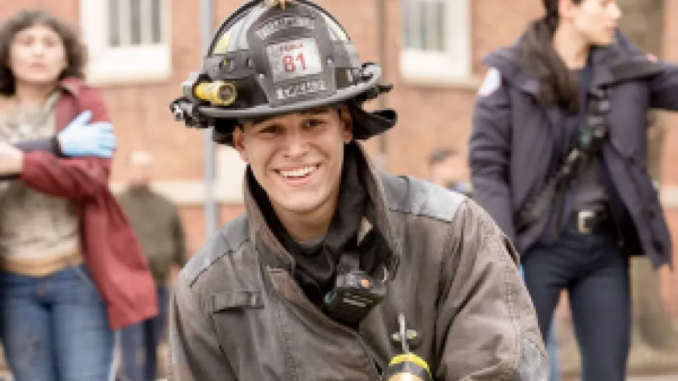
The leadership dynamics within the walls of Firehouse 51 have undergone a seismic shift as Stella Kidd officially transitions into her role as a Lieutenant, a move that has both invigorated the Chicago Fire fanbase and introduced a new layer of tension to the series. For years, Stella was the rising star of Truck 81, a firefighter who combined raw physical talent with a deep, intuitive empathy for the victims she rescued. However, as any veteran of the Chicago Fire Department will tell you, there is a massive gulf between being a great firefighter and being a great leader. As Stella steps up to command her own crew, the central question of the current season is whether she can handle the crushing weight of responsibility that comes with the bugles on her collar.
Stella’s journey to the lieutenant’s quarters was not an easy one. She had to battle against the internal politics of the department, overcome the shadows of her own past, and prove to the high-ranking brass that she was more than just a talented protégé of Kelly Severide or Christopher Herrmann. Her initiative, Girls on Fire, became a symbol of her dedication to the future of the service, proving that she possessed the vision required for leadership. Yet, now that she is the one making the life-or-death calls on the fire ground, the reality of the position is hitting home. The show has expertly portrayed her struggle to balance her natural desire to be one of the crew with the necessary distance required of an officer.
The pressure on Stella is multifaceted. On one hand, she is following in the footsteps of legendary leaders like Matthew Casey and Wallace Boden, men who commanded the floor with a quiet, unquestioned authority. On the other hand, she is navigating a personal life that is inextricably linked to the firehouse. Her marriage to Kelly Severide, while a source of strength, also adds a layer of complexity to her professional standing. When Severide is away on arson investigations or involved in high-stakes squad rescues, Stella is left to anchor the station alone. The writers have done a brilliant job of showing how this isolation can lead to second-guessing and self-doubt, even for someone as capable as Kidd.
Recent episodes have highlighted specific moments where the pressure nearly reached a breaking point. During a complex multi-vehicle accident on the expressway, Stella was forced to make a split-second decision that put her own team at risk to save a trapped civilian. While the rescue was successful, the fallout within the truck was palpable. New recruits and even seasoned veterans like Mouch have had to adjust to her specific style of command, which is more collaborative yet sometimes more emotionally transparent than her predecessors. This vulnerability is her greatest strength, but in the heat of a backdraft, it can also be perceived as a liability.
Moreover, the administrative burden of being a lieutenant is a side of the job that Chicago Fire rarely explored in such detail before Stella took the reins. We see her grappling with the paperwork, the budget cuts, and the constant scrutiny from headquarters. This “office” side of the crisis is where the real pressure often lies, as one wrong move in a report can have more lasting consequences than a broken hydrant. Stella’s refusal to play the political games of the CFD has made her a target for some of the more cynical members of the leadership, adding an external layer of stress that she must manage while also keeping her crew safe and motivated.
The supporting cast has been instrumental in showing the different facets of Stella’s growth. Her friendship with Kelly and her mentorship of the younger female firefighters provide a support system that keeps her grounded. However, the show also isn’t afraid to show her failing. There have been briefings where her voice wavered and calls where she hesitated just a fraction of a second too long. These moments of humanity are what make her such a relatable protagonist. Fans aren’t watching a superhero; they are watching a woman work twice as hard to earn half the respect in a male-dominated field.
As the season progresses toward its finale, the stakes for Stella Kidd are only going to increase. With rumors of a major department shake-up and the potential for a new Chief to take over at 51, her leadership will be tested like never before. Can she maintain the unique culture of Firehouse 51 while satisfying the demands of a changing department? More importantly, can she keep her crew alive in a city that seems to produce a new disaster every Wednesday?
Stella Kidd has proven she has the heart of a lion, but the crown of leadership is heavy. The audience is strapped in to see if she will rise to the occasion and become the new legendary anchor of the station or if the fire of responsibility will prove too hot to handle. One thing is certain: Firehouse 51 has never felt more vital, and Stella is exactly the leader we need for this new era of Chicago’s bravest.