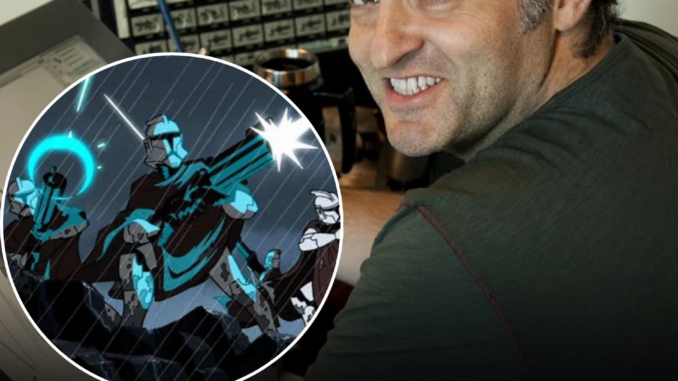
A stunning piece of Star Wars history is once again igniting debate across fan communities: Genndy Tartakovsky, the visionary creator of Star Wars: Clone Wars (2003), reportedly declined a leadership role at Lucasfilm in 2005 — a move that many now believe reshaped the entire future of the franchise.
At the time, Tartakovsky had just delivered a critically acclaimed, stylistically bold animated series that expanded the Clone Wars era in ways fans had never seen before. His micro-series, praised for its cinematic action and mythic tone, helped bridge Attack of the Clones and Revenge of the Sith and redefined how animation could serve the Star Wars universe.
According to long-circulating industry reports and insider discussions, Lucasfilm was interested in keeping Tartakovsky in a larger creative capacity as the franchise prepared for its next animated evolution. However, he reportedly chose to pursue other creative projects rather than step into a long-term executive or supervisory role within the company.
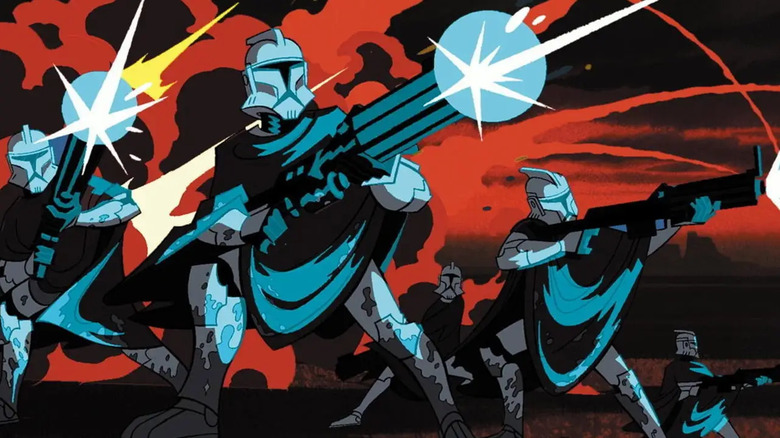
That decision opened the door for Dave Filoni, a protégé of George Lucas, to rise into a central creative position. Filoni would go on to lead Star Wars: The Clone Wars (2008), a series that dramatically expanded the mythology — introducing characters like Ahsoka Tano and deepening the arcs of Anakin Skywalker and the Jedi Order. Today, Filoni stands as one of the most influential architects of the modern Star Wars era, overseeing major projects within the franchise’s television universe.
Fans are now fiercely debating the “what if” scenario:
-
What would Star Wars look like today if Tartakovsky had taken that leadership role?
-
Would the franchise have leaned further into stylized, minimalist storytelling instead of character-driven serialized arcs?
-
Would Ahsoka Tano even exist in the form fans know today?
Online discussions highlight the sharp creative contrast between Tartakovsky’s kinetic, near-mythological visual storytelling and Filoni’s lore-heavy, character-focused expansion of canon. Some longtime fans argue that Tartakovsky’s interpretation captured a raw, operatic intensity that felt closer to the spirit of the prequel trilogy. Others credit Filoni’s long-form storytelling with saving and strengthening the franchise during uncertain years.
Industry observers also note that Tartakovsky has since spoken about the creative challenges of working within established IP systems, often preferring artistic autonomy over franchise oversight. His later projects outside of Star Wars reinforced his reputation as a fiercely independent creator.
Meanwhile, Filoni’s ascent within Lucasfilm has positioned him as a key steward of the galaxy far, far away — particularly in the streaming era. Many now view the 2005 leadership decision as a quiet but pivotal fork in the road for Star Wars history.
Nearly two decades later, the ripple effects of that moment are still shaping canon, characters, and creative direction. What once seemed like a simple career choice now reads like one of the most consequential turning points in the evolution of the franchise.
In a saga built on destiny and pivotal decisions, this may have been one of the most important — and least visible — choices of them all.