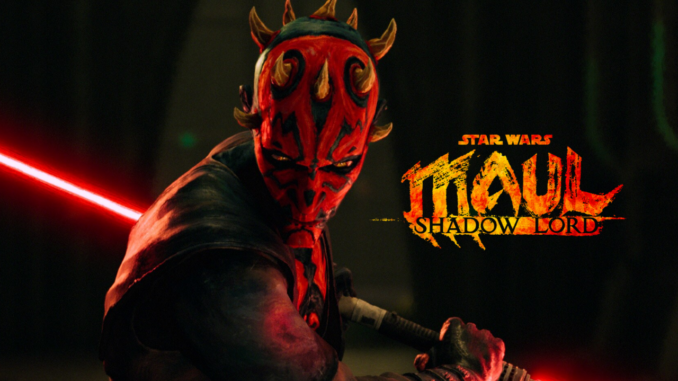
For decades, Star Wars has told the story of heroes, hope, and redemption. But what happens when the spotlight shifts fully to the shadows?
With Star Wars: Maul – Shadow Lord arriving on April 6, the galaxy is about to revisit one of its most dangerous survivors. Set after the fall of the Republic and in the unstable aftermath of the Clone Wars, this new chapter follows Darth Maul as he claws his way back to power—not as a Sith apprentice, but as something far more unpredictable: a criminal kingpin determined to dominate the galaxy’s underworld.
And fans are already debating whether this is the boldest move the franchise has made in years.
The Villain Finally Takes Center Stage
Ever since his shocking return in Star Wars: Episode I – The Phantom Menace and his expanded arc in Star Wars: The Clone Wars, Maul has transformed from a silent assassin into one of the saga’s most psychologically complex figures.
In Shadow Lord, the timeline pushes forward—after the Republic’s collapse and during the early tightening grip of the Empire. The Jedi are scattered. The Sith operate in secrecy. Crime syndicates thrive in the vacuum of order.
And Maul sees opportunity.
No longer merely driven by rage against Obi-Wan Kenobi, he now seeks structure, influence, and total control over the criminal networks spanning the galaxy. Rival syndicates, Imperial enforcers, and even surviving Jedi begin to close in, forcing Maul into increasingly ruthless choices.
This is not just revenge. It’s evolution.
The Actor Fans Can’t Stop Talking About
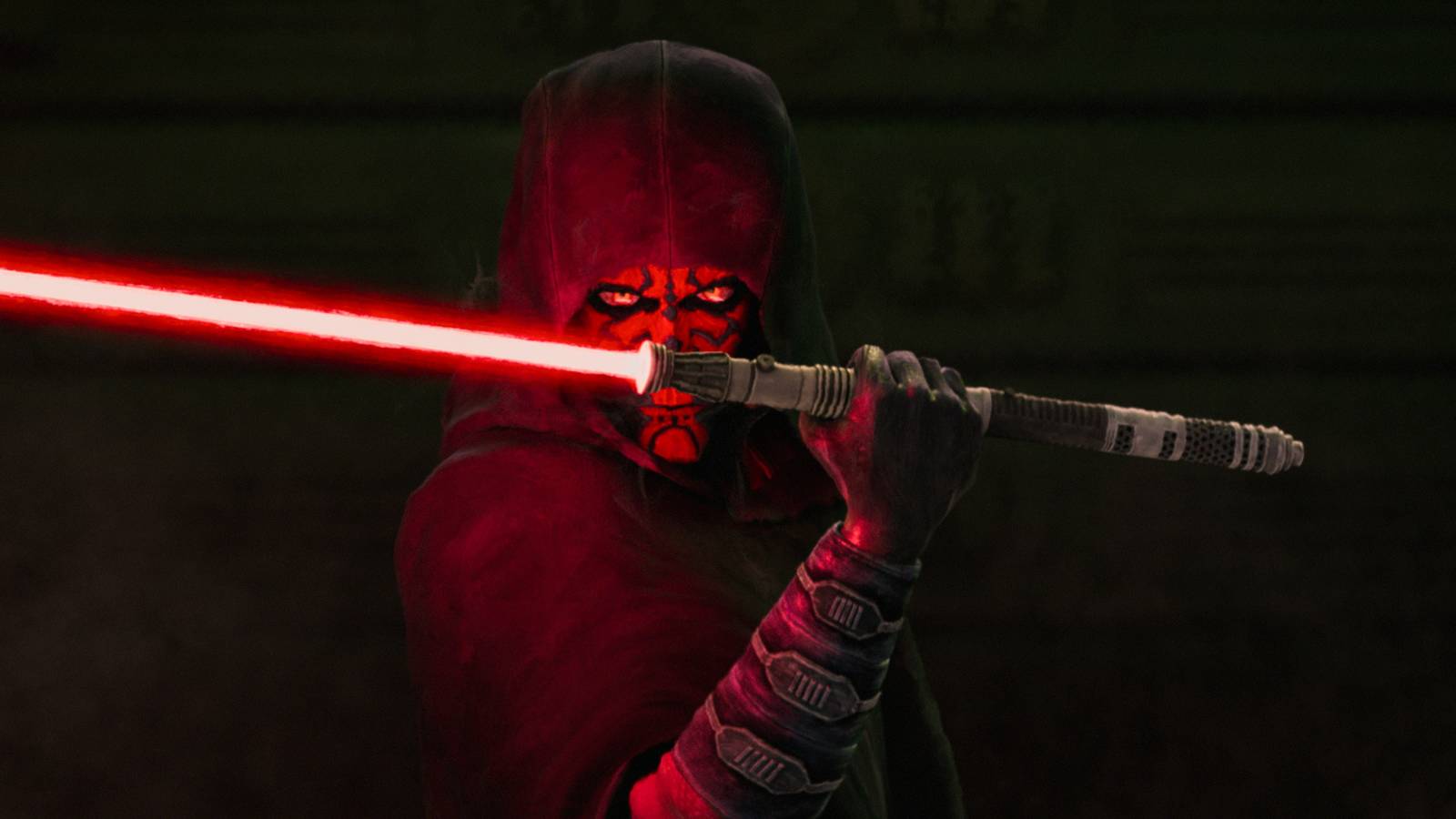
Much of the renewed hype surrounds Sam Witwer, whose voice performance redefined Maul in animation. Witwer’s portrayal turned a visually striking villain into a layered, tragic mastermind—oscillating between icy control and explosive fury.
Now, audiences are dissecting every interview and teaser clip. Will Shadow Lord push Maul further into calculated strategist territory? Or will we witness the final psychological fracture that shapes the version seen later in Solo: A Star Wars Story?
Witwer has hinted that this story explores “the cost of obsession when power is the only thing left.” That single line has ignited speculation across the fandom.
A Criminal Empire in the Making
Longtime viewers know Maul’s Crimson Dawn connections from previous canon. But what many casual fans may not realize is that Maul’s rise to power is one of the earliest examples of large-scale organized crime taking advantage of the Empire’s restructuring.
Unlike the Sith’s Rule of Two philosophy, Maul builds something different: influence through fear, loyalty through manipulation, and power through chaos.
Here’s what makes Shadow Lord unique:
-
It explores the criminal underworld as a political battlefield.
-
It positions Maul not as a Sith traditionalist—but as a rival power structure.
-
It blurs the line between villain and anti-hero without redeeming him.
In a franchise known for redemption arcs, Maul refuses absolution.
What Most Fans Don’t Know
One fascinating detail often overlooked: Maul is one of the only characters in Star Wars canon to directly challenge both Jedi and Sith ideology—and reject both.
After being discarded by Darth Sidious, Maul’s hatred evolves into something more existential. He no longer seeks approval from the Sith. He seeks to dismantle the systems that created him.
That ideological rebellion makes Shadow Lord more than a crime story. It’s a meditation on identity after betrayal.
Another lesser-known aspect? Maul’s survival and transformation mirror the galaxy’s own fracture. As the Republic dies and the Empire rises, Maul becomes a reflection of a broken political order—weaponized instability in humanoid form.
The Imperial Threat Lurking in the Background
While Maul builds his empire, the Empire consolidates its own.
The tension in Shadow Lord reportedly stems from this collision course. Criminal syndicates can operate in chaos—but not under absolute authoritarian control. As Imperial forces tighten their grip, Maul must decide whether to hide, negotiate, or strike first.
This dynamic adds a strategic chess-match layer rarely explored in villain-focused storytelling.
Why This Story Feels Different
Recent Star Wars projects have leaned into legacy characters, nostalgia, and hopeful continuations. Shadow Lord pivots sharply.
There are no Jedi councils. No grand rebellions—at least not yet.
Instead, we see:
-
Power vacuums.
-
Fear-based alliances.
-
Moral decay spreading in the Empire’s shadow.
It’s darker. More intimate. More psychologically driven.
And fans are split. Some celebrate the deeper dive into criminal lore. Others question whether centering a villain risks glorifying him.
But that debate? It’s exactly what’s fueling the anticipation.
A Bridge to the Future of the Franchise?
There’s growing speculation that Shadow Lord could quietly set up future Crimson Dawn storylines, potentially connecting threads between animated canon and live-action projects.
Maul’s survival past the Clone Wars has already proven that the franchise is willing to resurrect and reshape its most dangerous players. The question now is whether this story is a tragic midpoint—or the beginning of a larger expansion into the underworld era.
The Transformation Into Legend
By the time audiences encounter Maul again in later canon appearances, he is colder, more isolated, and consumed by destiny.
Shadow Lord promises to chart that descent.
The man who was once a Sith weapon becomes something arguably more terrifying: a self-made tyrant operating outside the binary morality of Jedi and Sith.
And in doing so, the franchise may finally answer a long-standing question:
Was Maul ever truly a servant of darkness—or was he always destined to rule it?
Final Verdict: A Risk Worth Taking?
With April 6 approaching, Star Wars: Maul – Shadow Lord stands poised to become one of the most talked-about expansions of villain lore in recent memory.
It’s not about redemption.
It’s not about hope.
It’s about survival, ambition, and what happens when a discarded apprentice decides he will never kneel again.
If the execution matches the ambition, this could redefine how Star Wars tells stories about power—and who gets to wield it.
The galaxy is watching.
And the shadows are moving.