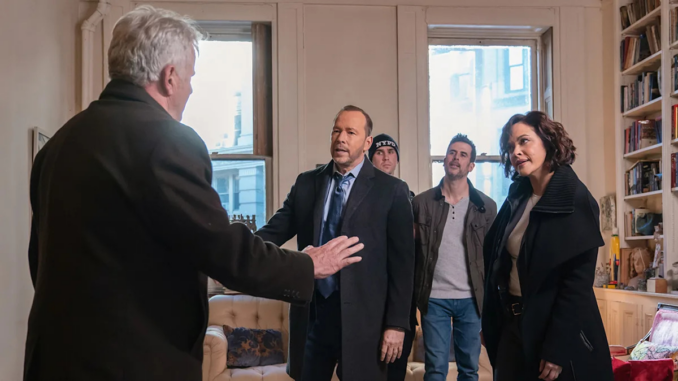
For more than a decade, Blue Bloods hasn’t just been a police drama. It’s been ritual television. A Sunday night tradition. A steady heartbeat in an industry obsessed with reinvention.
And now? The ground is shifting.
With confirmation that Season 14 will close the chapter on the Reagan family, fans aren’t just reacting—they’re dissecting every scene, every interview, every cryptic cast comment for clues about what this ending really means.
Is this a graceful farewell? A corporate decision? Or the prelude to something unexpected?
Let’s unpack the storm surrounding Blue Bloods.
The Announcement That Hit Like a Shockwave
When it was revealed that Season 14 would be the series’ last, the response was immediate and emotional. For many viewers, Blue Bloods represents stability in a television era defined by abrupt cancellations and streaming shakeups.
But this wasn’t a quiet fade-out.
Cast members acknowledged the weight of the ending. Longtime lead Tom Selleck, who has anchored the series as Commissioner Frank Reagan, openly expressed disappointment that the show would not continue beyond its current run. His comments fueled debate about whether the decision was purely creative—or financial.
When the patriarch of the Reagan family signals unfinished business, fans listen.
Why Season 14 Feels Like a Closing Chapter
There’s a noticeable tonal shift this season.
Frank is reflecting more than commanding. Danny’s cases carry heavier emotional consequences. Jamie and Eddie are navigating not just professional pressure but deeper questions about identity and legacy.
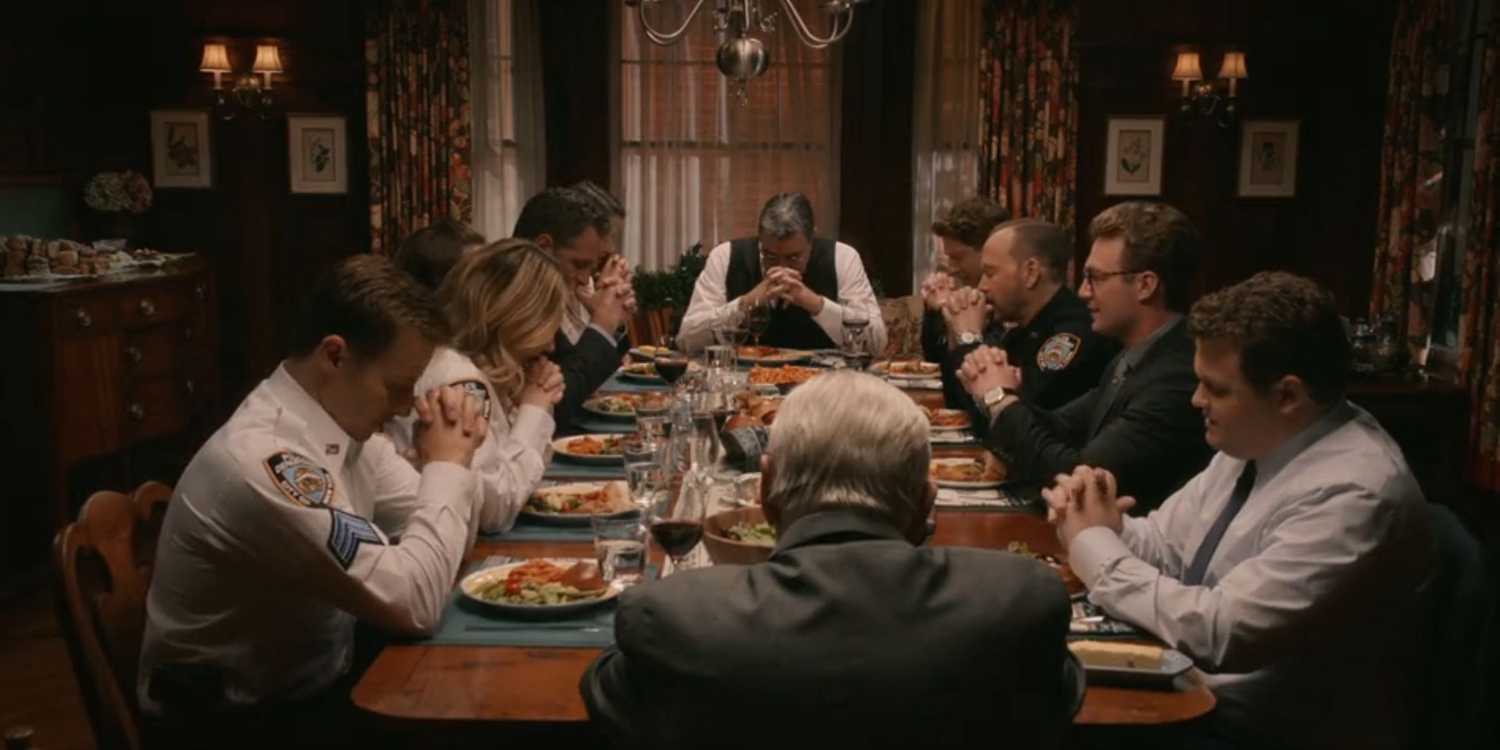
And then there’s the Sunday dinner table—the symbolic core of the series. Scenes feel longer. Conversations feel loaded. It’s as if the writers are deliberately honoring what made the show iconic before taking a final bow.
When a series begins tying up emotional threads this carefully, it rarely happens by accident.
The Cast at the Center of the Conversation
You cannot discuss the show’s impact without recognizing its ensemble strength:
-
Tom Selleck as Frank Reagan
-
Donnie Wahlberg as Danny Reagan
-
Bridget Moynahan as Erin Reagan
-
Will Estes as Jamie Reagan
This isn’t just a cast. It’s a television family viewers have grown alongside for fourteen seasons.
So when fans heard the end was near, the reaction wasn’t casual disappointment. It felt personal.
The Budget Debate No One Can Ignore
Behind the scenes, reports of salary adjustments and production cost negotiations sparked speculation that financial realities may have influenced the decision.
Long-running network dramas face a difficult equation: veteran casts command higher salaries, production expenses rise, and ratings must justify it all.
In today’s shifting broadcast landscape—where streaming dominance pressures traditional networks—the survival of a 14-season procedural is almost miraculous.
But miracles have price tags.
Is There Room for a Reagan Future?
Here’s where the speculation intensifies.
Could the Blue Bloods universe continue in another form? A limited series focused on Danny? A political drama centered on Erin? A next-generation spin-off following Jamie?
Franchise storytelling has become television’s safety net. Networks rarely abandon recognizable brands entirely if there’s life left in them.
And let’s be honest—the Reagan family tree has plenty of branches.
The Cultural Weight of a Long-Running Procedural
Since its 2010 debut on CBS, Blue Bloods carved a unique lane in the crowded crime-drama space.
It balanced law enforcement action with moral debate. It explored generational conflict. It made policy discussions feel personal. It kept faith, loyalty, and duty at the center of its storytelling.
Few procedurals sustain that kind of thematic consistency for over a decade.
Ending such a series isn’t just a scheduling decision—it’s the closing of a cultural chapter.
Why Fans Are Still Holding Onto Hope
Despite the confirmed final season, some viewers believe the door isn’t fully closed.
Television history is filled with revivals once thought impossible. Streaming deals have resurrected canceled favorites. Spin-offs have emerged years later.
And when a show maintains a loyal, vocal audience, executives take notice.
The Reagan family may be leaving primetime—for now. But in modern television, “final season” doesn’t always mean forever.
A Farewell That Feels Earned
If this truly is goodbye, Season 14 appears determined to honor the journey.
There’s reflection in Frank’s quiet moments. There’s emotional vulnerability in Danny’s cases. There’s political ambition in Erin’s arc. There’s legacy-building in Jamie’s choices.
It feels less like a cancellation and more like a controlled landing.
After fourteen seasons, that’s a rare gift.
End of an Era—or Strategic Pause?
So where does that leave us?
Blue Bloods stands at a crossroads. The ending is official, but the conversation is far from over.
Is this the final Sunday dinner?
Or simply the last chapter before a new Reagan story begins?
One thing is undeniable: few network dramas have achieved this level of longevity, consistency, and audience loyalty.
And if the table is truly being cleared for the last time, it won’t just be the characters saying goodbye.
It will be millions of viewers who made room at that table every week.
That kind of legacy doesn’t disappear. It lingers.