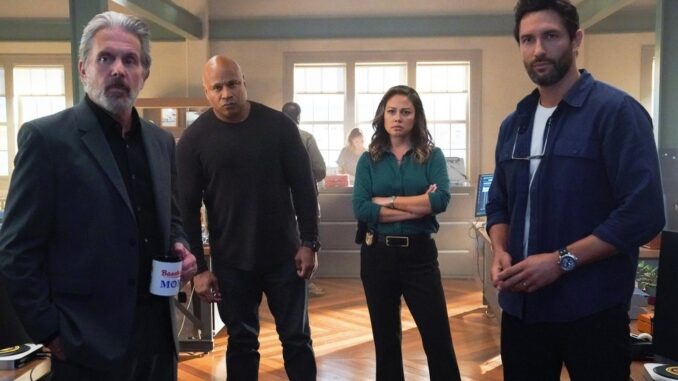
When a long-running procedural signs off, the big question is simple: did people show up? For NCIS Hawai’i, the answer is loud and clear. The series wrapped its run with the third-best audience total of the entire season—a finale performance that feels less like a quiet goodbye and more like a standing ovation.
So what happened? Why did viewers rally at the finish line? And what does this ratings spike really mean for the franchise, for the network, and for fans still processing the end?
Let’s break it all down.
A Quick Look at the NCIS Franchise Legacy
Before diving into numbers, it’s worth remembering the powerhouse brand behind the show. The broader NCIS universe began with NCIS and has since become one of television’s most durable franchises.
From NCIS: Los Angeles to NCIS: New Orleans, the brand has consistently delivered reliable ratings and fiercely loyal audiences.
And then came NCIS: Hawai’i—a sun-soaked procedural that blended island landscapes with high-stakes military investigations.
It had big shoes to fill. And in many ways, it did.
The Ratings Story Behind the Finale
What “3rd-Best Audience of the Season” Actually Means
Let’s put this into perspective. When we say the finale earned the third-best audience of the season, we’re talking about total viewers—real people tuning in live and same-day.
In a television era dominated by streaming and delayed viewing, landing near the top of your season’s performance list is no small feat. Especially at the end.
Finales often spike. But not all do. Some fade quietly. Others surge because of controversy, cliffhangers, or word-of-mouth buzz. For NCIS Hawai’i, the uptick suggests something powerful: viewers wanted closure.
Audience Loyalty Still Matters
In today’s fractured TV landscape, audience loyalty is gold.
A procedural drama surviving multiple seasons has already proven its consistency. But ending with one of the strongest audiences of the year? That signals emotional investment.
It’s like a marathon runner accelerating at mile 26. Instead of limping across the finish line, NCIS Hawai’i sprinted.
Why Did Viewership Rise at the End?
Let’s talk strategy—and sentiment.
The Power of a Series Finale
When fans know it’s the end, they show up.
Finales carry emotional weight. They promise answers. They promise closure. And sometimes, they promise one last twist.
In the case of NCIS Hawai’i, promotional efforts highlighted the significance of the episode. That urgency likely pulled in casual viewers who hadn’t watched consistently all season.
“Maybe I should tune in one last time.”
That thought alone can drive millions of eyeballs.
Word-of-Mouth and Social Buzz
Even traditional broadcast shows benefit from social media chatter.
As news spread that the series was ending, fans took to online platforms to share reactions, favorite moments, and hopes for the characters’ futures.
This digital ripple effect matters. In a crowded content ecosystem, conversation equals visibility. Visibility equals ratings.
The Impact on CBS’s Primetime Strategy
For a network like CBS, ratings data isn’t just trivia—it’s currency.
What the Numbers Say About Scheduling
A strong finale suggests that the time slot still holds value. It also proves the brand remains viable.
So why end the show if the audience was still there?
Television economics are complex. Production costs rise. Strategic shifts happen. Networks pivot toward different demographics. But ratings strength at the end raises eyebrows—and questions.
How NCIS Hawai’i Differed From Its Siblings
Every entry in the NCIS universe shares DNA. But each has its own flavor.
Setting as a Character
Hawai‘i wasn’t just a backdrop. It was part of the storytelling fabric. The lush landscapes, coastal operations, and island culture gave the show a visual identity unlike its mainland counterparts.
In a sea of procedurals set in urban offices and shadowy warehouses, this one had sunshine and surf—without sacrificing suspense.
Character-Driven Storytelling
Procedurals live and die by their ensembles. And NCIS Hawai’i leaned heavily into personal arcs, team dynamics, and emotional beats.
By the time the finale aired, viewers weren’t just watching cases unfold. They were checking in on people they felt they knew.
That’s powerful.
Ratings in the Modern TV Era
Let’s zoom out for a second.
Linear TV Isn’t What It Used to Be
Traditional broadcast audiences have declined across the board. Streaming platforms dominate headlines. Younger viewers rarely watch live.
So when a network drama secures one of its top audiences at the end of its run, it’s notable.
It means the show retained relevance in an increasingly competitive environment.
The Value of Consistency
Flashy premieres are common. Sustained performance is rare.
NCIS Hawai’i didn’t just spike once. It maintained a dependable audience across seasons—and then closed strong.
That kind of reliability is a programmer’s dream.
What Fans Are Saying
When ratings rise at the end, it often reflects fan sentiment.
Viewers expressed disappointment at the cancellation. Many believed the show had more stories to tell. Some argued it was finding its creative stride.
And that emotional reaction? It likely translated into finale tuning.
There’s something poetic about that. A show that inspired enough affection to boost its final numbers.
Could the Franchise Return in Another Form?
Here’s where things get interesting.
Television history is full of revivals. Spin-offs. Crossovers. Streaming continuations.
A strong audience at the end leaves the door cracked open. Not wide—but open.
The NCIS brand remains one of broadcast TV’s most resilient properties. And in Hollywood, brands rarely disappear forever.
The Bigger Picture for Procedural Dramas
Procedurals have faced criticism for being formulaic. Yet they endure.
Why?
Because familiarity is comforting. Because case-of-the-week storytelling works. Because not every viewer wants a 10-hour serialized puzzle.
The finale ratings of NCIS Hawai’i reinforce this truth: there’s still an appetite for traditional network storytelling.
Lessons From the Ratings Surge
Let’s distill it down.
1. Emotional Stakes Drive Viewership
When viewers feel something, they show up.
2. Franchise Strength Matters
Established brands create built-in audiences.
3. Finales Are Events
Promote them like events, and people will treat them that way.

A Farewell That Feels Earned
Ending with the third-best audience of the season isn’t just a statistic. It’s a statement.
It says the show mattered.
It says viewers cared.
It says the goodbye wasn’t ignored.
In a media world obsessed with viral spikes and overnight sensations, there’s something refreshing about a steady performer exiting with dignity—and strength.
Conclusion: A Strong Finish Leaves a Lasting Impression
NCIS Hawai’i didn’t fade away quietly. It closed its chapter with one of its strongest audiences of the season—a reminder that loyalty still exists in broadcast television.
Was it the right time to end? That debate will continue. But one thing is certain: when the final credits rolled, millions were watching.
And in television, being watched is everything.