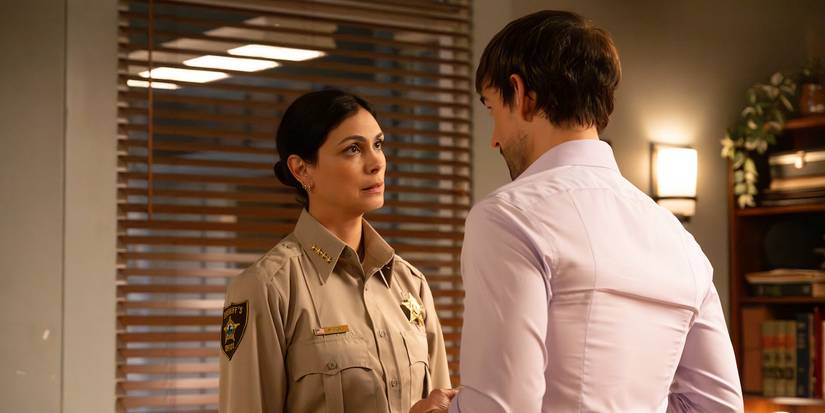
Nine episodes into its run, Sheriff Country is already generating plenty of conversation among fans of the expanding universe that began with Fire Country. While the new series has delivered gripping crime investigations, tense confrontations, and the rugged atmosphere viewers expect from a Northern California drama, some longtime fans are beginning to notice a worrying pattern. The show may already be repeating one of the biggest mistakes that occasionally frustrated audiences in Fire Country.
When Fire Country first premiered, it quickly became one of television’s most exciting action dramas. The show balanced explosive wildfire rescues with deeply emotional character journeys, particularly through the story of Bode Donovan and the inmate firefighting program. What made the series special was its ability to combine high-stakes emergencies with personal redemption arcs that felt authentic and grounded.
However, as the series grew more ambitious, critics and fans sometimes pointed to a recurring issue: pacing. At times, Fire Country struggled to balance its large ensemble cast and multiple storylines. Some plotlines were rushed, while others seemed to appear suddenly without enough emotional buildup. The show remained compelling, but those uneven narrative rhythms occasionally weakened the impact of major moments.
Now, less than a season into Sheriff Country, some viewers feel the spin-off may be heading down the same path.
The new series centers on Sheriff Mickey Fox, played by Morena Baccarin, a character who already captured attention when she appeared within the Fire Country universe. As the sheriff of a small community surrounded by wildfire-prone wilderness, Mickey operates at the intersection of crime, survival, and disaster response. It’s a premise full of storytelling potential, blending law enforcement drama with the environmental dangers that defined its predecessor.
The early episodes of Sheriff Country have delivered strong individual cases and atmospheric tension. Each investigation pulls viewers deeper into the complicated social dynamics of a town where danger can come from both criminals and nature itself. But as the ninth episode arrives, the show appears to be juggling an increasingly crowded set of narrative threads.
Mickey’s personal history, her complicated family relationships, the mysteries surrounding past crimes, and the ongoing interactions with firefighters and local authorities all compete for screen time. In theory, this layered storytelling should enrich the show. In practice, some arcs feel as if they are moving too quickly while others linger without resolution.
This is where the comparison to Fire Country becomes unavoidable. One of that series’ most debated weaknesses was its tendency to introduce dramatic twists before fully developing the emotional groundwork behind them. When the storytelling slowed down and allowed characters to breathe, the show delivered its most powerful moments. But when it rushed forward with multiple plot developments at once, the emotional payoff sometimes suffered.
Nine episodes in, Sheriff Country may be drifting toward the same structural problem. Instead of allowing the audience to deeply connect with a few central storylines, the series occasionally shifts focus too rapidly. A tense investigation might dominate one episode, only to fade into the background as a completely different conflict suddenly takes center stage the following week.
To be fair, the show is still in its early stages. Many television dramas experiment with tone and pacing during their first season before settling into a stronger rhythm. And there’s no denying that Sheriff Country possesses several strengths that could help it avoid repeating its predecessor’s mistakes.
The most obvious advantage is Mickey Fox herself. Morena Baccarin brings a commanding presence to the role, portraying the sheriff as both fiercely determined and quietly vulnerable. Her performance gives the series an emotional anchor that can ground even the most chaotic storylines.
Additionally, the setting remains a powerful storytelling tool. The same wildfire-prone landscape that defines Fire Country adds a constant sense of danger to Sheriff Country. Even when the narrative focuses on crime investigations, the looming threat of environmental disaster reminds viewers that life in this region is always unpredictable.
If the writers can slow down and allow certain arcs to develop more naturally, the show could easily correct course. The foundation is already strong—complex characters, a compelling central figure, and a world filled with potential conflicts. What it needs now is patience in how those stories unfold.
Ultimately, Sheriff Country still has plenty of time to find its identity. Nine episodes may reveal early warning signs, but they also provide valuable lessons. If the series learns from the pacing challenges that occasionally affected Fire Country, it could grow into something even more powerful: a crime drama that blends suspense, character depth, and environmental tension into a truly unforgettable television experience.