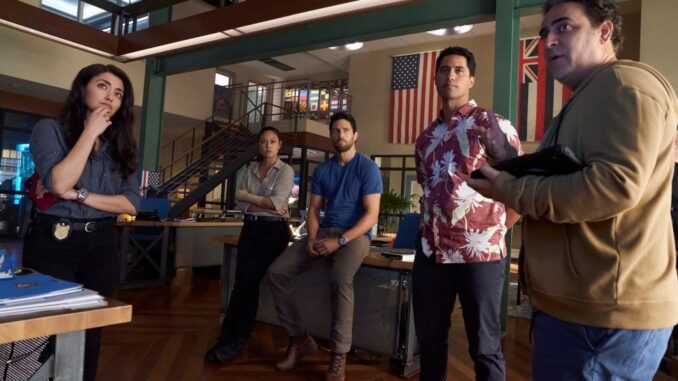
When NCIS: Hawai’i premiered, it wasn’t just another spinoff—it was a bold evolution of a legendary franchise. Sun-soaked visuals, high-stakes cases, and a historic female lead made it stand out fast. So when news broke that the series was cancelled, fans were stunned. Even more surprising? The show didn’t quietly fade out. Instead, it went out guns blazing.
Let’s break down how NCIS: Hawai’i ended, why the cancellation sparked controversy, and why the finale still feels like a love letter to fans.
The Rise of NCIS: Hawai’i in the NCIS Universe
A Fresh Take on a Familiar Formula
Every NCIS spinoff faces the same challenge: How do you stay familiar without feeling stale?
NCIS: Hawai’i cracked that code by blending traditional procedural storytelling with island culture, emotional depth, and cinematic flair.
Set against the stunning backdrop of O‘ahu, the show leaned into both spectacle and substance—a rare balance in network TV.
Why Fans Connected So Quickly
From week one, viewers bonded with the characters. The cases mattered, but the people mattered more. Relationships evolved. Trauma lingered. Victories felt earned. It didn’t feel like background noise TV—it felt personal.
Breaking Barriers with a Female Lead
Jane Tennant Changed the Game
Led by Vanessa Lachey as Special Agent in Charge Jane Tennant, the show made history as the first NCIS series with a female lead. But this wasn’t a gimmick—it was storytelling with purpose.
Tennant wasn’t perfect. She struggled, adapted, and grew. That authenticity made her one of the most relatable leaders in the franchise.
Representation That Actually Mattered
Beyond Tennant, the show embraced diversity in a way that felt organic. Cultural identity wasn’t window dressing—it shaped characters and cases alike.
The Controversial Cancellation That Shocked Fans
Why Was NCIS: Hawai’i Cancelled?
Despite solid ratings and a passionate fanbase, CBS cancelled NCIS: Hawai’i after three seasons. The official reasons were vague—budget constraints, scheduling shifts, and strategic restructuring.
To fans, it felt abrupt. To critics, it felt shortsighted.
Fan Backlash and Online Uproar
Social media lit up. Petitions circulated. Viewers questioned why a successful, culturally rich show was pulled while others survived.
Was it timing? Money? Network priorities? The lack of transparency only fueled frustration.
Did the Writers Know the End Was Coming?
A Finale That Feels… Prepared
Here’s the twist: the finale doesn’t feel rushed.
While it wasn’t originally written as a series finale, it smartly leaves the door half-closed—enough resolution to satisfy, enough ambiguity to dream.
That balance is hard to pull off, and NCIS: Hawai’i nailed it.
Breaking Down the NCIS: Hawai’i Finale
An Episode Fueled by Tension
The final episode dives straight into danger. The team faces a high-risk mission involving national security threats, personal stakes, and moral gray areas.
No slow burn. No filler. Just intensity.
Jane Tennant’s Defining Moment
At the center of it all is Jane Tennant, forced to make decisions that test her leadership and her heart. It’s the kind of moment that defines a character—not with speeches, but with action.
High-Octane Action Until the Final Minute
A Classic NCIS Showdown—Island Style
Explosions. Tactical maneuvers. Split-second choices. The finale delivers action that rivals any flagship NCIS episode, but with the unique flavor only Hawai’i can offer.
The island setting isn’t just scenery—it’s part of the strategy.
Why the Action Hits Harder Here
Because we care. After three seasons, every risk feels personal. Every close call lands with weight.
Emotional Payoffs That Fans Were Waiting For
Character Arcs Come Full Circle
From unresolved trauma to evolving partnerships, the finale quietly addresses the emotional journeys fans followed for years.
Nothing feels forced. Nothing feels ignored.
Relationships That Matter
Friendships. Trust. Loyalty. These themes echo through the episode, reminding us why this team worked so well together.
Loose Ends: Tied or Left Open?
Closure Without Finality
Some threads wrap up neatly. Others are left intentionally open. It’s frustrating—but also realistic.
Life doesn’t always give us clean endings. Sometimes, it just keeps moving.
Was This a Setup for a Revival?
Probably not intentionally—but the possibility lingers. And honestly? That’s kind of beautiful.
How the Finale Honors the NCIS Legacy
Respecting the Franchise Roots
The finale doesn’t reinvent the wheel. Instead, it leans into what made NCIS iconic: teamwork, integrity, and sacrifice.
It feels like a respectful handshake to the past while standing firmly in its own identity.
Fan Reactions: Praise, Tears, and Frustration
Social Media Speaks Loudly
Fans praised the action, the emotion, and the performances. But many also expressed anger that this is how the journey had to end.
The consensus? NCIS: Hawai’i deserved more time.
Why NCIS: Hawai’i Will Be Missed
More Than Just Another Spinoff
This show mattered. It expanded representation. It told stories others didn’t. And it proved that long-running franchises can still evolve.
A Cast That Truly Clicked
Chemistry like this can’t be manufactured. It’s built over time—and just when it hit its stride, the curtain fell.
Could NCIS: Hawai’i Ever Return?
The Revival Question
In today’s TV landscape, cancellations aren’t always permanent. Streaming platforms revive shows all the time.
Is it likely? Hard to say. Is it possible? Absolutely.
Hope, after all, is a powerful thing.

What NCIS: Hawai’i Leaves Behind
A Legacy of Risk and Representation
The show didn’t play it safe—and that’s exactly why it mattered. It pushed boundaries while honoring tradition.
That’s not easy. And it shouldn’t be forgotten.
Final Thoughts on the NCIS: Hawai’i Finale
The NCIS: Hawai’i finale is a paradox: thrilling yet bittersweet, satisfying yet incomplete. It delivers action, emotion, and respect for its characters—even as it reminds us how fragile great TV can be.
Cancelled or not, NCIS: Hawai’i ended with dignity. And sometimes, that’s the most powerful ending of all.
Conclusion
NCIS: Hawai’i may have been cancelled too soon, but it refused to go quietly. Its action-packed finale proves the series still had plenty of stories left to tell—and plenty of heart to share. While fans may never fully accept the decision, the ending stands as a testament to what the show did best: bold storytelling, meaningful representation, and unforgettable characters. In the end, NCIS: Hawai’i didn’t just close a chapter—it left a lasting mark on the franchise.