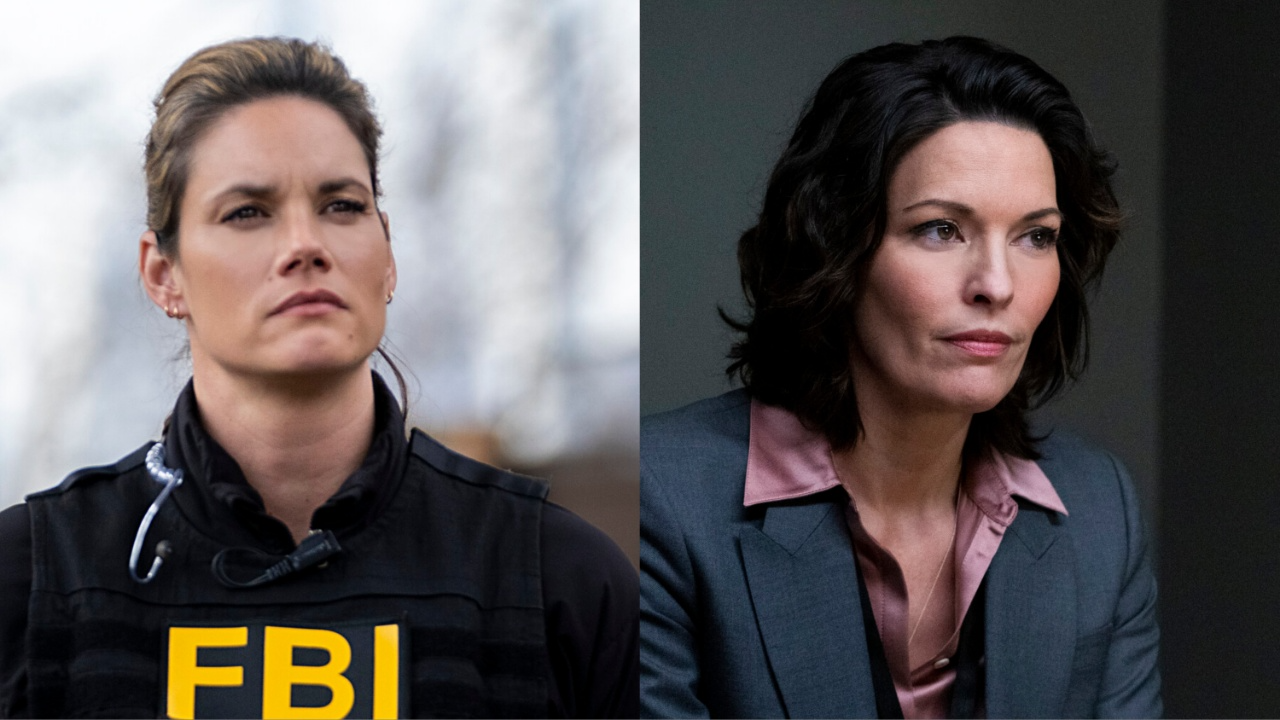
The expansive world of Dick Wolf’s procedural universe is known for its high-stakes crossovers and seamless transitions between different law enforcement branches, but the latest development in the FBI franchise is perhaps its most ambitious leap yet. In a move that has sent the fanbase into a frenzy of speculation, a bold narrative expansion is set to take Special Agent Maggie Bell, Assistant Special Agent in Charge Isobel Castille, and several key members of the New York Field Office away from their familiar domestic hunting grounds and into the shadows of Langley. The transition from the “FBI” to the “CIA” marks a significant tonal shift for the series, moving from the concrete-and-steel reality of federal law enforcement into the murky, high-stakes world of international espionage and global intelligence gathering.
At the heart of this expansion is Missy Peregrym’s Maggie Bell. Throughout the series, Maggie has been the moral compass of the 26 Fed squad, a character defined by her empathy, her adherence to the law, and her unwavering commitment to the victims of domestic crime. Sending her into the CIA environment creates a fascinating fish-out-of-water dynamic. In the CIA, the “rules” of engagement are often dictated by geopolitical necessity rather than the strict penal codes of the FBI. For Maggie, this transition isn’t just a change of scenery; it is a fundamental challenge to her identity. How does an agent who thrives on transparency and justice operate in a world where secrets are the primary currency and “the greater good” often involves making morally ambiguous sacrifices? Early reports suggest that Maggie’s involvement with the CIA stems from a cold case involving her late husband, a narrative thread that has long haunted her character and provides a deeply personal motivation for her to step into the Agency’s world.
Simultaneously, Alana De La Garza’s Isobel Castille is uniquely positioned for this crossover. As the leader of the New York Field Office, Isobel has frequently clashed with federal bureaucracy and international agencies when their interests compromised her team’s investigations. Her move toward the CIA sphere highlights her prowess as a political navigator. Isobel has always been a character who understands the “big picture,” and seeing her trade barbs and strategies with CIA directors offers a fresh perspective on her leadership. This expansion allows the show to explore the friction between domestic intelligence and foreign operations—a real-world tension that adds a layer of gritty realism to the FBI universe. De La Garza’s commanding presence is the perfect bridge between the two worlds, ensuring that even as the scope of the show expands, the authoritative voice of the FBI remains central to the story.
The expansion also promises to elevate the supporting cast, as agents like OA (Zeeko Zaki) and Stuart Scola (John Boyd) find themselves caught in the crossfire of inter-agency cooperation. The CIA operates on a global scale, and the narrative shift implies that the team will no longer be confined to the five boroughs of New York. Predictions for the upcoming episodes suggest international locations, from safe houses in Europe to intelligence hubs in the Middle East. This “Bold FBI Universe Expansion” effectively turns the series into a global thriller, utilizing the high production values and fast-paced editing that have become the franchise’s hallmarks. By blending the procedural “crime of the week” format with the overarching serialized drama of an international conspiracy, the showrunners are successfully revitalizing a formula that has dominated network television for years.
Furthermore, the introduction of CIA-specific characters will provide a necessary foil to our established heroes. Where the FBI agents are trained to build cases for trial, the CIA “case officers” are trained to gather intelligence and neutralize threats before they ever reach a courtroom. This ideological clash is where the drama will truly ignite. Fans are particularly excited about the possibility of “backdoor pilots” or the introduction of a new spin-off series—FBI: International has already laid the groundwork for global operations, but a dedicated CIA-centric series within the Wolf Entertainment umbrella would be a logical next step in the franchise’s evolution.
The transition to the CIA world also allows the show to tackle modern, complex themes like cyber-warfare, state-sponsored terrorism, and the ethics of surveillance in the digital age. As Maggie and Isobel navigate these new waters, the audience is invited to question the cost of national security. The “Elite of the Elite” theme often seen in Fire Country finds its counterpart here, as these agents must prove they have the mental fortitude to survive a world where there are no clear lines between friend and foe.
As the FBI universe continues to grow, this bold move into the CIA landscape ensures that the franchise remains relevant and unpredictable. By taking beloved characters and placing them in a high-pressure, unfamiliar environment, the writers are breathing new life into the procedural genre. The stakes have never been higher, and for Maggie Bell and Isobel Castille, the mission has only just begun. The move to the CIA is more than just a crossover; it is a declaration that the FBI universe is no longer bound by borders.