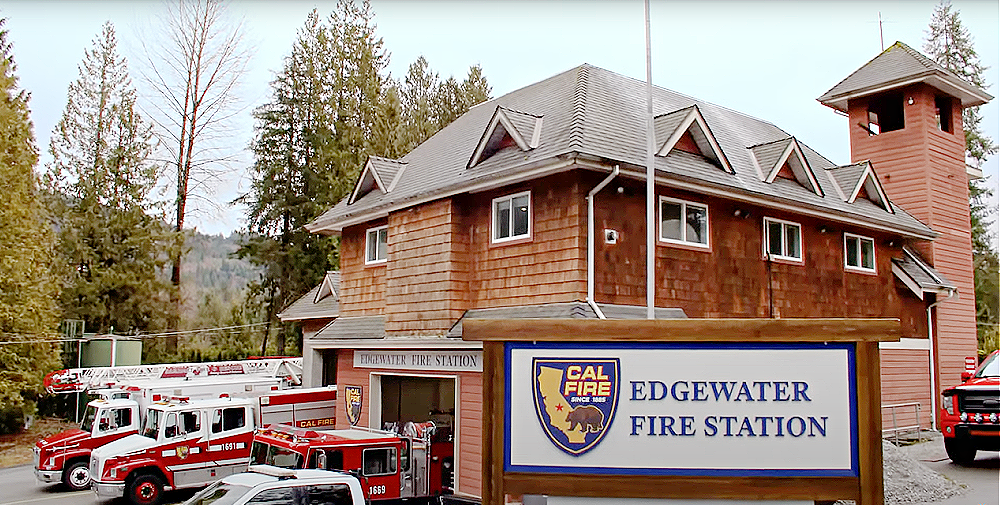
In the landscape of modern television, setting is often treated as little more than a backdrop—a collection of soundstages and green screens designed to house the characters. However, CBS’s hit drama Fire Country has managed to achieve something far more immersive. The fictional town of Edgewater, Northern California, has become a character in its own right. While the town doesn’t exist on any real-world map, its heavy atmosphere, complex social hierarchy, and lived-in history make it feel as tangible as any real mountain community.
The success of Fire Country lies in its ability to build a world that feels grounded in reality. From the socioeconomic tensions to the environmental threats that define the region, here is how the show makes Edgewater feel like a place you could actually visit—or, if the sirens are wailing, a place you might need to flee.
A Geography Defined by Danger
One of the primary ways Fire Country establishes realism is through its specific, unforgiving geography. Edgewater isn’t just “the woods”; it is a carefully mapped environment of steep ridges, dense timber, and unpredictable canyons. The writers use the local topography to dictate the plot, making the land itself a constant antagonist.
Whether it’s a “snag” falling in a remote valley or a “spot fire” jumping a specific ridge line, the show uses technical geographic language that gives the town a sense of physical scale. By consistently referencing local landmarks—like the “Smokey’s” tavern or the specific bends in the river—the show creates a mental map for the audience. When a fire breaks out at a location we’ve heard of before, the stakes feel higher because we recognize the “turf.”
The Socioeconomic “Blue-Collar” Soul
Edgewater feels real because it captures the authentic friction of a town built on manual labor and legacy. The show doesn’t shy away from the reality that many small mountain towns are struggling. We see the contrast between the established families like the Leones, who have patrolled these woods for generations, and the “outsiders” who occupy the Three Rock Conservation Camp.
This social layering adds a profound sense of realism. In Edgewater, everyone has a history with everyone else. A simple trip to the grocery store or the local bar isn’t just a scene transition; it’s an opportunity for a character to run into a former high school rival or a family friend. This “small-town claustrophobia” is a hallmark of rural life. The show captures the feeling that your past is always present, which is particularly poignant for a protagonist like Bode Leone, who is literally trying to outrun his reputation while wearing an inmate’s orange jumpsuit.
The Authenticity of the “Fire Culture”
While the show certainly takes dramatic liberties for the sake of television, it leans heavily into the authentic culture of Cal Fire. The terminology, the hierarchy, and the rituals—such as the “handing down” of helmets or the specific way crews debrief after a burn—anchor the fictional town in a very real professional world.
The presence of the Three Rock camp is based on the real-world California Conservation Camp Program. By grounding the show’s central premise in a real-life (and often controversial) social system, Edgewater gains a layer of political and social relevance. The town isn’t just a place where fires happen; it’s a place where the state’s justice system intersects with its environmental challenges. This intersection makes the town feel like a microcosm of the actual American West.
Atmospheric Storytelling and Sound
Beyond the script, the production design of Fire Country works overtime to sell the reality of Edgewater. The lighting is often filtered through a haze of smoke or the amber glow of a sunset, creating a perpetual “fire season” aesthetic. The sound design, too, plays a vital role. The constant background hum of cicadas, the crackle of dry brush underfoot, and the distant thrum of helicopter blades create an auditory environment that is synonymous with Northern California summers.
Even the weather is a character. The show frequently discusses “Red Flag Warnings” and humidity levels, making the audience feel the same anxiety the characters do. When the wind picks up in Edgewater, the viewers know it means trouble. This environmental consistency makes the town feel like a living, breathing ecosystem rather than a static set.
The Power of Local Lore
Finally, Edgewater feels real because it has a history that predates the first episode. The show frequently references past fires, town tragedies, and legendary figures. This “local lore” gives the town a soul. We understand that the characters aren’t just fighting a fire today; they are fighting to protect a heritage that was nearly lost in previous decades.
By focusing on the scars—both on the land and on the people—Fire Country creates a sense of continuity. Edgewater is a town that has been burned before, and that collective trauma informs every decision the characters make. It is this depth of history that ultimately transforms a fictional setting into a place that feels like home to millions of viewers.