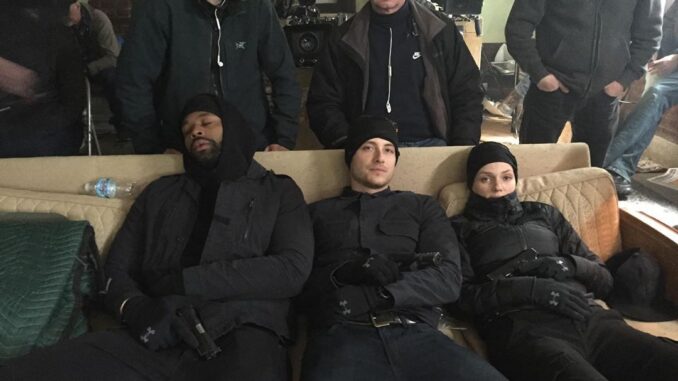
From high-speed chases to emotionally charged interrogation scenes, Chicago P.D. delivers intensity in every episode. But what viewers see on screen is only a fraction of the story. Behind each 42-minute installment lies a complex, fast-moving production machine that operates with precision, pressure, and an incredible level of coordination.
Because filming a single episode isn’t just a shoot—it’s a marathon.
It all begins in the writers’ room, where stories are broken down weeks in advance. Each episode must balance action, character development, and continuity within the larger season arc. For a show like Chicago P.D., that often means weaving together multiple cases while still giving emotional weight to the characters fans care about. Once the script is finalized, the real work begins.
Pre-production moves fast.
Locations across Chicago are scouted and secured, often with tight time windows and logistical challenges. Permits, street closures, and coordination with local authorities all need to be arranged in advance. The show’s commitment to filming on location—rather than relying solely on sets—adds authenticity, but also complexity. Every exterior scene requires planning down to the smallest detail.
At the same time, departments begin building the world of the episode. Costumes are selected to reflect both character and realism. Props—especially weapons and police equipment—must meet strict safety and accuracy standards. The set design team prepares interiors, including the iconic Intelligence Unit office, ensuring everything is camera-ready.
Then comes the filming itself.
A typical episode takes around 8 to 10 days to shoot, but those days are long. Cast and crew often work 12 to 14 hours at a stretch, moving between locations, resetting scenes, and adapting to unexpected challenges—weather, traffic, or even last-minute script changes. Every shot requires multiple takes from different angles, meaning a single scene that lasts a few minutes on screen can take hours to capture.
Action sequences are another level entirely.
Car chases, arrests, and tactical operations involve stunt coordinators, safety teams, and precise choreography. Nothing is left to chance. What looks spontaneous on screen is actually carefully rehearsed and executed under strict supervision. The goal is to make it feel real—without ever putting anyone at risk.
And then there are the performances.
Actors like Jason Beghe bring emotional depth to every scene, but that intensity doesn’t just happen. It’s built through repetition, direction, and collaboration. Directors work closely with the cast to shape each moment, ensuring that even the smallest interaction feels authentic. In a show driven by tension and moral complexity, those details matter.
But filming is only half the process.
Once shooting wraps, the episode enters post-production—a phase just as demanding as what came before. Editors piece together hours of footage into a cohesive story. Sound designers add layers of audio, from subtle background noise to the sharp crack of gunfire. Music is carefully chosen to enhance emotion without overpowering the scene.
Color grading gives the show its signature look—gritty, grounded, and unmistakably Chicago.
And all of this happens under tight deadlines.
Network television doesn’t have the luxury of endless time. Episodes must be completed on schedule to meet weekly air dates, meaning multiple episodes are often in different stages of production at the same time. While one is being filmed, another is being edited, and a third is already in development.
It’s a constant cycle.
What makes Chicago P.D. stand out is how seamlessly it all comes together. Viewers see a polished, high-intensity drama—but behind it is a team of hundreds working in sync, each playing a crucial role in bringing the story to life.
So the next time an episode airs, it’s worth remembering what went into it.
The early mornings. The long nights. The coordination, the creativity, the pressure.
Because what looks effortless on screen is anything but.
It’s the result of dedication, precision, and a relentless commitment to storytelling—episode after episode.