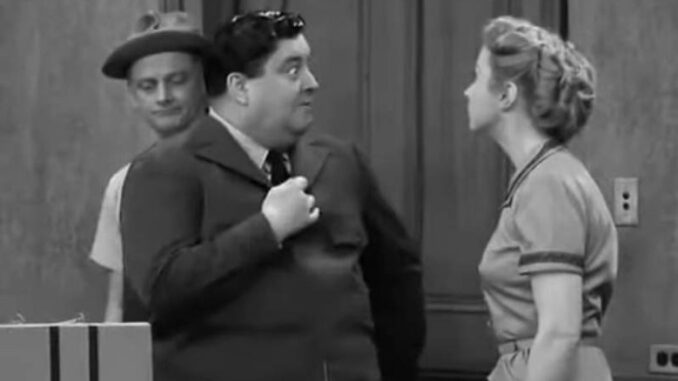
Revisiting The Honeymooners through a modern lens invites an unavoidable question: could a sitcom so rooted in 1950s working-class life still resonate with today’s audiences? On the surface, the world Ralph and Alice Kramden inhabit feels distant—black-and-white television, rigid gender roles, and a culture shaped by post-war austerity. Yet beneath those period details lies a set of emotional truths that feel surprisingly contemporary.
What would likely change first is the tone of Ralph Kramden’s behavior. His bluster, temper, and occasional verbal threats—played for laughs in the 1950s—would be met with sharper scrutiny today. Modern audiences are more sensitive to power dynamics and emotional boundaries, particularly within marriage. A contemporary version of The Honeymooners would almost certainly soften Ralph’s aggression, reframing him as emotionally volatile rather than domineering. His flaws would remain, but they would be contextualized with greater psychological awareness.
Alice Kramden, on the other hand, might feel even more relevant now than she did then. Her intelligence, emotional control, and refusal to be intimidated align closely with modern expectations of female characters. In a present-day adaptation, Alice would likely be given more narrative space—her internal conflicts, ambitions, and compromises explored in greater depth. What was once subtext could become central to the story.
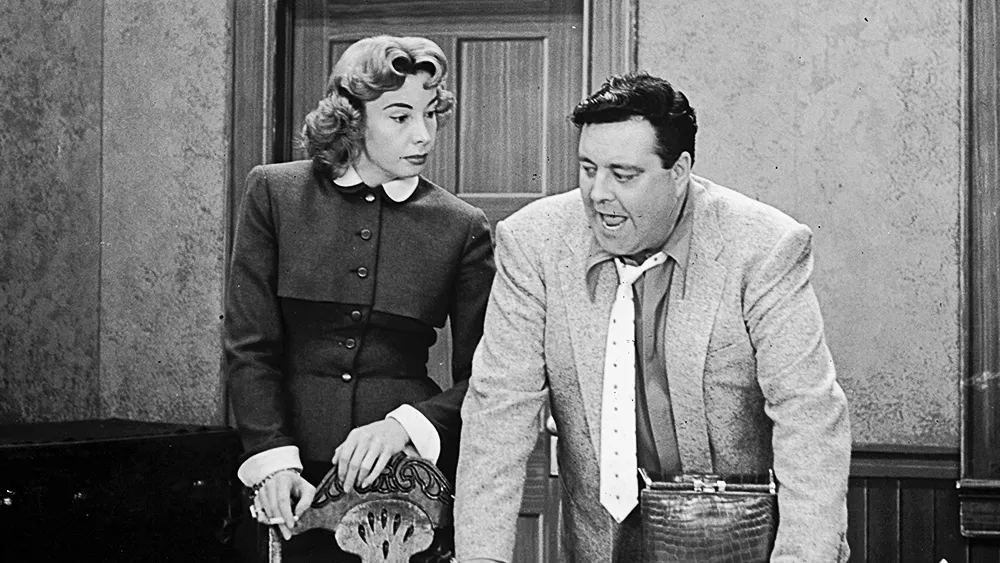
Economics, too, would translate easily. Ralph’s constant anxiety about money mirrors the financial precarity faced by many today. Rising living costs, job insecurity, and stalled upward mobility are no longer historical concerns—they are current realities. A modern Honeymooners might replace Ralph’s get-rich-quick schemes with side hustles, startup dreams, or risky investments, but the emotional engine would remain unchanged: the fear of falling behind.
Where the show might struggle is with pacing and expectations of growth. Contemporary sitcoms often rely on character development and long-term arcs. The Honeymooners famously resisted change, trapping its characters in cycles of hope and disappointment. Yet this very stasis could become its strength in a modern context. In an era obsessed with self-optimization and constant progress, a show that acknowledges emotional stagnation might feel refreshingly honest.
Ultimately, The Honeymooners would not succeed today by replicating itself exactly. It would need reinterpretation rather than imitation. But its core—marriage under pressure, dreams constrained by reality, love expressed through endurance—remains deeply relatable. The show’s enduring question is not whether life gets better, but how people cope when it doesn’t.
That question has not aged. If anything, it has grown louder. And that is why The Honeymooners, even decades later, still feels like a conversation worth continuing.