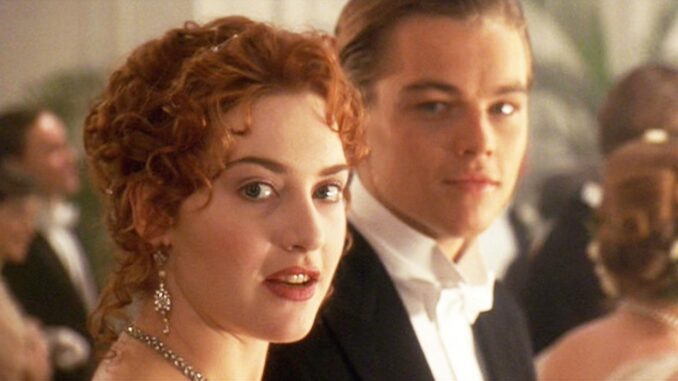
🌊 The Price of the North Atlantic: A Stardom No One Could Predict
We all remember the first time we saw Titanic. The sweeping music, the “I’m flying” moment on the bow, and the heartbreaking ending that left an entire generation of moviegoers in tears. For us, it was a cinematic masterpiece. For a 22-year-old Kate Winslet, it was the moment her world fractured into a million pieces.
Imagine waking up and finding your face on every newsstand, not for your acting prowess, but as a target for some of the most vicious media scrutiny in history. Recently, the Oscar winner opened up about the “horrific” aftermath of the film’s success, admitting she was “terrified to go to sleep.” It wasn’t just the weight of fame; it was a literal invasion of her life that made her feel like a prisoner in her own skin. Let’s dive into why the “Ship of Dreams” felt like a living nightmare for the woman who brought Rose DeWitt Bukater to life.
🕵️ The Paparazzi Plague: Phone Tapping and Trash Rummaging
The level of intrusion Kate faced wasn’t just annoying; it was borderline criminal. In recent interviews, she’s detailed the lengths the British press went to just to get a “scoop” on the world’s newest sweetheart.
The Constant Fear of Being Listened To
-
Phone Tapping: Kate revealed that her phones were being tapped. Think about that for a second. Every private conversation with her family, every vulnerable moment shared with a friend, was potentially being recorded by a stranger in a van down the street.
-
A World Upside Down: “There were people everywhere,” she recalled. The feeling of being watched 24/7 is enough to make anyone lose their mind. It’s no wonder she was scared to close her eyes—the boundary between her private life and the public eye had completely vanished.
Digging for “Dirt” in the Garbage
If the phone tapping wasn’t enough, photographers were literally going through her trash. Why? To see what diet she was on. At a time when the media was obsessed with “heroin chic” and skeletal frames, Kate’s healthy, natural body was treated like a scandalous anomaly. They wanted to know if she was eating, what she was eating, and if they could find any “evidence” to fuel their next abusive headline.
💔 The “Fat-Shaming” Epidemic: A Young Actress Under Fire
It’s hard to believe now, but back in 1997, the media was absolutely ruthless regarding Kate’s weight. Despite being stunningly beautiful and healthy, she was subjected to what she now calls “appalling” bullying.
H3: The Cruelty of the British Tabloids
The names they called her were nothing short of abusive. Journalists would write entire columns dissecting her physique as if she were a specimen under a microscope rather than a young woman trying to find her way.
-
The Heroin Chic Era: The late 90s celebrated an extreme thinness that Kate simply didn’t represent. Instead of celebrating her “womanly” figure, the press tried to shame her into a size zero.
-
The Emotional Toll: “I felt quite bullied,” she shared. This wasn’t just a few mean comments; it was a global campaign of body shaming that targeted her at her most vulnerable age.
H4: Confronting the Ghosts of the Past
Kate has since fought back, even confronting journalists face-to-face. She once told a group of reporters, “I hope this haunts you,” referring to the way they treated her as a young girl. It’s a powerful reminder that words have consequences, even for the most famous people on the planet.
🏠 The “Garden Wall” Savior: How Neighbors Kept Her Sane
When the press pack was camped outside her door, making it impossible to even go out for milk, Kate found comfort in the most human of places: her neighbors.
Steaming Pasta and Red Wine
She recalls a couple next door, Giorgio and Plaxy, who became her lifelines. When the paparazzi were too thick to navigate, Plaxy would call her and say, “Babe, they’re out there again. I’m going to pop some of Giorgio’s pasta and a glass of wine on the garden wall for you.”
Those moments of “steaming pasta” and shared humanity were what kept her anchored. In a world that wanted to consume her, these friends just wanted to feed her. It’s a beautiful metaphor for the importance of community when the world goes crazy around you.
🛡️ The Strategic Retreat: Why Kate Chose “Small” Films
After Titanic, Kate could have walked into any blockbuster in Hollywood. She had the world at her feet. Instead, she did something that confused every executive in the business: she chose small, independent films.
Learning the Craft Away from the Spotlight
-
“I Wasn’t Ready”: Kate admitted she still felt like she was learning how to act. She didn’t want the “big Hollywood jobs” because they came with a level of scrutiny she wasn’t prepared for.
-
Self-Protective Mode: Choosing projects like Hideous Kinky or Holy Smoke! was a strategic move to regain her privacy and her sanity. She wanted to be an actress, not a “brand.”
The Long Game of Resilience
By choosing the path of the “serious actress” over the “movie star,” Kate ensured she wouldn’t be a flash in the pan. She played the long game, focusing on her skills rather than her celebrity. This is why, decades later, she is still one of the most respected names in the industry while many of her 90s contemporaries have faded away.
👶 Motherhood: The Ultimate Reality Check
If neighbors and indie films were the armor, motherhood was the cure. Kate has often stated that having her daughter, Mia, at age 25 “saved her mental health.”
A Connection to the Real World
When you have a newborn to care for, the opinions of a tabloid journalist in London suddenly matter a whole lot less. Motherhood provided a “direction and meaning” that fame never could.
-
Focusing Inward: Raising her children allowed her to shut out the noise. “Motherhood saved me,” she said plainly. It gave her a reason to look at herself through her children’s eyes rather than the distorted lens of the media.
-
A Healthy Perspective: Two of her children are now in the industry themselves, and Kate uses her past trauma to guide them, ensuring they know how to use their voices in a way she couldn’t back then.
Final Conclusion
Kate Winslet’s journey from being “terrified to go to sleep” to becoming a fearless advocate for body positivity and mental health is nothing short of heroic. The Titanic era wasn’t just about a record-breaking movie; it was a baptism by fire in the harshest elements of global stardom. By enduring phone tapping, trash-digging, and relentless body shaming, Kate didn’t just survive—she evolved. She traded the “horrific” fame of her 20s for a grounded, respected career built on her own terms. Today, she wears her fame “lightly,” proving that while the “Ship of Dreams” may have hit an iceberg of media cruelty, the woman at its center was far too strong to sink.
❓ 5 Unique FAQs After The Conclusion
Q1: Why was Kate Winslet particularly targeted by the media compared to Leonardo DiCaprio?
A1: While both stars were followed, the media at the time was heavily focused on the “heroin chic” aesthetic. Because Kate had a more “womanly” and healthy build, the British press used her as a target for body-shaming and diet-culture scrutiny, which was much more prevalent for female stars than male ones in the 90s.
Q2: Did James Cameron really call her “Kate Weighs-a-Lot”?
A2: This was a long-standing rumor that Kate has since clarified. While she mentioned the set was incredibly difficult and “disorienting” (sometimes working 20-hour days), she has spoken highly of her professional relationship with Cameron, especially during their reunion for Avatar: The Way of Water.
Q3: What did Kate mean when she said she used “Radiohead and a good poo” to cope?
A3: In a refreshingly honest interview, Kate mentioned that simple, human things—like listening to her favorite band (Radiohead), having a nice cup of coffee, and basic physical relief—helped her feel “normal” when the world around her felt insane. It’s her way of saying she found comfort in the mundane.
Q4: How did Kate Winslet’s career change after she “backed away” from big films?
A4: It actually made her more successful in the long run. By choosing smaller, character-driven roles in the late 90s and early 2000s, she built a reputation for immense talent and versatility. This path eventually led to her seven Oscar nominations and her win for The Reader in 2009.
Q5: Is Kate Winslet still friends with Leonardo DiCaprio?
A5: Yes! They share one of the most famous and enduring friendships in Hollywood. Kate has often described Leo as her “brother” and credits their close bond on the set of Titanic as a major factor in how they both survived the overwhelming fame that followed.